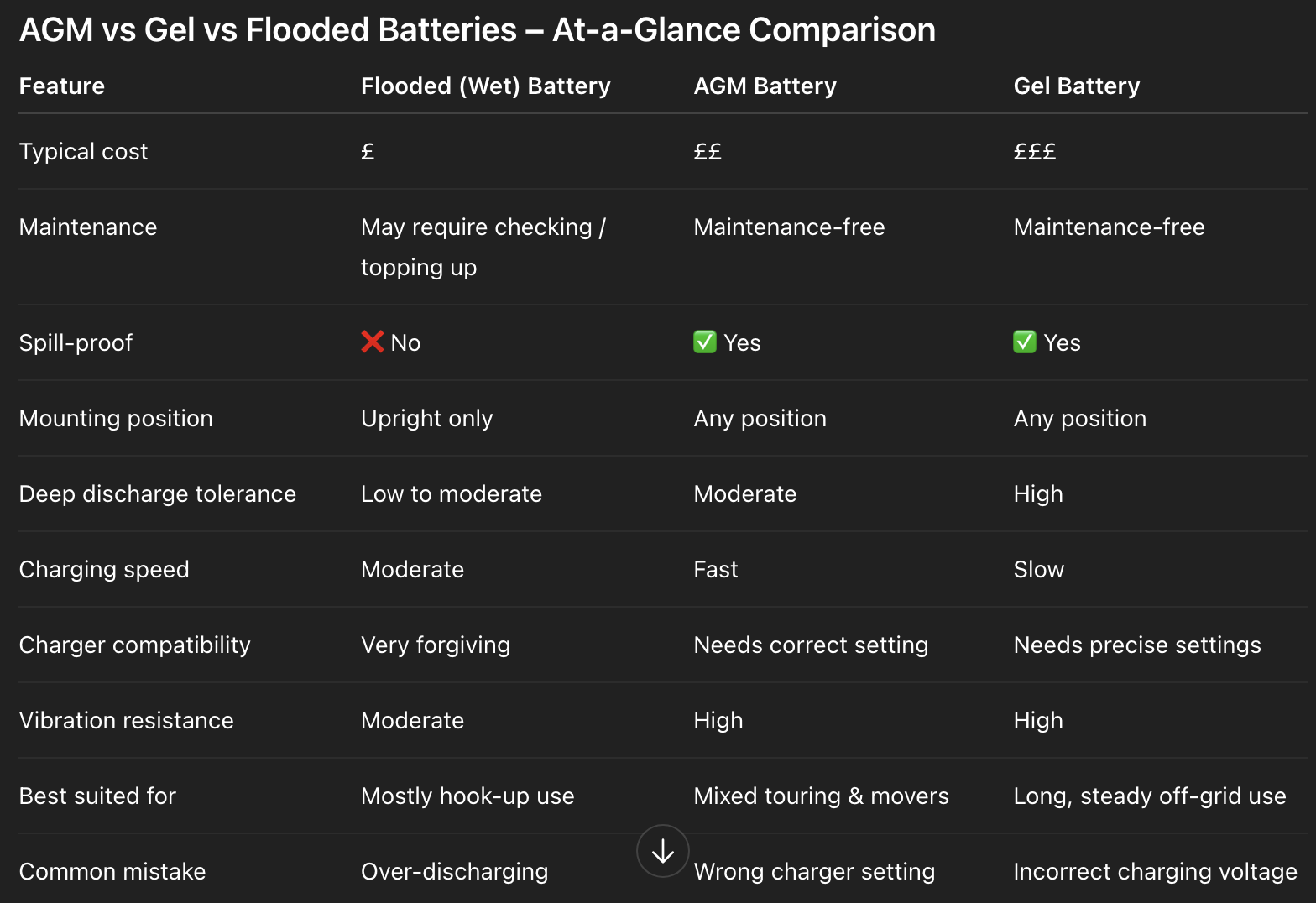
AGM vs Gel vs Flooded Batteries – What’s the Real Difference?
When looking for a caravan leisure battery, you’ll often see three main types mentioned: flooded, AGM, and gel. They’re all lead-acid batteries, but they behave quite differently in day-to-day use.
The confusion usually comes from marketing claims and price differences, rather than from how these batteries actually perform in a caravan. This guide explains the real, practical differences so you can decide which type suits your touring style — without overthinking it.
Flooded (Wet) Leisure Batteries
Flooded batteries are the most traditional type of leisure battery and have been used in caravans for decades.
How they work
They contain liquid electrolyte (acid) and lead plates submerged inside the battery casing. Some are sealed, while others require occasional topping up with distilled water.
Characteristics
Usually the cheapest option
Heavier and bulkier
Can release small amounts of gas when charging
Must be kept upright
Where they make sense
Flooded batteries are well suited to:
Caravanners who mostly use electric hook-up
Light off-grid use
Simple setups with standard caravan chargers
They’re robust, well understood, and perfectly adequate for many caravans — just not the most tolerant of deep discharge.
AGM Batteries (Absorbent Glass Mat)
AGM batteries are often described as a “step up”, but it’s worth understanding why.
How they work
Instead of liquid acid, the electrolyte is absorbed into glass fibre mats between the plates. This makes the battery sealed and spill-proof.
Characteristics
Maintenance-free
More resistant to vibration
Faster charging than flooded batteries
Can deliver higher currents if needed
Where they make sense
AGM batteries suit:
Caravans with movers or higher electrical loads
Touring where the battery is regularly used but recharged often
People wanting a sealed, no-maintenance option
They’re often chosen as a middle ground between flooded and more specialist battery types.
Gel Batteries
Gel batteries are the least common in caravans today, but they still appear in older systems and some specialist setups.
How they work
The electrolyte is suspended in a gel rather than liquid or absorbed mats.
Characteristics
Fully sealed and spill-proof
Very tolerant of deep discharge
Slower charging
Sensitive to incorrect charging voltages
Where they make sense
Gel batteries can work well for:
Long, steady discharge cycles
Low current draw over extended periods
Systems specifically designed for gel charging
However, they’re less forgiving if the charger isn’t matched correctly — something that catches many caravanners out.
Charging compatibility (this really matters)
One of the biggest differences between these battery types isn’t the battery itself — it’s how they’re charged.
Flooded batteries are the most forgiving
AGM batteries need slightly higher charging voltages
Gel batteries need carefully controlled charging
Many caravan chargers are set up primarily for flooded or AGM batteries. Using gel batteries without the correct charging profile can shorten their lifespan significantly.
Common myths worth clearing up
“AGM or gel always lasts longer”
Not necessarily — correct charging and realistic usage matter more than battery type.
“More expensive means better”
Only if the battery suits your setup and touring style.
“Any charger will do”
Incorrect charging is one of the biggest causes of premature battery failure.
So which is best for a caravan?
There’s no universal “best” — only best suited.
Flooded batteries: simple, affordable, and fine for most caravanners
AGM batteries: sealed, flexible, and popular for modern setups
Gel batteries: specialist option that needs the right charging system
Choosing the right type is about matching the battery to how you actually use your caravan, not chasing the most advanced option.
The takeaway
All three battery types can work well in a caravan — when they’re used correctly and charged properly. Understanding the differences helps avoid wasted money, disappointing performance, and early battery failure.
This guide is part of the wider Caravan Batteries section, where you’ll also find help choosing capacity, managing charging, and looking after your battery long-term.