
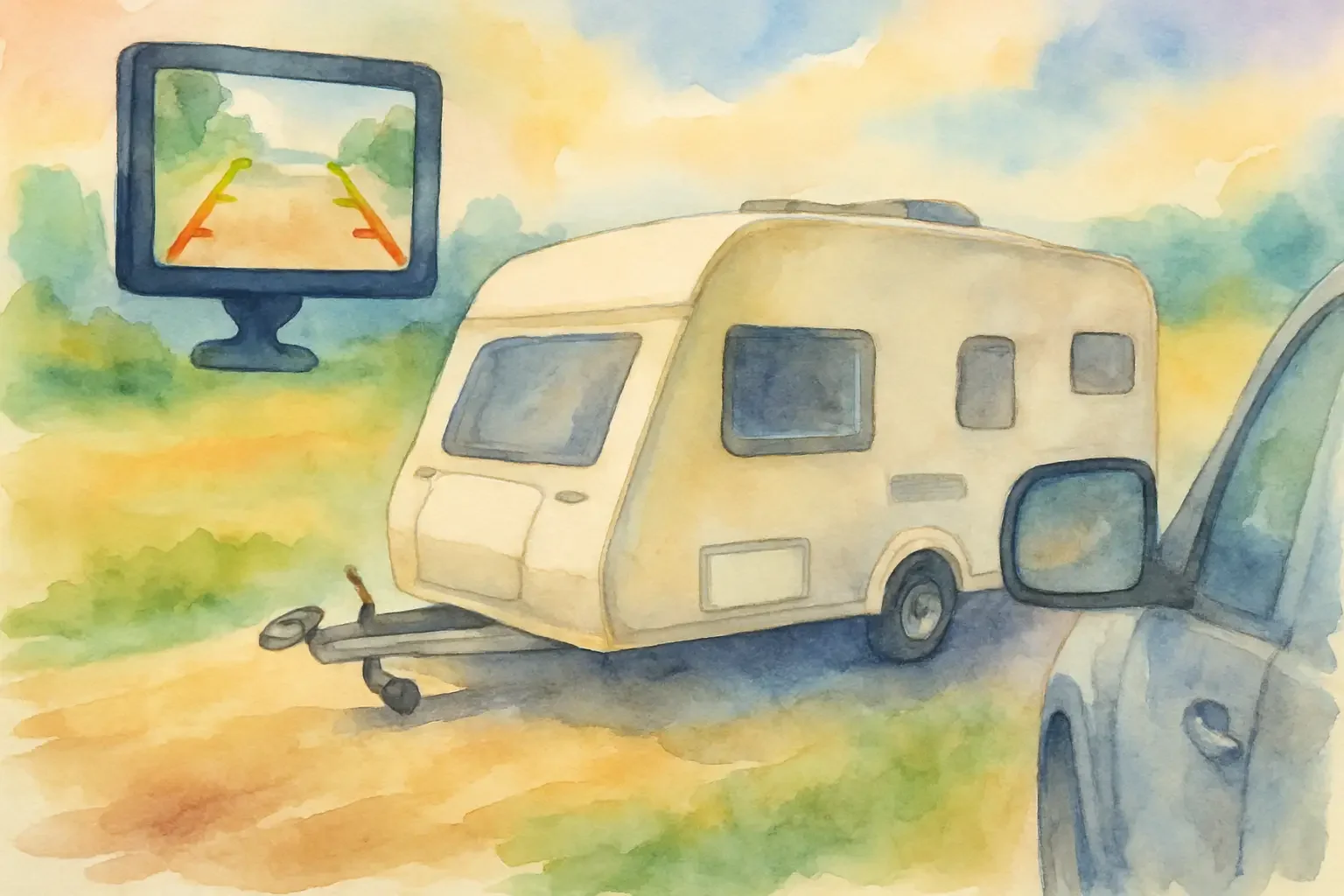
Best caravan reversing camera kits in the UK
You can reverse perfectly well with mirrors and a decent spotter - right up until you can’t.
It’s rarely the dramatic moments that catch people out. It’s the low post hidden by a hedge, the bollard that only exists when your rear corner swings, or the helpful stranger who’s waving enthusiastically while standing in precisely the wrong place. A reversing camera doesn’t make you a better driver overnight, but it does lower the stress and reduce the number of "well, that was close" stories you tell over a brew.
This isn’t a hypey "must-have" gadget pitch. It’s a calm look at what actually matters when you’re buying the best caravan reversing camera kits UK caravanners tend to be happiest with - and what depends on your outfit, your pitch style, and your tolerance for fitting jobs.
What makes a reversing camera kit "best" for caravans?
A caravan kit isn’t quite the same purchase as a car reversing camera. You’re often dealing with a longer overall length, different power options, a rear wall that may or may not already have a camera prep plate, and a screen that needs to sit sensibly in the tow car without turning your dashboard into the flight deck of a budget airline.
The best kit is the one that gives you a clear, stable picture when it matters - at low speed, close to obstacles - and that doesn’t make you dread setting it up every trip. That generally comes down to five things: how it connects (wired or wireless), how it’s powered, the screen size and mounting, low-light performance, and whether the camera is positioned and angled for a caravan rather than a van.
Wired vs wireless - the trade-off nobody escapes
If you want maximum reliability, wired wins. It’s not glamorous, but a cable doesn’t care about interference, thick caravan walls, or that busy campsite with twelve other wireless systems doing their own thing. Wired kits are also more predictable in image quality and lag - and lag is what makes you over-correct and start that familiar left-right wobble.
Wireless can be excellent, and for many people it’s the sweet spot because it avoids running a video cable the full length of the caravan. The compromise is that wireless performance varies with distance, the type of transmitter, and where the signal has to travel. A short-bodied tourer and a modern tow car often behave nicely. A longer twin axle with a lot of "stuff" in the way can be more temperamental.
If you mostly reverse on open, quiet pitches and you want quick fitting without dismantling half the caravan, wireless is often good enough. If you reverse into tight storage bays, onto driveways with walls, or you simply don’t want to gamble with signal stability, wired is the calmer choice.
Power - where the kit gets its juice matters
Most caravan camera kits need 12V power at the camera end and power for the screen in the car.
For the camera, some people take power from the caravan’s reversing light circuit. That can work, but caravans don’t have a "reverse gear" feed in the same way as a motorhome, and not all setups provide a convenient, reliable trigger. Many kits are instead powered from the caravan’s 12V system so the camera can be on whenever you choose.
For the screen, you’re usually looking at a 12V accessory socket (or hardwiring if you’re keen). If your car’s socket turns off with the ignition, that’s fine for reversing. If you want the camera as a constant rear-view while towing, you’ll care about whether your socket stays live - and whether you really want a screen glowing away for three hours up the M6.
Screen size and placement - confidence without clutter
A 7-inch monitor is a common sweet spot in the UK. Big enough to read distance and see the edges of a pitch, not so big that it blocks the windscreen or becomes a distraction. 5-inch screens can be fine if you’re only using it for the last metre or two. 9-inch can be lovely, but you need somewhere sensible to put it.
Mounting matters as much as size. Suction mounts are convenient but can wobble on textured dashboards or in hot weather. A more fixed mount (dash pad or bracket) is less exciting to fit but tends to feel more "factory" once it’s done.
What to look for in the best caravan reversing camera kits UK buyers choose
A proper wide angle - but not fish-eye chaos
You want a wide field of view so you can see corners and obstacles, but some ultra-wide lenses distort distance so much that everything looks miles away until it’s suddenly not. If you can, choose a kit where the angle is designed for reversing rather than CCTV.
Night vision that helps, not a marketing sticker
Infrared LEDs can improve visibility, but the real-world usefulness depends on the sensor quality and how the camera handles glare from lights. If you arrive on site at dusk and rely on the camera to find the pitch marker, you’ll appreciate a better sensor far more than an impressive-sounding spec.
Weatherproofing and a sensible mounting position
A camera stuck low down will get road grime. A camera up high can be cleaner but might make judging distance trickier. Many caravanners mount near the top centre of the rear panel, angled down so you can see the bumper line or a reference point. The "best" position is the one that gives you repeatable cues.
A stable connection and low latency
This is the unsexy bit that separates a kit you trust from one you tolerate. If the image freezes or lags, you end up ignoring it and going back to mirrors - which rather defeats the point.
Kit types that work well on UK caravans
Rather than firing a random list of product names at you, it’s more useful to match kit style to the way you tour.
The "always-on while towing" rear-view kit
If you like the idea of seeing what’s behind the caravan on the move - not for lane changing bravado, just for awareness - you want a kit that can stay powered and stable for long periods. This is where wired kits shine, or high-quality digital wireless systems designed for vehicle use (not generic home transmitters).
This setup suits nervous first-timers, anyone towing in heavy traffic, and those who want to keep an eye on bikes or a rear box. It’s also handy for spotting a flapping cover before it becomes a roadside performance.
The "reversing only" kit for simple, low-faff fitting
If your main pain point is the final approach onto the pitch or driveway, a simpler wireless kit can be ideal. You power it, pair it, and use it for the last few minutes of each trip. You don’t need perfection at 60 mph. You need a clear view at walking pace.
This style is often the best value because you’re not paying for heavy-duty always-on performance you won’t use.
The pre-wired/prep-friendly kit
Some caravans come with a camera prep point or a bracket area intended for one. If yours does, it’s worth leaning into it. You’ll get a cleaner install and fewer worries about water ingress.
If you’re not sure whether your caravan is prepped, check the handbook and look for a blanking plate or labelled wiring near the rear. If that sentence alone made you sigh, that’s fair. It’s exactly the sort of small job that can turn into an afternoon.
Fitting - DIY is fine, but don’t turn it into a saga
If you’re comfortable running cables and sealing holes properly, fitting a wired kit isn’t beyond a careful DIYer. The key is patience and tidy routing. Most problems come from rushing, not from lacking special skills.
Wireless kits reduce the cabling but don’t eliminate it. You still need to mount the camera securely and power it properly. The worst-case scenario is a "temporary" cable that becomes permanent because it sort of works - until it catches on something or rubs through.
If you’d rather pay someone, that’s not a defeat. It’s just an honest assessment of how you want to spend your weekend.
Common myths (and the calmer reality)
A reversing camera won’t remove the need for a spotter. It helps, but it doesn’t give you 360-degree awareness, and it won’t always show the low corner you’re about to clip. Use it alongside mirrors and, when possible, a person you trust - ideally someone who understands that frantic arm-waving is not a recognised language.
Also, a camera won’t automatically make reversing easy if your main struggle is understanding the caravan’s pivot point. If your brain and your steering wheel still have a slightly frosty relationship, practise in a quiet car park first. Confidence comes from repetition, not from buying another screen.
So what should you actually buy?
If you want the safest bet and you’re happy with a more involved install, choose a wired caravan reversing camera kit with a 7-inch monitor, good low-light performance, and a mount you can live with long-term.
If you want quick wins and you mainly reverse at low speed onto pitches, a decent digital wireless kit with a stable signal and a sensibly sized screen is usually the best balance.
If you’re somewhere in the middle, prioritise connection stability and camera positioning over fancy features. Most caravanners don’t need recording, split screens, or a menu system worthy of a smart TV. They need a picture that appears every time and helps them place the van accurately.
If you want more confidence-building guides like this, they’re what we do at CaravanVlogger - practical, no-drama help for the bits of caravanning that feel weirdly high-stakes when you’re new.
A closing thought
A reversing camera is at its best when it makes you calmer, not cockier. Fit it, learn its quirks, and treat it as one more trustworthy cue - like mirrors, a slow approach, and the willingness to stop, get out, and look. That last one is still the most underrated upgrade you can buy.
What Does CaravanVlogger Use?
On our last two caravans we’ve had cameras professionally fitted by Trailervision UK in Peterborough. Although there are cheaper alternatives, their cameras are commercial grade so use higher quality compnents. They use camera systems by CAMOS. If you contact Trailervison UK for a camera system, they have given us a discount code for your to use. When ordering quote CV150 for a £150 discount.
Check Out The Other Guides
These three guides are designed to work together, not compete:
Towing Without the Panic → confidence on the road
Setup & Site Life – Without the Stress → calm arrival, living, and departure
Caravan Ownership – What Actually Matters → long-term clarity and confidence
Need clearer caravan answers?
TalkWrench is where caravan questions get calm, experience-based explanations — without the noise, arguments, or guesswork.