
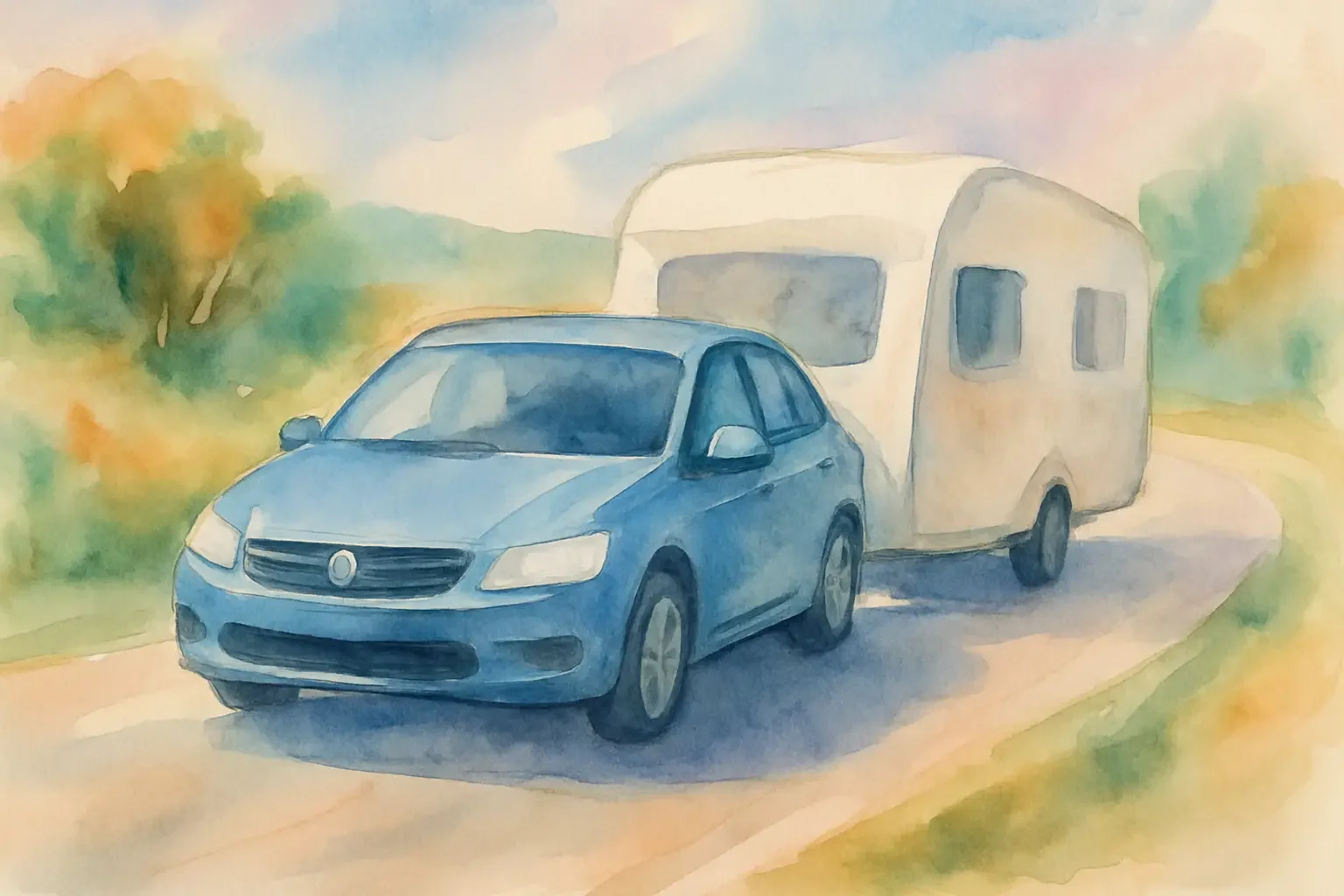
Car and Caravan Match: Get It Right, Calmly
Most people don’t fear towing - they fear finding out, three weeks after buying the caravan, that they’ve accidentally paired it with the wrong car.
That’s what “Car and Caravan Match” anxiety really is. Not the physics. Not the motorway. It’s the dread of hidden limits, confusing numbers, and well-meaning strangers insisting there’s only one correct ratio and everyone else is doomed.
So here’s the calm truth: matching a car to a caravan is absolutely doable with a bit of method. You’re not trying to “win” at towing. You’re trying to create a pairing that’s legal, stable, comfortable, and realistic for the way you actually travel.
What “Car and Caravan Match” really means
When people talk about a Car and Caravan Match, they usually mean three things rolled into one:
First, legality - are you within the car’s plated limits and within your licence entitlement?
Second, stability - is the outfit inherently well-balanced so it behaves sensibly at speed, in wind, and when lorries blast past?
Third, usability - can the car actually cope on hills, on wet grass, and on those awkward site exits without you turning into a clutch-scented cautionary tale?
The reason it feels messy is that these three don’t always align perfectly. You can have something that’s legal but unpleasant. Or stable but technically overweight. Or powerful enough but still a poor match because the car is light on its feet and the caravan is a big sail.
A good match isn’t about impressing anyone on a Facebook group. It’s about reducing the number of moments where you think, “I’m not enjoying this.”
Start with the numbers that actually matter
Let’s de-mystify the plates before we even think about ratios.
On the car you have limits like gross vehicle weight (sometimes called maximum authorised mass), gross train weight, and axle limits. On the caravan you’ve got MTPLM (maximum technically permissible laden mass) and MIRO (mass in running order).
If those acronyms already make you want a lie down, you’re not alone. If you want a calmer run-through of what the UK terms mean and how they relate, this is worth having open in another tab: Caravan weights in the UK, explained calmly.
For matching purposes, focus on these four ideas:
1) The caravan’s actual weight matters more than the brochure
Sales listings love quoting MIRO because it looks friendly. Real trips don’t.
Your caravan’s actual laden weight on travel day is what the car must pull, stop, and control. If you don’t have a recent weighbridge ticket, you’re guessing. Sometimes that guess is close. Sometimes it’s hilariously optimistic.
A practical approach is to assume you’ll be near MTPLM once you’ve added awning bits, food, chairs, levelling gear, and the mysterious collection of “useful things” that multiplies in every locker.
2) The car’s tow limit is not the whole story
Your car will have a maximum braked trailer weight (tow limit). That’s a hard cap. But it isn’t a guarantee of good manners.
Manufacturers set tow limits based on engineering, cooling, drivetrain durability, and performance requirements. It doesn’t automatically mean the outfit will feel composed in crosswinds or when you need to correct a wobble.
So yes, you must be under the tow limit - but being comfortably under it often improves the experience.
3) Gross Train Weight (GTW) is where people get caught out
GTW is the maximum combined weight of the fully loaded car plus the fully loaded caravan.
This matters because you can be under the caravan tow limit but still exceed the train weight once you load the car with passengers, dogs, bikes, and the sort of snacks that suggest you’re planning to survive winter.
If you’re matching, always ask: “If the car is realistically loaded for our trip, will the combined weight stay under GTW?”
4) Noseweight is a stability tool, not a trivia question
Noseweight is the downward force the caravan puts on the towball. Too little can encourage snaking. Too much can overload the car’s rear axle, upset steering and braking, and potentially exceed the car or towbar noseweight limit.
You’re working within two limits (car and towbar), and you’re aiming for a sensible figure that helps stability while keeping the car level and within axle load.
If your car is soft at the back, the “correct” noseweight can still make it sit like a dog dragging its bottom across the carpet. That’s not a moral failing - it’s a sign the car, the loading, or the caravan weight is pushing the comfort zone.
The famous ‘85% rule’ - useful, not holy
You can’t discuss matching without somebody shouting “85%” like it’s written in the Caravan Commandments.
The idea is simple: as a beginner, aim for the caravan’s actual laden weight to be no more than 85% of the car’s kerbweight. It’s a guideline that tends to produce a stable-feeling outfit.
Here’s the calmer take.
It’s not law. It’s not a binary safe/unsafe switch. It’s a conservative starting point that stacks the odds in your favour, especially if you’re new, nervous, or towing something tall and boxy.
There are sensible outfits above 85%. There are also some dreadful ones below it, particularly if the caravan is loaded badly, tyres are underinflated, or the driver is tense and over-correcting.
Use the ratio as a “how relaxed will this feel?” indicator. If you’re at 75-85% with sensible loading, the car will usually feel like it’s in charge. If you’re pushing towards 95-100%, you may still be legal, but you’ll likely notice more movement and you’ll need to be more disciplined with speed, loading, and keeping everything in top condition.
And if you’re already an experienced tower who enjoys methodical loading, runs at sensible speeds, and understands how the outfit reacts, you might choose a higher ratio knowingly. The key word is knowingly.
The match isn’t just weight - it’s also shape and wheelbase
A light caravan behind a long, heavy car can feel beautifully planted. A similarly weighted caravan behind a short, tall car can feel busier.
Two factors matter in real life:
Wheelbase and rear overhang
A longer wheelbase car tends to resist the caravan’s steering influence better. A big rear overhang (towball sitting far behind the rear axle) can give the caravan more leverage, which can make the outfit feel more sensitive.
You don’t need to get the tape measure out at the dealership. Just understand why some cars feel “grown up” when towing and others feel like they’re always having a discussion about it.
Caravan frontal area (how much it catches the wind)
A tall caravan is a sail. A wide caravan is a sail. Add gusty weather, exposed roads, and being overtaken by a lorry, and suddenly stability isn’t theoretical.
This is why a mid-sized SUV with a decent tow limit can still feel less settled than a heavier estate car of similar power. It’s not about being anti-SUV. It’s about centre of gravity, suspension control, and how the car deals with lateral forces.
Power, torque and gearing - what you actually feel on the road
A match that’s “legal on paper” but underpowered in practice is miserable. Not because you can’t move - because you spend the day stressing the car, the gearbox, and yourself.
Torque (pulling strength) at low revs is what makes towing feel easy. That’s why many modern diesels have historically been popular tow cars. But petrol and hybrid setups can tow very well too if the powertrain delivers torque sensibly and the cooling and gearing are up to it.
What does “up to it” look like?
It looks like pulling away on a mild incline without drama. It looks like joining a dual carriageway without needing a novel-length run-up. It looks like the gearbox not hunting constantly because the car is right on the edge.
If you’re choosing between two cars with similar tow limits, pick the one that will work less hard day-to-day. Less strain usually means less heat, less noise, and fewer “why does it smell hot?” moments at the services.
The hidden killer: payload in the car
Caravan matching conversations fixate on the caravan weight and then quietly ignore the car’s payload - how much weight you can put in the car before you hit its maximum.
This matters because the car is carrying:
passengers
luggage
possibly bikes or a roof box
hitch load (noseweight counts as weight on the car)
Run out of payload and you can exceed the car’s maximum weight or rear axle limit even if the caravan is fine. It’s surprisingly easy with a family car that has a modest payload rating.
This is also where “we’ll just put it in the boot” becomes less of a plan and more of a lifestyle.
A good match keeps enough payload in reserve that you’re not constantly playing Tetris with coats and kettle leads to stay legal.
Real-world matching: a calm step-by-step approach
If you want a method that doesn’t involve panic-buying a bigger car, do it in this order.
Step 1: Decide how you travel
Before you touch a calculator, be honest about your touring style.
Do you do long motorway runs? Hilly regions? Wet grass pitches in spring? Do you take bikes, an awning, and half of Dunelm? Do you travel as a couple or with extra passengers?
A lighter, smaller caravan can be a brilliant match for more cars, but only if it fits how you actually holiday. The same goes the other way - a bigger caravan might be worth it if comfort on site matters more than a perfectly serene tow.
Step 2: Assume realistic caravan weight
If you don’t have a weighbridge figure, assume you’ll be near MTPLM once loaded. If that feels uncomfortable, that’s a sign to reassess before you commit.
If you do have a weighbridge ticket, use that number. It’s the closest thing to truth in a world of brochure optimism.
Step 3: Check tow limit and GTW
Make sure the caravan’s realistic weight is under the car’s braked tow limit.
Then check GTW by estimating the car’s realistic loaded weight (people, fuel, luggage, noseweight). If the combined total is close to GTW, you’ve found a pressure point. It might still work, but you’ll need discipline and it may feel more strained.
Step 4: Look at the ratio as a comfort indicator
Work out the caravan-to-kerbweight ratio. If you’re new, aim to be around or under that 85% guideline if you can. If you’re above it, don’t automatically bin the idea - just recognise you’re moving into a zone where stability, loading, tyres, and speed discipline matter more.
Step 5: Check noseweight limits and axle loading
Confirm the car’s noseweight limit and the towbar’s limit, then plan to load the caravan to achieve a stable noseweight within those.
Then think about the rear axle. If your car’s rear axle is already busy with passengers and luggage, adding a hefty noseweight can push it over. This is where a weighbridge can save you from unknowingly running overweight.
Step 6: Sanity-check the “feel” factors
If you’re pairing a tall, wide caravan with a relatively light, short car, expect it to feel more active. If you’re pairing a big, heavy car with a smaller caravan, expect it to feel calmer.
This isn’t snobbery. It’s simply acknowledging that towing is partly physics and partly how relaxed your shoulders are after 90 minutes.
Common matching myths that cause unnecessary stress
The caravanning world loves a rule. Rules feel safe. The problem is that dodgy rules can make you anxious for no reason.
Myth 1: “If it’s under the tow limit, it’s fine”
It might be legal, but it might not be pleasant. Tow limit is necessary, not sufficient.
Myth 2: “You must have a 4x4”
No. Plenty of estate cars and larger saloons tow beautifully, and some crossovers are mediocre tow cars despite the marketing.
What you need is a car with appropriate limits, adequate payload, sensible suspension control, and enough powertrain headroom for your use.
Myth 3: “Bigger caravan tyres / fancy gadgets will fix a poor match”
Good tyres, correct pressures, a well-maintained hitch, and a stabiliser can improve stability. They can’t turn a fundamentally mismatched outfit into a relaxing tow.
Think of gadgets as polish, not structure.
Myth 4: “You can’t tow near 100% safely”
Some people do tow higher ratios safely, usually with experience, careful loading, and a suitable car. The trade-off is that the margin for error is smaller. If you’re a beginner, it’s sensible to stack the odds your way rather than prove a point.
Matching for beginners: confidence matters as much as maths
A pairing can be technically fine and still be the wrong match if it scares you every time the wind picks up.
If you’re new, you don’t just need legality. You need calm.
That often means choosing a car that’s heavier than you think you “need”, leaving more margin in tow limit and train weight, and not buying the largest caravan your budget can stretch to just because it has a nicer shower.
If you’re at the start of your towing journey and want the driving side to feel less intimidating, these two are worth a read: Towing a Caravan for Beginners: Calm, Confident Starts and Towing a Caravan: Confidence Tips That Work.
What a good match feels like (and what a bad one feels like)
People ask for a definitive “is this a good match?” score. Real life doesn’t do scores.
But you can recognise patterns.
A good match tends to feel like the car is doing the work and the caravan is simply coming along. Steering stays consistent. You don’t need constant micro-corrections. When a lorry passes, you feel a nudge, not a negotiation.
A poor match tends to feel twitchy. You notice the caravan’s presence in the steering. You avoid overtakes because the outfit feels unsettled when you change lanes. You grip the wheel harder than you meant to. You start driving like you’re trying not to spill tea in a moving cup.
Those feelings aren’t “in your head”. They’re useful feedback. If the outfit feels busy, it’s worth revisiting loading, tyre pressures, speed, noseweight, and whether the car is simply too light for that caravan.
Practical ways to improve a borderline match
Sometimes you already own the car and the caravan. Replacing either isn’t an option right now. Fair enough.
If your match is legal but feels a bit too lively, you can often make meaningful improvements by tightening the basics:
Loading is the big one. Heavy items low down and close to the axle. Avoid weight at the very rear. Keep side-to-side balance sensible. Don’t use the caravan as a loft.
Tyres come next. Correct tyre pressures on both car and caravan, tyres in good condition, and no ancient caravan tyres that look fine but were fitted during the London Olympics.
Noseweight is worth measuring properly with a gauge. Adjust loading to achieve a stable figure within limits, rather than guessing by how much the car squats.
Speed discipline matters more than people like to admit. A stable outfit at 55-60 can become a busy outfit at 65, especially in wind. You’re not being boring by slowing down - you’re reducing the forces that trigger instability.
Finally, give yourself permission to practise. A lot of “bad match” stories are really “first few trips” stories. You’re learning how your outfit reacts. That learning curve is normal.
When the correct answer really is “change something”
There are times when calm adjustments won’t overcome the fundamentals.
If you’re repeatedly close to the car’s GTW, or you can’t load the car for a normal trip without exceeding payload, that’s not a technique problem. It’s capacity.
If you’re consistently above the car’s tow limit or axle limits, that’s not “being careful”. That’s simply overweight.
If the outfit feels unstable despite correct loading, correct tyre pressures, sensible speed, and a healthy noseweight, treat that as data. Either the car is too light for the caravan, the caravan is too large in frontal area for the car, or something mechanical needs attention.
A matching decision isn’t a judgement on your driving. It’s just choosing the right tools for the job.
Buying decisions: match the car to the caravan, or the caravan to the car?
If you’re starting from scratch, matching is easier because you can choose the pairing.
If you already own the car, be honest about its real towing comfort zone and its payload. Then choose a caravan that fits inside it with margin. This often leads to happier touring because you’re not forcing the car to live at its limits.
If you already own the caravan, choose a car that gives you headroom in tow limit, train weight, and kerbweight ratio, and that has enough payload for your travel style. That’s usually a more relaxed long-term solution than trying to “make do” with something that’s technically allowed but constantly feels like hard work.
If you want a single place to work through the learning curve without the noise and the macho nonsense, CaravanVlogger is built around exactly that - practical, experience-led guidance that helps you make sensible decisions and enjoy the trip.
A closing thought to keep you sane
A Car and Caravan Match isn’t a badge of honour. It’s a set of trade-offs you choose on purpose.
If you aim for legality first, stability second, and comfort third, you’ll usually end up with an outfit that feels calm - and calm is what turns towing from something you endure into something you barely think about at all.
Where next?
If this page resonated, the next helpful reads are:
👉 What Actually Causes Snaking?
👉 Do I Need ATC or Sway Control?
Both continue the story calmly, without scare tactics.
Need clearer caravan answers?
TalkWrench is where caravan questions get calm, experience-based explanations — without the noise, arguments, or guesswork.