
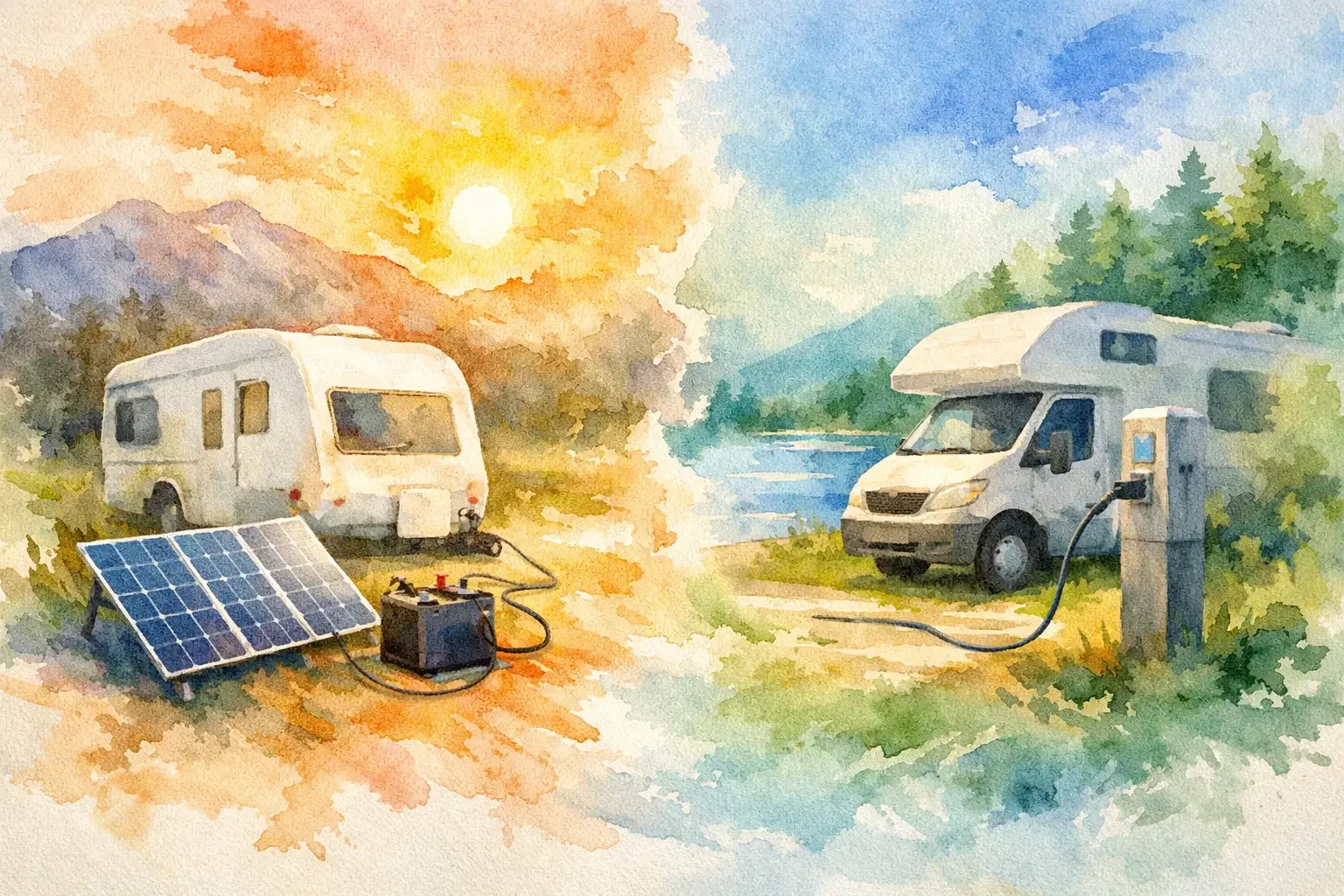
Caravan 12V vs 230V Explained
You do not need to become an electrician to understand your caravan's power. You just need to know which system does what, when it works, and why the answer is rarely as dramatic as some forum threads make out.
If you've ever wondered why some things still work when you're off-grid while others sit there like expensive ornaments, this is the bit that clears it up. In simple terms, a caravan usually has two electrical systems - 12V and 230V - and they do different jobs.
Caravan 12V vs 230V: what's the actual difference?
The short version is this: 12V is the low-voltage system that usually runs from the leisure battery, while 230V is the mains system you get when you're plugged into an electric hook-up.
That sounds straightforward, and it mostly is. The confusion starts because some appliances can work with both systems, some only work on one, and some behave differently depending on whether you're towing, on site, or parked up without hook-up.
Your 12V system is there for the essentials that need to keep going when you're not connected to mains power. Think interior lights, the water pump, the control panel, and often things like USB sockets, fans, motor movers and alarms. It is designed for caravan life as it really happens, not just for the tidy brochure version where everyone is permanently parked on a fully serviced pitch.
Your 230V system powers the sort of things you would expect to run from household mains. That usually includes standard plug sockets, the microwave, kettle if you bring one, battery charger, and often the heating or hot water on electric mode. If you've plugged the caravan into a bollard on site, you are bringing mains electricity into the van.
Neither system is "better" in a general sense. They are just different tools for different jobs.
What does the 12V system in a caravan power?
In most modern caravans, the 12V side handles more than newcomers expect. Lighting is the obvious one, especially now that LED lights use very little power compared with older fittings. The water pump is another common 12V item, which is why you can often still have running water off-grid even though you are not on mains electricity.
The control panel, extractor fans, USB charging points, TV booster, flushing system on some toilets, and security equipment often sit on the 12V side too. If your caravan has a motor mover, that is a heavy 12V user and one of the best examples of why a healthy leisure battery matters.
The fridge can muddy the waters. Many caravan fridges are three-way, meaning they can run on petrol, 230V, or 12V. But the 12V setting is usually there for towing, not for camping overnight from the battery. It draws a lot of current, so if you leave it trying to cool from the leisure battery alone, you will flatten the battery with impressive efficiency.
That is a good example of why "can run on 12V" and "should run on 12V all weekend" are not the same thing.
What does the 230V system power?
The 230V side is what makes a caravan feel more like home when you're on a hook-up pitch. Standard sockets only work when mains is connected. So does anything that relies on household-style AC power unless you have an inverter fitted, which is a separate conversation and one that can get expensive quickly.
The battery charger also runs from 230V, which means hook-up is not just powering appliances directly. It is often charging your leisure battery at the same time. That is why your 12V lights and pump usually feel much less stressful when you're plugged in - the battery is being supported rather than left to fend for itself.
Heating and hot water often have electric options that require 230V. Many caravans also allow petrol, electric, or a mix of both. That flexibility is useful because it lets you choose what suits the site, the season, and your wallet. If electric is included in the pitch fee, people tend to become surprisingly fond of electric heating.
Caravan 12V vs 230V on site, off-grid and when towing
This is where the systems make most sense. On a site with electric hook-up, you effectively have both systems available. The caravan receives 230V mains power, and the onboard charger keeps the 12V side going happily. Lights, pump and control panel work as normal, and your sockets and mains appliances do too.
Off-grid, or on a non-electric pitch, you lose the 230V side unless you have some sort of inverter or external power solution. The caravan then relies on 12V for its core functions, and petrol often takes over for heating, hot water and fridge operation. This is why many caravans are perfectly usable without hook-up, provided you understand what drains the battery and what doesn't.
While towing, the tow car can feed certain caravan 12V functions through the road lights and charging circuits. Depending on your car, caravan and electrics setup, the fridge may run on 12V while travelling and the leisure battery may receive some charge. But not every setup behaves identically, and modern smart alternators have added a bit of extra faff to what used to feel more predictable.
So if something does not charge as expected while towing, that does not automatically mean disaster. It may just mean your setup needs checking properly rather than diagnosed by guesswork and confidence.
Which system is safer?
Used properly, both are safe. Used badly, both can cause problems - just in different ways.
The 230V side carries the greater shock risk because it is mains electricity. That is why caravans have consumer units, RCD protection and proper hook-up procedures. Damaged hook-up leads, wet connectors and homemade electrical bodges are not signs of practical ingenuity. They are signs that future-you may end up having a very irritating day.
The 12V side is lower voltage, but it is not harmless in every sense. A poor connection, undersized cable, blown fuse, or overloaded circuit can still cause faults, heat and equipment damage. Batteries also deserve respect. They can produce explosive gases during charging in some conditions, they are heavy, and shorting the terminals is a splendid way to ruin your afternoon.
The sensible approach is gloriously unexciting: keep equipment maintained, use the right fuses, inspect cables, and do not treat electrics as a place to save £12 and improvise.
Do you need 12V if you always use electric hook-up?
Yes, because the 12V system still runs many core caravan functions even when you're on mains. Hook-up does not bypass the low-voltage side completely. It supports it through the charger or power supply.
That means your leisure battery still matters. If the battery is dead, failing, disconnected or in poor condition, some 12V functions may not behave properly even on hook-up, depending on your caravan's setup. In some vans, things continue fairly normally because the power supply carries the load. In others, the battery plays a more central role.
This is one of those areas where blanket advice is not terribly helpful. Your handbook matters, and so does knowing how your particular caravan behaves rather than what someone else's did in a Facebook comment section in 2017.
Choosing between 12V and 230V appliances
For most caravanners, this is less about ideology and more about how you tour. If you mostly stay on serviced or hook-up pitches, 230V appliances are convenient and familiar. A mains kettle, toaster or coffee machine can make life easier, provided you stay within the site's amperage limit and do not try to run everything at once like you're testing the grid.
If you enjoy off-grid nights, low-draw 12V kit becomes much more useful. USB charging, LED lighting and efficient 12V appliances help your battery last longer. Petrol often remains the star player for heating, hot water and refrigeration away from hook-up.
The practical question is not "which voltage is best?" It is "how do we actually use the caravan?" A couple doing club sites with hook-up most weekends will make different choices from someone who likes rallies, stopovers and quieter non-electric pitches.
The mistake that catches many beginners
The most common misunderstanding is assuming that if an appliance has power available somewhere in the caravan, it will work automatically. In reality, caravans are a system of systems. The battery, charger, consumer unit, control panel, car connection, petrol supply and appliance settings all have to line up.
That is why a fridge might work on petrol but not on electric, or lights might work while the sockets do not, or the pump might stop despite being plugged into hook-up. Usually there is a straightforward explanation once you know which side of the electrical system you are looking at.
If you are learning, keep it simple. Work out what in your caravan uses 12V, what uses 230V, and what can switch between energy sources. Once you understand that, a lot of caravan electrics stops feeling mysterious and starts feeling manageable.
If you want more calm, experience-led help with caravan basics, CaravanVlogger has plenty of guidance that cuts through the noise without pretending there is only one right way to do things.
The aim is not to become obsessed with volts and switches. It is to know enough that when something does not work, you can think clearly, check the obvious things first, and get on with enjoying the trip.
Need clearer caravan answers?
TalkWrench is where caravan questions get calm, experience-based explanations — without the noise, arguments, or guesswork.