
Caravan Alarm vs Tracker UK - Which Matters Most?
If you've found yourself comparing a siren-on-wheels with a hidden little box that quietly reports your caravan's location, you're not overthinking it. The caravan alarm vs tracker UK question comes up for good reason - both are sold as security essentials, both can add cost, and neither is magic. If only security shopping came with a kettle and a lie down.
The sensible answer is that alarms and trackers do different jobs. One tries to put a thief off or draw attention. The other helps you find the caravan again if the worst happens. That sounds simple enough, but where people get tangled is assuming one can fully replace the other. Sometimes it can. Often it can't. It depends on how you store the caravan, how often you use it, what your insurer expects, and how much risk you are trying to reduce rather than merely feel better about.
Caravan alarm vs tracker UK - what is the actual difference?
A caravan alarm is there to detect interference. That might be a door opening, movement inside, a tilt sensor reacting to the caravan being hitched, or a shock sensor picking up tampering. Its main strength is immediate deterrence. A loud alarm can make somebody think twice, especially on a storage site, on a driveway where neighbours might notice, or on a campsite where attention is the last thing a thief wants.
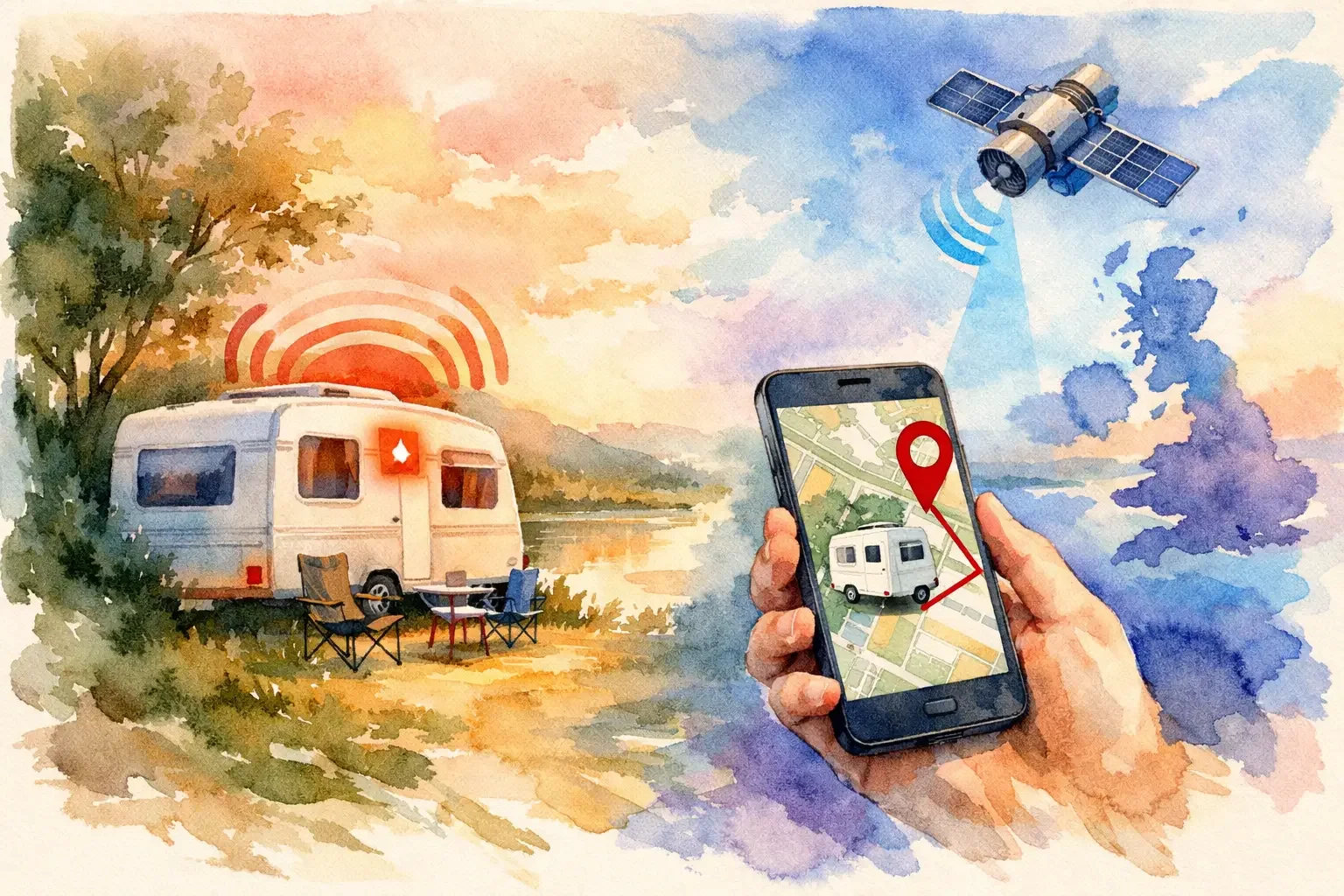
A tracker does something quite different. It is designed to report the caravan's location, usually through GPS and a mobile data connection. Some trackers alert you if the caravan moves unexpectedly. Some are monitored. Some are basic self-managed units. Their strength is recovery, not prevention.
That's the core of it. Alarms try to stop the theft happening. Trackers try to improve the odds of getting the caravan back. If you're expecting an alarm to recover a stolen caravan or a tracker to scare somebody away at the point of theft, you're asking the wrong bit of kit to do the other's job.
Why this isn't really an either-or question
Plenty of UK caravanners ask whether they need an alarm or a tracker, but the more useful question is what weak point you're trying to cover.
If your caravan lives on a quiet driveway, an alarm may have real value because noise and attention can work in your favour. If it sits on a remote storage compound where nobody is close enough to hear much of anything, the alarm may still be useful, but less decisive. In that case a tracker can start to look more worthwhile, especially if the site is large and caravans can be moved quickly.
If you own a newer or higher-value caravan, recovery matters more because replacement is expensive, lead times can be miserable, and insurance claims are rarely anyone's idea of a cheerful afternoon. A tracker can be the difference between a total loss and a very awkward phone call followed by a decent recovery result.
That said, some owners overbuy security tech and underthink the basics. A good hitchlock, wheel clamp, secure storage and simple habits often do more practical work than adding gadgets for the sake of it. Security is layered. Not glamorous, but then neither is watching your caravan disappear on CCTV.
When a caravan alarm makes most sense
An alarm tends to make sense when visible deterrence matters. If a thief wants an easy target, anything that adds noise, time or uncertainty helps. This is particularly true for caravans kept at home, where neighbours, passing traffic or even you inside the house could hear an alarm trigger.
It also suits people who want immediate alerts to interference while away on site. If someone opens a door or shifts the caravan unexpectedly, an alarm can tell you before the van has gone anywhere. For some owners, that reassurance is worth a lot, provided they understand its limits.
The limits are fairly obvious once you say them out loud. People ignore alarms. Some thieves work quickly. Some storage areas are too remote for a siren to matter much. And a badly adjusted alarm that keeps false-triggering soon becomes the electronic equivalent of the boy who cried wolf.
So yes, alarms are useful. No, they are not a forcefield.
The main strengths of alarms
Alarms are usually cheaper than a quality monitored tracker. They can deter casual theft attempts. They may also satisfy insurance requirements on some policies, though you need to check your own wording rather than rely on what somebody on a forum heard from their cousin's mate.
They also make sense for caravanners who want obvious, active security without ongoing subscription costs. Buy it, fit it properly, maintain it, and it gets on with the job.
The main drawbacks of alarms
Their effect depends heavily on context. If nobody hears it, the deterrent value drops. If it's too sensitive, you'll annoy yourself and everyone else. If it's not sensitive enough, it can miss the sort of movement you actually care about.
And once the caravan has gone, the alarm has done all it can do.
When a tracker is the better investment
A tracker starts to earn its keep when recovery is your priority. If your caravan is valuable, stored off-site, or left unattended for long periods, knowing where it is can matter far more than making a noise after the event. Some systems send movement alerts straight to your mobile phone. Others include professional monitoring, which can be a genuine advantage if something happens overnight or while you're away and not checking messages.
Trackers can also be important for insurance. Some insurers want an approved tracker for certain caravan values or specific theft-risk categories. If that's the case, the decision is partly made for you. Not glamorous, but practical.
The catch is that trackers are not all equal. A cheap self-fit unit with poor battery life and patchy signal is not the same thing as a properly installed, monitored system. Hidden location matters. Backup power matters. The quality of the alert system matters. And, rather inconveniently, the monthly or annual subscription matters too.
The main strengths of trackers
A tracker gives you a chance of recovery. That's the big one. It can also provide alerts if the caravan is moved without permission, which may give you a head start. For owners storing caravans in places where an alarm would attract little useful attention, that can be more valuable than noise.
A good tracker may also support insurance acceptance or lower premiums, although you should never buy one on the promise of savings alone. Insurance logic can be mysterious at the best of times.
The main drawbacks of trackers
Trackers do not physically stop theft. If the caravan is moved, the tracker helps afterwards. They also bring ongoing cost if they require monitoring or data service. Some owners are happy with that. Others understandably resent paying a subscription for the privilege of sleeping slightly better.
There is also the issue of complacency. A tracker is excellent backup, but it should not become an excuse to skip physical security.
Alarm, tracker, or both?
For many UK owners, the best answer in the caravan alarm vs tracker UK debate is both - but only if the caravan's value, storage situation and insurance requirements justify it.
If you're working to a budget, think in this order. First, cover the basics with good physical security and sensible storage. Second, choose the device that addresses your biggest gap. If your main concern is someone tampering with the caravan at home or on site, an alarm may be the better first buy. If your bigger worry is organised theft from storage or the financial pain of losing a high-value caravan, a tracker may be more useful.
For lower-value caravans or very occasional use, an alarm on its own can be perfectly reasonable. For premium caravans, year-round storage, or insurance-driven setups, a tracker often becomes harder to argue against. And if your insurer requires one, that settles the debate more quickly than any blog article can.
What UK caravanners should check before buying
Before spending anything, check your insurance policy wording. Not what a comparison site once implied, not what a dealership casually mentioned, and not what somebody confidently typed in all caps online. Look at the actual requirements for alarms, trackers, approved devices and storage conditions.
Then think about installation and ownership costs. A cheaper system that is poorly fitted or awkward to maintain is not a bargain. Battery backup, mobile signal performance, notification reliability and ease of use matter more than marketing language.
It also helps to be honest about how you tour. If you regularly leave the caravan in storage for weeks, your needs are different from someone who keeps it on the drive and uses it every fortnight. Security should fit your real life, not an imaginary version where you are both more organised and more adventurous.
At CaravanVlogger, we're generally in favour of taking the heat out of decisions like this. You do not need every gadget. You do need to understand what each one is actually for.
If you're still undecided, buy the security that covers your most likely problem first, not the one with the loudest sales pitch. Confidence usually comes from matching the right tool to the real risk - and that makes for a much calmer cup of tea.
👉 Most caravanning advice is either overcomplicated… or just wrong.
Join the CaravanVlogger newsletter for:
✔ Real-world towing advice
✔ Setup tips that actually matter
✔ The stuff no one explains properly