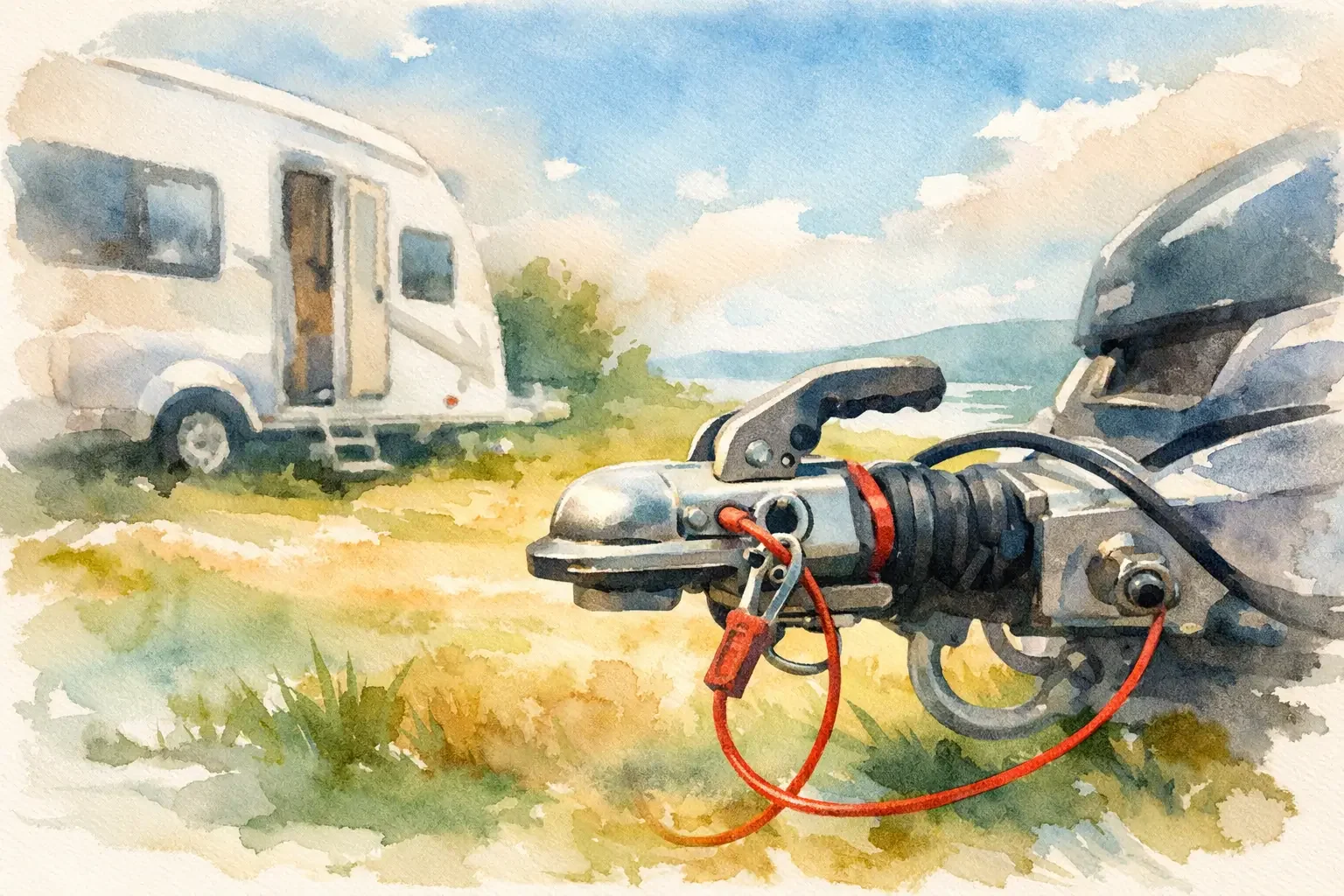
Caravan Breakaway Cable Fitting UK
If you have ever stood at the towball with a breakaway cable in one hand and three bits of conflicting advice rattling around your head, you are not alone. Caravan breakaway cable fitting UK questions come up so often because the cable looks simple, yet people are regularly told there is only one acceptable method, usually in the sort of tone that suggests the caravan may immediately launch itself into a hedge if you get it wrong.
Let us lower the drama a bit. The breakaway cable matters. It is a safety device, not a decorative extra. But fitting it properly is mostly about understanding what the cable is meant to do, what your towbar actually provides, and avoiding a couple of very common mistakes.
What the breakaway cable is actually for
A caravan breakaway cable is designed to apply the caravan's handbrake if the caravan becomes detached from the tow vehicle. That is its job. Not to look tidy, not to satisfy a particularly animated person on a forum, and not to be wrapped around anything convenient because it was raining and your tea was getting cold.
If the coupling failed or the caravan became separated from the towball, the cable should pull tight and operate the caravan brake before the cable itself gives way. That helps bring the caravan to a halt rather than letting it continue its own holiday plans down the carriageway.
That purpose matters because it explains why the fitting method matters too. The cable must be attached in a way that allows it to pull straight enough, become taut at the right moment, and stay attached to the tow vehicle long enough to do its job.
Caravan breakaway cable fitting UK - the basic rule
In the UK, the preferred method is to attach the breakaway cable to a designated attachment point on the towbar if one is provided by the towbar manufacturer. Many modern towbars have a specific eyelet, loop or hole for exactly this purpose.
If your towbar has that dedicated point, use it. That is the neatest and usually the correct approach. It is what the fitting point is there for, and it avoids the cable riding awkwardly on the towball neck or snagging where it should not.
If there is no dedicated attachment point, the cable may be looped around the neck of the towball and clipped back onto itself, but only if the towbar manufacturer permits that method and the shape of the towball mount allows it to sit securely. This is the bit where blanket statements start to fall apart. Some setups suit that method. Some do not. It depends on the hardware in front of you, not on who shouts loudest online.
How to check what your towbar allows
The sensible place to start is with the towbar documentation. If you have the handbook or fitting instructions, check whether there is a dedicated breakaway cable attachment point and whether looping around the towball neck is acceptable if no point exists.
If the paperwork has long since vanished into the same black hole as the caravan's original radio manual, look closely at the towbar itself. A proper attachment point is usually obvious once you know to look for it. It may be a small steel loop, an eyelet plate, or a purpose-made hole near the towball mounting.
If you are unsure, ask the towbar manufacturer or a competent towbar fitter. This is one of those situations where a quick, specific answer beats ten opinions and a small argument. You do not need mystery. You need the right method for your actual equipment.
The most common fitting mistakes
The first common mistake is clipping the cable onto a random part of the towbar assembly that was never designed for it. Just because something is metal does not mean it is the right place. Some edges can damage the cable. Some points may not hold as intended in a separation event.
The second is wrapping the cable around the towball itself rather than the neck or a proper attachment point. That can interfere with the coupling and is simply poor practice.
The third is leaving too much slack. A breakaway cable should have enough length to allow full articulation during normal towing, including tight turns, but not so much that it drags, hangs low, or delays activation unnecessarily if the caravan detaches.
The fourth is routing it badly. If the cable crosses in an odd way, catches on the jockey wheel handle, or sits where it can chafe, that is not a clever alternative method. It is just a problem waiting for a more inconvenient day.
Getting the cable length and routing right
A correctly fitted cable should run cleanly from the caravan hitch area to the tow vehicle attachment point without excessive twists or loops. When connected, it should not drag on the ground and should not be under tension in normal straight-line towing.
Check it on full lock in both directions. That part is often skipped because it feels a bit fussy, right up until someone hears a cable strain while manoeuvring on a pitch. Turn the car slowly and make sure the cable still has enough freedom without becoming taut too early.
At the same time, avoid leaving a great drooping curve of cable hanging below the A-frame. If it can scrape the road, catch on something, or flap about like it has lost the will to live, shorten the routing by fitting it correctly rather than improvising a knot. A knot is not engineering.
What if you have a detachable towball?
Detachable towbar systems can add a bit of confusion because the layout is sometimes less obvious than on a fixed flange towbar. Some have a clear dedicated attachment point built into the towbar structure. Others rely on a specified method in the manufacturer instructions.
The key thing is not to assume that every detachable system should be treated the same way. They vary. If yours has a designated point, use it. If it does not, check the approved method. This is another area where the right answer is sometimes slightly less exciting than internet folklore would prefer.
Wear, damage and when to replace it
A breakaway cable should be checked regularly. Look for kinks, broken strands, corrosion, crushed sections near the clip, or signs of fraying. If the clip is bent or not closing properly, that is enough reason to replace it. These are not expensive items, and this is not the place to squeeze a few extra months out of a tired part.
Also check that the cable has not been stretched or damaged by previous poor routing. A cable that has spent a season rubbing against sharp metal or dragging on the road has already told you it wants retirement.
If you buy a used caravan, inspect the cable early on rather than assuming the previous owner was meticulous. They may have been. They may also have stored levelling chocks in the oven. People are varied.
Does fitting method affect legal compliance?
Yes, potentially, because the breakaway cable is a required safety device on braked caravans and trailers. But this is where calm detail matters. The issue is not usually whether you chose Method A or Method B from a shouting match on social media. The issue is whether the cable is fitted in a way that is appropriate for the towbar, secure, and capable of operating the caravan brake if separation occurs.
So if your towbar has a dedicated attachment point, using that is the strongest position. If it does not, and the manufacturer allows looping around the towball neck, that may be acceptable. The legal and practical standard is not theatre. It is whether the setup is correct for the equipment and purpose.
A simple pre-tow check worth doing every time
Before setting off, glance at the breakaway cable as part of your normal hitch-up routine. Check that it is attached to the right point, not twisted around anything it should not be, not dragging, and not pulled tight.
This takes seconds and saves a surprising amount of second-guessing later. It also helps you spot the classic moment when the cable has been clipped in place but routed badly during a rushed departure. Most towing mistakes are not dramatic acts of incompetence. They are small oversights committed by perfectly normal people who want to get moving.
That is really the tone to keep with caravan safety in general. Be careful, yes. Be methodical, absolutely. But do not let simple jobs become mystical. If your breakaway cable is attached to the proper point for your towbar, routed cleanly, and in good condition, you are doing exactly what you should be doing - no heroics required.