
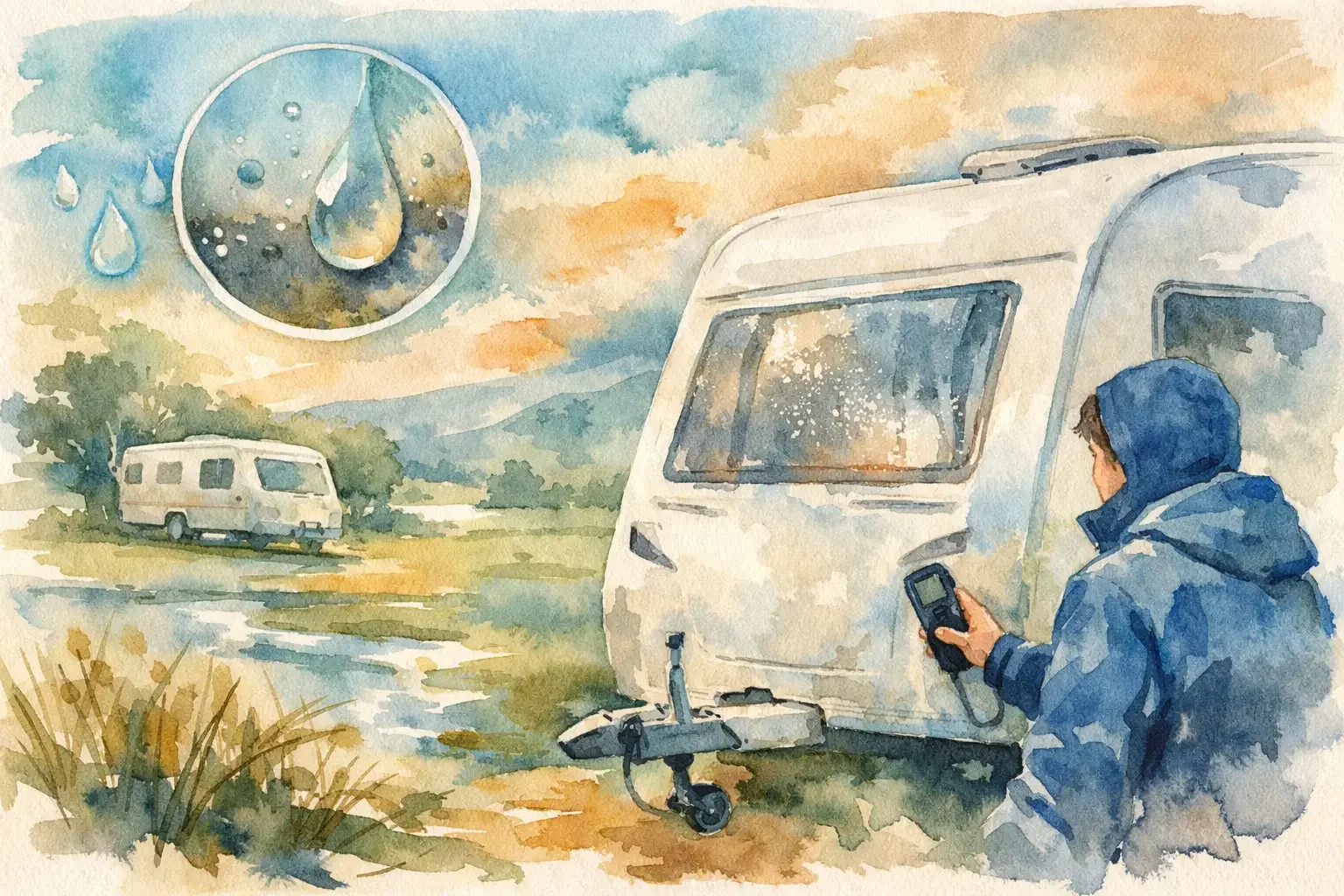
Caravan Damp Check Explained UK
A caravan can look spotless, smell fine and still be quietly collecting moisture where you cannot see it. That is why a proper caravan damp check explained UK style matters less as a box-ticking exercise and more as an early warning system. Not glamorous, no. But far cheaper than discovering a soft wall in March when you were meant to be off for your first weekend away.
Damp gets talked about in caravanning with two unhelpful extremes. One camp treats every slightly raised reading like the van is moments from dissolving into compost. The other shrugs and says they all get a bit damp. Neither view is much use when you are trying to make a sensible decision about buying, servicing or keeping your caravan in good order.
What a caravan damp check actually is
A caravan damp check is a systematic inspection of areas where water is most likely to get in, combined with moisture readings taken through the interior wallboards and around vulnerable joints. In the UK, it is usually carried out as part of a habitation service, pre-purchase inspection or specific investigation if an owner suspects a leak.
The key point is that a damp check is not just someone waving a meter about for five minutes and producing dramatic facial expressions. A good inspection also includes looking for staining, softness, sealant failure, mould, musty smells, window and rooflight issues, and any clues that water has been entering over time.
That matters because a meter reading on its own does not tell the whole story. It helps identify moisture levels in the structure, but the inspector still needs to interpret what those numbers mean in context.
Caravan damp check explained UK - how the readings work
Most damp checks use a moisture meter designed for caravan construction. The inspector presses the probes against interior wall surfaces in a pattern, usually focusing on corners, windows, rooflights, front and rear panels, locker openings, and around any fittings that pass through the body shell.
Readings are generally shown as a percentage. Different technicians and manufacturers may work with slightly different thresholds, but broadly speaking lower readings are what you want. A low single-figure reading is usually reassuring. Once readings start climbing into the teens, the result needs more attention. Higher readings can indicate active moisture ingress or material that has stayed damp for long enough to become a bigger problem.
This is where people often want one magic number that says good or bad. Annoyingly, caravans do not always cooperate like that. A reading of 15% in one spot might be less worrying than a reading of 12% repeated across a whole rear corner with staining and softness nearby. Equally, a slightly raised reading in winter after storage may need careful interpretation rather than immediate panic.
Where inspectors usually find problems
Caravans are full of joins, seals and openings, which is lovely for windows and doors but less ideal for keeping water out forever. Damp most often appears where movement, ageing sealant, impact damage or poor previous repairs have created a route for moisture.
Common trouble spots include front and rear corners, window surrounds, rooflights, awning rails, marker lights, grab handles, service hatches and locker doors. Floors can also be affected, especially near the doorway, washroom or around areas where water pipes and fittings live.
Older caravans are generally more vulnerable simply because sealants age and body joints have had more years to flex. That said, newer vans are not immune. A van being only a few years old is comforting, but not proof of anything. Water is not especially respectful of warranty optimism.
What happens during a proper damp inspection
If you book a professional damp inspection, expect more than a quick glance. The technician should inspect the inside carefully, take multiple readings throughout the caravan and note any higher areas. If it is part of a habitation service, they may also be checking gas, electrics, water systems and safety items, but the damp portion should still be methodical.
For a pre-purchase inspection, the process is especially useful because it gives you something more objective than "looks tidy to me". A seller may be perfectly honest and still not know there is moisture behind a panel. Equally, one raised reading does not automatically mean you should sprint away from the deal. It may mean you ask better questions, negotiate on price, or request further investigation before handing over your money.
A decent report should say where readings were taken, what figures were found and whether there are visible signs of damage. If all you get is "some damp present" with no detail, that is not much help.
What counts as a bad result
This is the bit people usually want reduced to traffic lights. Fair enough, but reality is a bit more fiddly.
A bad result is not just about a number. It is the combination of elevated moisture readings, the spread of those readings, whether the structure feels soft, whether there is visible damage, and whether the source of the water is obvious and repairable. A localised issue around a window with otherwise dry surroundings is one thing. Widespread readings across multiple panels, plus softness and staining, is a different conversation altogether.
The repair cost depends on access, extent of timber damage, whether internal furniture needs to come out, and how long the problem has been left. Minor resealing and monitoring might be manageable. Structural rebuilding is where the bill starts to become distinctly less charming.
This is why fear-based advice is not helpful. Damp is serious, yes. But not every elevated reading means the caravan is finished, and not every apparently cheap caravan with damp is a bargain either. Sometimes the smartest move is to walk away. Sometimes it is to negotiate hard and budget properly. Sometimes it is to reseal, dry and recheck.
Can you do your own checks?
Yes, to a point. A handheld moisture meter can help you spot obvious concerns, and regular owner checks are sensible. Press gently around corners and openings. Look for discolouration, rippling wallboard, cracking sealant, mould, musty odours and any softness underfoot. After heavy rain, inspect around windows, rooflights and lockers.
But home checks have limits. Cheap meters vary in quality, readings can be misread, and without experience it is easy to either miss a pattern or frighten yourself with a number that needs context. For routine ownership, owner checks are useful. For buying a caravan or confirming a suspected issue, a professional inspection is usually money well spent.
When to get a damp check done
If you are buying a used caravan, get one before purchase or make the sale conditional on inspection. That is the cleanest moment to avoid expensive regret. If you already own the caravan, an annual habitation service with damp testing is a sensible baseline, particularly if you want to maintain warranty conditions on newer vans.
It also makes sense to arrange a check if you notice a smell that was not there before, unexplained staining, soft wallboards, or repeated condensation in one area that seems out of proportion to normal winter use. Not every patch of moisture is a leak. Sometimes it is just condensation from storage or poor ventilation. But guessing is rarely the cheapest strategy.
Caravan damp check explained UK for buyers
For buyers, the biggest mistake is focusing so hard on layout, upholstery and whether the fridge still works that you ignore the structure. Damp is not as exciting as choosing your first porch awning, but it is far more expensive.
Ask when the last habitation service was done and whether damp readings were recorded. Ask if any resealing or body repairs have been carried out. If a seller becomes oddly vague when you mention moisture checks, pay attention. Honest sellers do not need to know every technical detail, but they should not become allergic to straightforward questions either.
If a caravan has minor historic damp that was repaired properly and verified as dry since, that is not automatically a deal-breaker. Evidence matters. Paperwork matters. Fresh readings matter. What you are trying to avoid is stepping into someone else's long-running problem with only optimism and a tube of sealant.
Check out the damp meters on Amazon
The calm, sensible approach
Damp checks matter because caravans live outside, move about, flex on the road and rely on seals that age. None of that is scandalous. It is just ownership. The useful mindset is neither panic nor denial, but routine attention.
A proper damp check gives you information, and information gives you options. You may hear all sorts in the wider caravanning world - that every old van is doomed, that dealers exaggerate, that meters are pointless, that one reading tells you everything. As usual, the truth sits somewhere less dramatic and more useful.
If you want to caravan with confidence, get the structure checked, understand what the readings actually mean, and make decisions based on evidence rather than folklore. It is not the most glamorous part of ownership, but neither is paying for rotten timber because everyone hoped for the best. And hope, useful as it is for British weather forecasts, is not a maintenance plan.
Need clearer caravan answers?
TalkWrench is where caravan questions get calm, experience-based explanations — without the noise, arguments, or guesswork.