
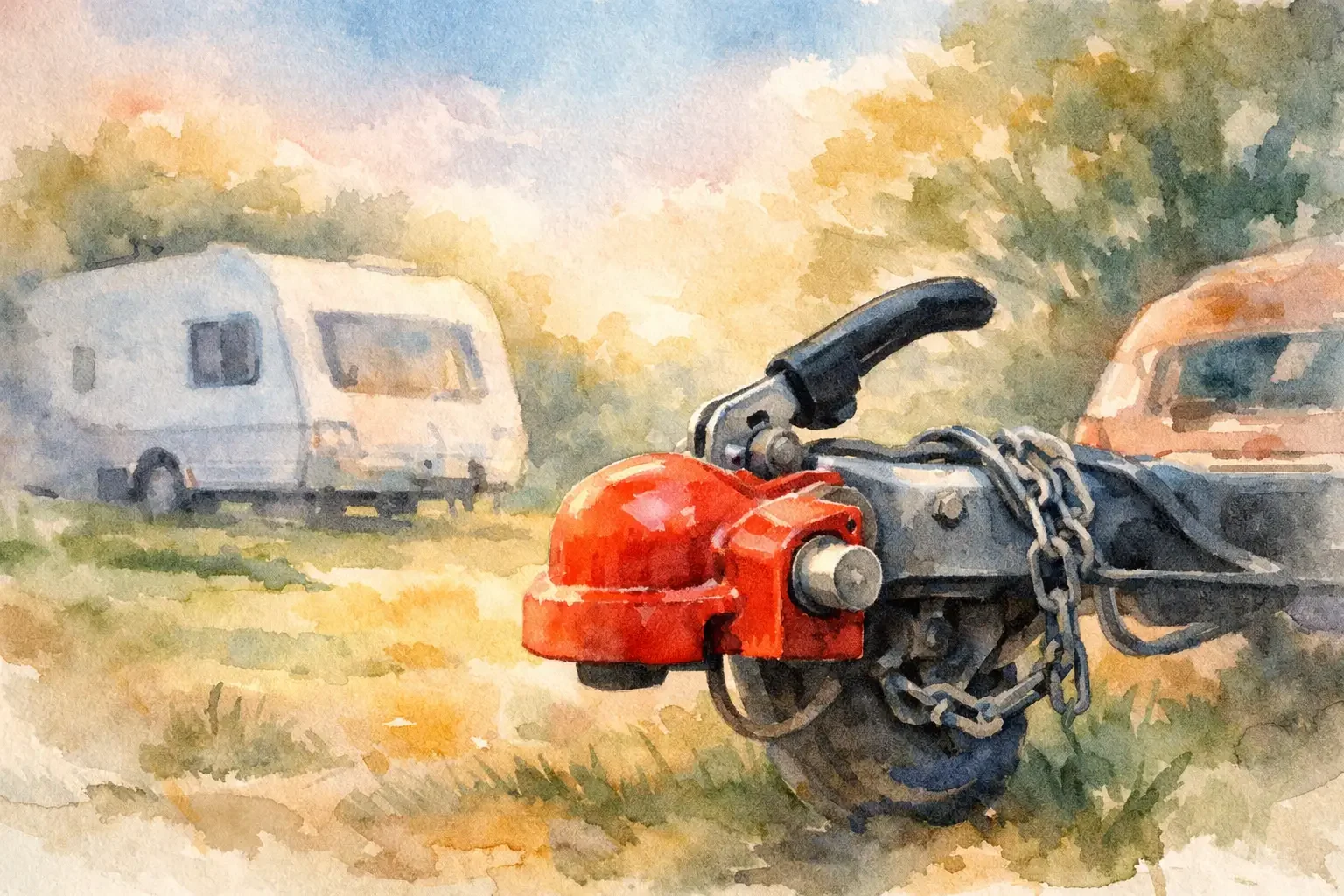
Caravan Hitch Lock Review: What Matters
A caravan hitch lock review can go one of two ways. It can turn into a parade of shiny bits of metal and dramatic claims about theft prevention, or it can answer the more useful question: what sort of lock makes sense for your caravan, your hitch and the way you actually store it? We are going with the second option, because most owners do not need more noise. They need a sensible way to make life harder for a thief without making life miserable for themselves.
The first thing worth saying is that no hitch lock is magic. If someone is determined, well-equipped and has time, a lock is one layer rather than a force field. That is not a reason to skip one. It is a reason to choose with a clear head. The best hitch lock is the one that fits properly, is awkward to defeat, and still gets used every single time.
Caravan hitch lock review - what you are really buying
When people compare hitch locks, they often focus on the chunkiness of the metal or how impressive the packaging looks. Fair enough - heavy kit feels reassuring. But in practice, you are buying a mix of deterrent, delay and convenience.
A visible, well-fitted lock can persuade an opportunist to move on. A better-designed one can slow down a more prepared thief. And if it is straightforward enough to fit in the rain, on a dark storage pitch, while your tea is going cold, you are far more likely to use it consistently. That last bit matters more than many reviews admit.
There is also a trade-off between universal locks and hitch-specific designs. Universal locks appeal because they promise flexibility, especially if you change caravans. The compromise is that some are more fiddly, sit less neatly, or leave more room for movement. Hitch-specific locks usually fit better and feel more integrated, but you need to be certain they suit your exact coupling.
The main types of caravan hitch lock
Most owners will come across three broad styles. The first is the compact lock that covers or blocks the hitch head when the caravan is unhitched. These can be practical for storage and tend to be less cumbersome. Their strength is convenience. Their weakness, sometimes, is that a cheap one can feel more symbolic than serious.
The second is the more substantial full-cover style, designed to enclose the hitch area more completely. These often inspire more confidence because they reduce access to the coupling and present a larger, more awkward object to attack. The downside is obvious enough - they are heavier, bulkier and not everyone enjoys wrestling with one on a frosty morning.
The third is the hitch-and-wheelclamp combination route, where the hitch lock is part of a wider security setup rather than the whole plan. For many caravanners, this is the sensible middle ground. A hitch lock on its own is useful. A hitch lock backed up by a decent wheelclamp, sensible storage and good habits is much stronger.
Fit matters more than bravado
This is where any honest caravan hitch lock review has to slow down a bit. The lock is only as good as the fit on the coupling it is meant to protect.
In the UK, many caravans use common hitch types, but "common" is not the same as "all the same". An Al-Ko stabiliser hitch may need a different lock arrangement from another design, and even within a brand there can be compatibility quirks depending on age and model. Buying on assumptions is a reliable way to end up with an expensive paperweight.
Good fit means the lock engages cleanly, does not rattle excessively, and cannot simply be wriggled into a weak position. It should also work with the caravan either coupled or uncoupled if that is how you plan to use it. Some locks are excellent in storage but awkward or impossible to use when hitched. That is not a fault if that is what they were designed for. It is only a problem when the buyer expected something else.
So before looking at brand names or price, check the exact hitch model on your caravan and read compatibility details carefully. Glamorous? Not especially. Cheaper than getting it wrong? Very much so.
What separates a decent lock from a disappointing one
Build quality still matters, of course. A hitch lock should feel solid, with decent finishing, minimal flex and a lock barrel that does not seem as though it came free with a cereal packet. If the keys feel crude or the mechanism feels vague from new, confidence does not improve with age.
Weather resistance is another point that gets less attention than it deserves. Caravans live outdoors. Locks that seize, corrode or become awkward after a wet winter quickly become unpopular. A lock that needs constant coaxing with lubricant and muttered language is less likely to be used properly. Smooth operation matters.
Then there is practicality. Can you fit it without getting into a wrestling match with the hitch? Is it manageable to carry and store? Does it come with a case or at least avoid smearing grease over everything nearby? Security gear that is theoretically excellent but irritating in normal use often ends up being skipped on quick stops or late arrivals. Human nature is unhelpfully consistent like that.
Independent approval can also be worth noting. Many owners look for recognised security standards or insurer-friendly products. That is reasonable, but it should not replace common sense. Approval is useful, not mystical. A certified lock that does not suit your hitch or your routine is still the wrong lock.
Price - where cheaper usually stops being clever
You do not have to buy the most expensive hitch lock on the shelf to get something decent. Equally, there is a point where very cheap security products start to feel optimistic.
Budget locks can be acceptable for lower-risk situations or as an extra visual deterrent, but they often show their limits in materials, fit and lock quality. Mid-range options are usually where value starts to make sense for most owners. You tend to get better engineering, smoother mechanisms and more reliable compatibility.
Premium locks can be worth it if they offer a genuinely better fit for your hitch, stronger construction or recognised testing standards that matter to your storage or insurance situation. But expensive does not always mean better in a practical sense. Sometimes you are paying for branding, and caravanners have enough costs already without funding unnecessary drama in polished packaging.
Who should buy what?
If you are a newer owner and want the least stressful option, a hitch-specific lock from a reputable maker is often the safest bet. It removes guesswork and tends to be easier to live with. You may pay a bit more, but you gain confidence, which is usually worth it.
If you store your caravan in a secure compound and want an extra layer rather than your entire security plan, a good mid-range lock may be perfectly sensible. If your caravan spends time on a driveway or in a more exposed location, it is worth leaning towards stronger, more substantial options and pairing them with other visible deterrents.
If you change caravans frequently, a universal lock can make sense, but only if it fits your current van properly and you accept the compromise. Flexibility is handy. Sloppy fit is not.
Common mistakes owners make
The biggest mistake is buying before checking hitch compatibility. The second is choosing purely on weight, as though heavier automatically means better. Weight can suggest substance, but design matters just as much.
Another common issue is forgetting the day-to-day reality. A lock that is awkward to align, filthy to handle or unpleasantly heavy may look excellent in a product photo and then stay in the front locker because you cannot face the faff. Security that lives in the locker is mostly decorative.
Owners also sometimes treat the hitch lock as the whole answer. It is not. Good habits still count - sensible storage, removing valuables, using more than one visible deterrent, and not advertising when the caravan is sitting unattended for weeks.
A sensible verdict
So what is the verdict in this caravan hitch lock review? Not that one lock is perfect and all others are rubbish. That would make life simpler, but not more truthful. The right choice depends on your hitch type, where the caravan is kept, and how willing you are to deal with a larger, heavier lock in normal use.
For most UK caravanners, the sweet spot is a well-made, properly compatible lock that is secure enough to be taken seriously and practical enough to be used without grumbling every time. The best review question is not "Which one looks toughest?" It is "Which one will I actually fit, every single time, without excuses?"
That may sound less dramatic than some security marketing, but caravanning usually gets better when you swap drama for judgement. If a lock helps you leave the van with one less nagging worry and does not become a nuisance in the process, it is doing the job rather well.
What Lock Do I Use?
I’ve used the Alko Premium Hitch Lock for several years. It’s easy to put on and take off. You can leave this lock one whilst towing, although I never have.
👉 Most caravanning advice is either overcomplicated… or just wrong.
Join the CaravanVlogger newsletter for:
✔ Real-world towing advice
✔ Setup tips that actually matter
✔ The stuff no one explains properly