
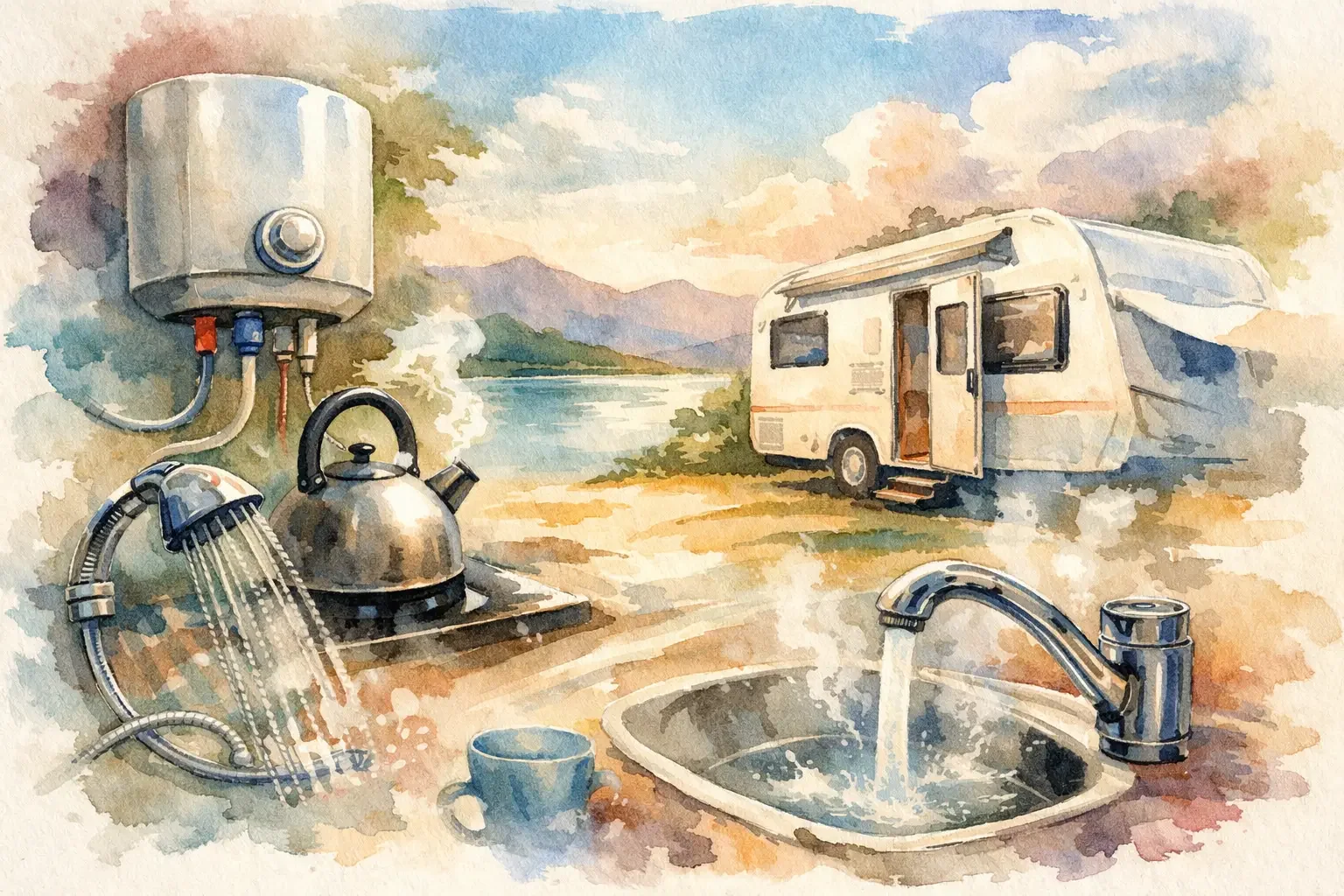
Caravan Hot Water Basics Made Simple
Nothing makes a new caravan owner feel quite as daft as standing at the sink waiting for hot water that never arrives. Usually, nothing is broken. It is just that caravan hot water is not quite as obvious as the brochure made it sound.
That is why Caravan Hot Water Basics matter. Once you understand the few moving parts involved, most of the mystery disappears. You do not need to become a touring plumber. You just need to know what system you have, what powers it, and why it sometimes seems to sulk.
What caravan hot water actually depends on
In most UK caravans, hot water comes from a separate water heater or a heating system with an integrated hot water function, often from brands such as Truma or Alde. The exact layout varies, but the principle is straightforward. Cold water enters the system, gets heated, and is then delivered to the taps and shower.
Where people get caught out is assuming hot water depends on one switch. It usually does not. It may depend on water being connected properly, the pump working, the heater being turned on in the control panel, and the right energy source being available. If one part of that chain is missing, you can wait all afternoon and achieve little beyond mild irritation.
If you are still getting your head around the full setup, it helps to read Caravan Water System Explained Simply alongside this. Hot water only makes sense when you understand the wider water system. You can also check the caravan water problem checker if you’re experiencing any issues with caravan water systems.
Gas, electric, or both?
This is the first thing to check, because your caravan may heat water on gas, on 230V electric, or on both depending on the model. Gas is useful off-grid and often heats water reasonably quickly. Electric works well on hook-up and saves your gas. Some systems let you use both together for faster heating.
This is also where people mix up 12V, 230V and gas controls. The control panel itself may run on 12V, but that does not mean the water is being heated by the leisure battery. In almost all cases, the battery is not there to provide luxury showers in a field. It is there to power the controls and other 12V systems. If that distinction is a bit foggy, Caravan 12V vs 230V Explained clears it up nicely.
How long should it take to get hot water?
Not instantly. This is a caravan, not a detached house with a combi boiler and opinions about underfloor heating.
Many systems take somewhere around 20 to 30 minutes to heat a tank of water, though that depends on the heater, the temperature setting and whether you are using gas, electric or both. Once heated, you may still need to run the tap briefly for the cold water sitting in the pipework to clear.
If you have hot water at one tap but not another, that points more towards pipe runs, mixer tap issues, or trapped air than a complete heater failure.
Common reasons you have no hot water
The boring answer is that the heater is often switched off, set wrongly, or not supplied with the energy source you think it has. That is not an insult. It is just caravanning.
A few common causes are worth checking calmly. The water container may be empty, the pump may not be primed, the system may need bleeding after storage, or the boiler may have been drained down and not refilled. On some systems, if the drain valve has opened, the heater tank will not fill properly at all.
Then there is the simple fact that many owners are using a new-to-them caravan and do not yet know which button does what. That is entirely normal. The handbook is not a sign of weakness.
The drain valve catches plenty of people out
If your caravan has been in storage or has had winter drain-down, the hot water tank may still be empty because the drain valve is open. On some systems this opens automatically if the temperature drops low enough, to help protect the heater.
If that valve stays open, water can keep draining away instead of filling the tank. The result is no hot water, odd pump behaviour, or water appearing where you did not expect it. Before blaming the heater, check that the system has actually been refilled correctly.
A quick word on safety and maintenance
Hot water systems are not especially dramatic when used properly, but they do deserve basic care. Do not fire up a system that should be full of water if it has been drained and not refilled. Do not ignore fault codes because a forum hero said his has done that for years. And if you smell gas, stop and investigate properly.
Regular drain-down in winter matters, especially in the UK where "it probably will not freeze" has ruined more than one weekend. Keeping the system clean, checking for leaks, and understanding your heater controls will save far more hassle than buying extra kit you do not need.
If your caravan also doubles as your heating classroom, Caravan Heating Explained Properly is worth a read, because heating and hot water are often more closely linked than people realise.
Caravan Hot Water Basics in real life
The practical version is this: know your heater model, know whether you are on gas or electric, make sure the tank is actually full, and allow enough time for the water to heat. Most hot water problems are setup issues, not disasters.
Once you understand that, the whole thing becomes much less intimidating. And that is true of a surprising amount of caravanning, really. Half the battle is learning which problems are serious, and which are just the caravan asking you to press the right button.
Need clearer caravan answers?
TalkWrench is where caravan questions get calm, experience-based explanations — without the noise, arguments, or guesswork.