
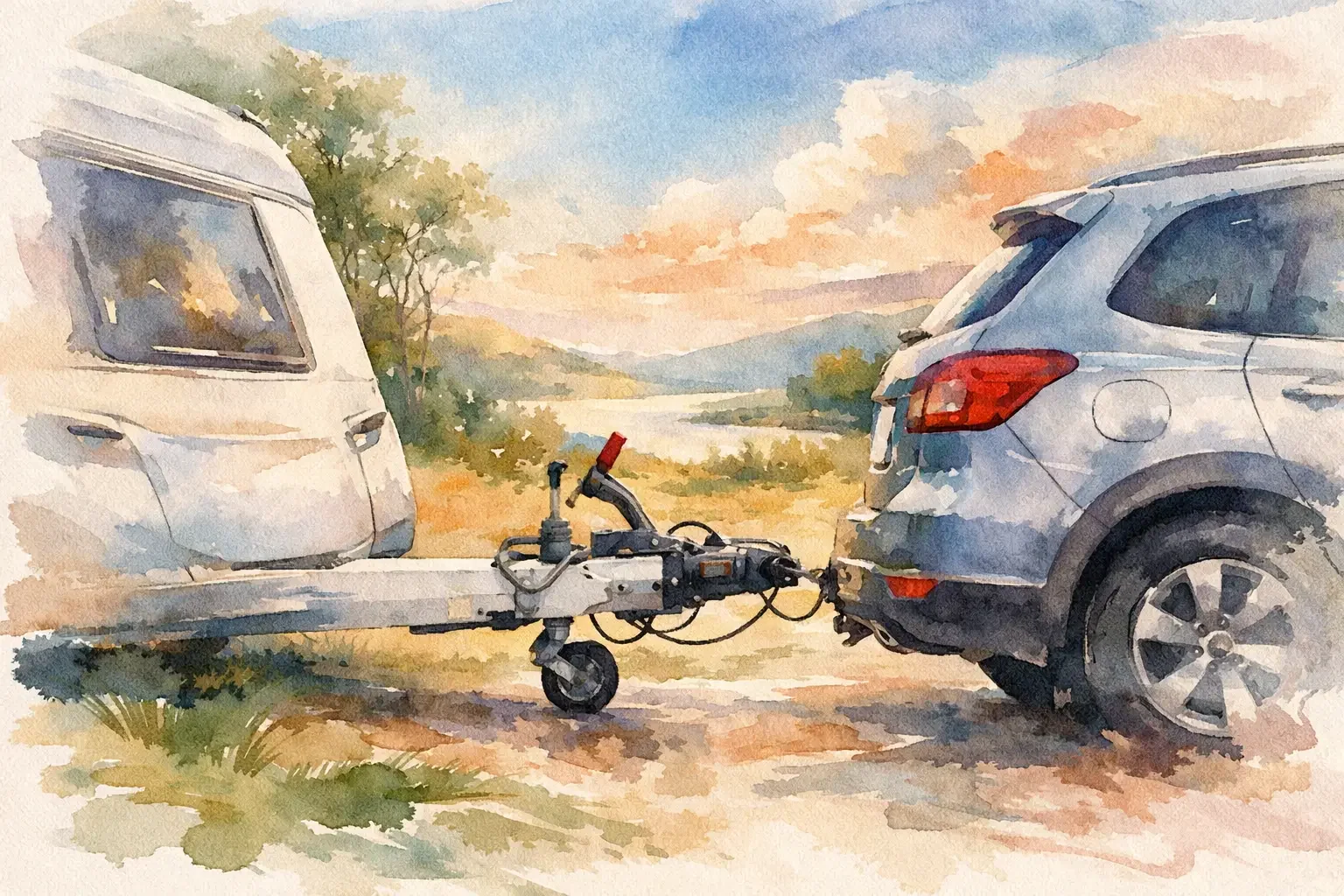
Caravan Noseweight Guide for Safer Towing
If your outfit feels twitchy at speed, or the back of the car seems to sag more than expected, noseweight is one of the first places to look. This caravan noseweight guide is here to make the subject less mystical and more useful, because there is a lot of noise around towing weights and not all of it helps when you are stood on the drive with a tape measure and a mild sense of regret.
Noseweight matters, but it is not a magic fix and it is not a badge of honour either. It is simply the downward force the caravan hitch applies to the towball. Get it wrong and towing can feel unsettled. Get it sensible and within limits, and the whole outfit usually behaves in a calmer, more predictable way.
What noseweight actually is
In plain terms, noseweight is the amount of weight pressing down vertically on the towball from the caravan coupling. It is affected by how the caravan is loaded, where heavy items are placed, how much petrol and water you are carrying, and sometimes by small things people forget, like tools stuffed into the front locker because there was a gap and it seemed convenient at the time.
A common misunderstanding is that more noseweight is always better. Not quite. Too little can contribute to instability, but too much can overload the car, the towbar or both. The aim is not to chase the biggest number possible. The aim is to stay within the lowest relevant limit while keeping the outfit stable.
That lowest limit is the key point. Your actual maximum permitted noseweight is whichever is lower out of the car limit, the towbar limit and the caravan hitch limit. If your car allows 90kg, your towbar 85kg and the hitch 100kg, then 85kg is the ceiling. It is not a negotiation.
Caravan noseweight guide - what number should you aim for?
This is where people often get dragged into arguments that sound terribly certain. In reality, there is some judgement involved.
Many caravanners aim for a noseweight somewhere close to the maximum permitted for their setup, because that often helps stability. Often is the important word there. It does not mean you should cram every heavy item into the front locker and call it engineering. A sensible target is usually near the legal limit without exceeding it, while still keeping the caravan load balanced and the car within its own payload and axle limits.
For some outfits, that might be around 70kg. For others, 80kg or 90kg may be fine. The right number depends on the specific car, towbar and caravan combination. If you are new to towing, it can help to think less about chasing a perfect figure and more about creating a stable, legal, well-balanced outfit.
And yes, stability is affected by more than noseweight. Tyre pressures, speed, loading behind the axle, suspension condition, wheel alignment and plain old crosswinds all get a vote.
How to find your noseweight limits
Start with the handbook for the tow car. Look for the maximum vertical load on the towball. Then check the towbar plate or paperwork, and finally the caravan hitch documentation if needed. Use the lowest figure.
Do not assume that because a bigger SUV looks like it could tow a small bungalow, its noseweight limit must be huge. Some cars have surprisingly modest limits. Equally, some caravans and hitches have their own restrictions that catch people out.
Also remember that noseweight counts as part of the car's payload. In other words, if the caravan is pressing 80kg onto the towball, that load is being carried by the car. It is not free weight that lives in a parallel universe.
How to measure caravan noseweight properly
The simplest way is with a proper noseweight gauge. There are spring gauges and more rigid calibrated types. Used correctly on level ground, they are straightforward and quick.
You can also use a bathroom scale arrangement designed for the purpose, provided it supports the hitch at the correct height and gives a stable reading. The hitch should be at roughly the same height it would sit on the car when coupled. Measuring it too high or too low can alter the result, sometimes enough to matter.
A few practical points help. Load the caravan as you would for travel. Put the petrol bottle where it will actually be, include the awning if you carry one, and do not measure an empty caravan if you never tow it empty. Chock the wheels, make sure the caravan is level side to side, and take more than one reading if the first seems odd.
If the number keeps changing, there is usually a reason. Uneven ground, the gauge not being upright, or the hitch moving as the jockey wheel shifts are common culprits. It is rarely paranormal activity.
Loading changes noseweight more than people think
Move a heavy item forwards and noseweight rises. Move it rearwards and noseweight drops. That sounds obvious, but the effect can be bigger than expected, especially with dense items like toolboxes, bottled drinks or a bag of levelling blocks that somehow now weighs the same as a small moon.
The old advice still holds up well - keep heavy items low and close to the axle where possible. That helps avoid creating a pendulum effect and usually makes the caravan feel more composed. Light items can go in overhead lockers and less critical spaces, but do not let the back washroom turn into a storage annex.
Rear loading deserves special caution. A bit of weight behind the axle can reduce noseweight quickly, which may sound useful if you are over the limit. Sometimes it is the practical answer, but it is also easy to overdo it and create a less stable outfit. If you need a major loading shuffle to get legal, it may be a sign you are simply carrying too much or carrying it in unhelpful places.
Common mistakes this caravan noseweight guide can help you avoid
One mistake is measuring once and assuming the answer never changes. It changes every time your load changes. Swap a steel awning frame for an inflatable awning, add a second petrol bottle, carry bikes, fill the boot differently - all of that can shift the balance.
Another is focusing only on the caravan. The car matters just as much. If the boot is packed to the roof with holiday optimism, and the rear seats are carrying passengers, dogs and enough snacks to outlast winter, the car's rear axle and payload can become the real limit before towing stability is even discussed.
There is also the myth that a stabiliser hitch fixes poor loading. It helps damp certain movements. It does not suspend the laws of physics because you clipped a clever bit of metal onto the towball.
Finally, do not confuse legal with pleasant. An outfit can be technically within limits and still feel poor on the road if the loading is awkward. Equally, a slightly lower noseweight than someone on a forum insists is essential may tow perfectly well if the whole setup is balanced and sensible.
What to do if your noseweight is too high or too low
If it is too high, move some weight rearwards but keep it low and not too far behind the axle. Sometimes shifting a toolbox, awning or canned-food collection to a position just over or slightly behind the axle is enough. If the front locker is heavily loaded, that is an obvious place to review.
If it is too low, bring some suitable weight forwards, again keeping it low down. Check that you have not loaded the rear washroom, under-bed storage at the back, or bike rack area with more than is sensible.
Make one change at a time and re-measure. Randomly redistributing half the caravan in one go tends to create confusion rather than insight.
Real-world judgement matters
This is the part that gets lost in some towing advice. There is no single loading pattern that suits every caravan, every car and every trip. A weekend away in summer is not the same as a fortnight touring in October with extra kit and heavier clothing. The best approach is repeatable rather than rigid.
Know your limits. Measure when your load changes. Keep heavy items low and near the axle. Aim for a healthy noseweight within the lowest permitted limit. Then pay attention to how the outfit feels on the road.
If towing feels nervous, do not just grip the wheel harder and hope for character building. Stop and reassess. A small loading change can make a surprising difference, and it is far cheaper than buying accessories in a panic because someone online said your setup is doomed.
If you want more practical towing help without the usual drama, CaravanVlogger has plenty of plain-English guidance for UK caravanners at https://caravanvlogger.co.uk.
The good news is that noseweight is one of the more manageable parts of towing. Once you understand what affects it, it stops being a dark art and becomes just another sensible pre-trip check - not glamorous, perhaps, but then neither is calling the breakdown service from a lay-by.
👉 Most caravanning advice is either overcomplicated… or just wrong.
Join the CaravanVlogger newsletter for:
✔ Real-world towing advice
✔ Setup tips that actually matter
✔ The stuff no one explains properly