
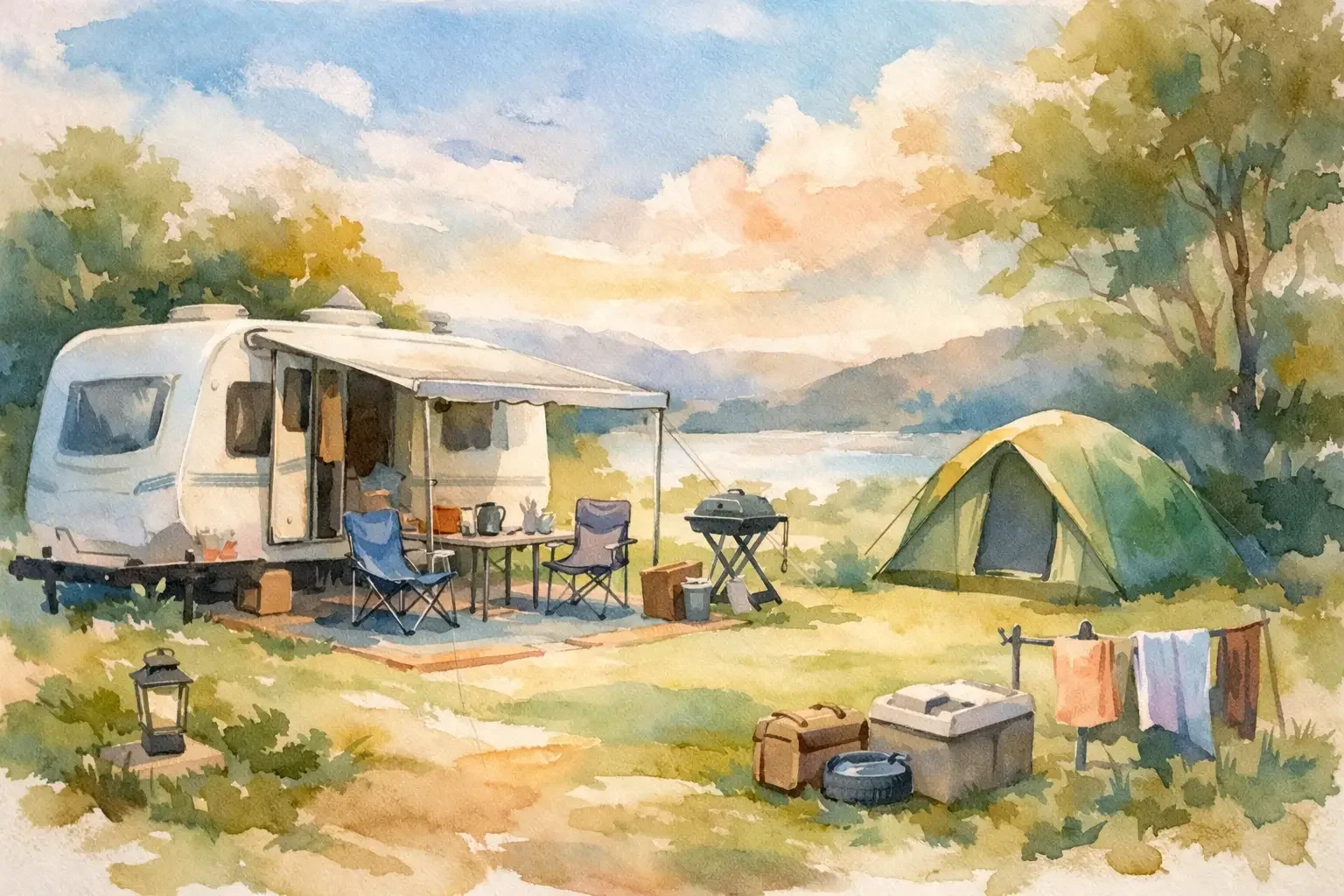
Caravan Pitch Setup Example Routine
You do not need a military-grade procedure every time you arrive on site, but you do need a routine. A good caravan pitch setup example routine is less about looking experienced and more about avoiding the daft little mistakes that happen when you are tired, it is raining, and someone is waiting to get past you with a motor mover remote in one hand and a kettle in the other.
The trick is to have an order that works often enough to become automatic, while still leaving room for pitch type, weather and site rules. There is no single holy method handed down on a laminated plaque. There is, however, a sensible sequence that makes setup calmer, safer and quicker.
A caravan pitch setup example routine that works
For most UK site arrivals, I would keep the routine simple. Stop, assess the pitch, position the caravan, level it side to side, unhitch, level front to back, secure it, then connect services and sort the inside. That is the broad shape. The detail matters because the detail is where people either gain confidence or start second-guessing themselves.
When you first pull up near the pitch, do not rush straight in because you feel watched. Everyone feels watched. In reality, most people are only half-looking while deciding what to have with their tea. Pause for a minute and check the basics. Which way do you want the door facing? Where is the electric hook-up bollard? Is the pitch reasonably level? Are there any obvious hazards such as a dip, soft ground, low branch or awkward drainage cover?
If the site has specific pitching rules, follow those first. Some want outfit positions a certain way for spacing or fire regulations. That is not the moment for creative interpretation.
Before you unhitch, get the caravan where you want it
If you are reversing with the tow car, get the caravan as close as you can to its final position before you start fiddling with anything else. If you use a motor mover, you may still want the car to do most of the heavy work before the final adjustment. Neither method is morally superior. The best one is the one you can do calmly and safely.
Once you are roughly in place, check side-to-side level before unhitching. If one side needs lifting, now is the time to use a levelling ramp. This is a common point of confusion for beginners because there is a temptation to unhitch first and sort it later. Usually, that just makes life harder.
If using a ramp, have someone guide you if possible, and agree clear signals before you start. Not a dramatic semaphore display, just something both of you understand. Go gently onto the ramp, stop when level, apply the car handbrake, then secure the caravan wheels with chocks if needed. On very level hardstanding you may not need much correction at all. On grass, things can be less exact, and that is fine.
Unhitching and front-to-back levelling
With the caravan side-to-side level and in roughly the right place, apply the caravan handbrake properly before unhitching. Then disconnect in a calm order - breakaway cable, electrics, jockey wheel down, hitch head released. If the jockey wheel is on soft ground, use a decent pad beneath it. Watching it sink slowly into wet grass is one of caravanning's less glamorous little traditions.
Once the car is moved clear, you can level front to back using the jockey wheel. This part is usually straightforward. A small spirit level, whether built in or portable, helps, but you do not need laboratory precision. The caravan does not need to be level to within a micron. It needs to be level enough for comfort, drainage and appliances that benefit from it.
Then lower the corner steadies. This is where it is worth repeating an old point because it still catches people out - steadies are for stabilising, not lifting or levelling. Wind them down until they are firm on the ground or pads, but do not use them as miniature jacks. Caravans dislike that sort of treatment.
Then connect services in a steady order
Once the caravan is stable, I would connect the electrics before fussing with chairs, awnings or whether the view is exactly right from the nearside window. Practical first, decorative later.
Plug the site hook-up lead into the caravan and bollard in the order recommended for your equipment and site practice, taking care that the cable is routed neatly and not stretched tight across a walkway. If your site uses metered electric or specific procedures, follow those. Then go inside and check that the power is working as expected.
Water depends on your setup. If you use an Aquaroll and pump arrangement, get that in place once the caravan is settled. If you are on a fully serviced pitch, connect the water carefully and check for leaks before you wander off feeling pleased with yourself. Waste is similar - set the container or drainage hose so it actually drains rather than creating a small but committed swamp under the van.
Petrol is the point where routines vary a little more. Some people will switch on immediately if they want hot water or heating; others will wait until they know they need it. Either is reasonable. What matters is that if you do turn on petrol, you do it deliberately and check that everything is behaving normally.
The inside setup is where comfort catches up with safety
After the outside is secure, go indoors and do a quick working check. Lights, sockets, fridge mode, water pump, toilet flush, and heating if needed. This does not need to become a formal inspection worthy of a clipboard. You are just confirming that the basic systems are doing what they should.
Then secure the interior for living rather than travel. Open blinds, put the kettle where it belongs, sort bedding, and move anything that shifted in transit. If you have arrived in poor weather, getting wet coats and shoes organised early makes the van feel civilised much faster. There is a strong morale benefit to not tripping over a heap of waterproofs every time you turn round.
This is also the point where experienced caravanners often look very efficient, but much of that is simply familiarity. They are not blessed with secret pitch wisdom. They just know where they keep things and what order reduces faffing.
Where this caravan pitch setup example routine changes
A caravan pitch setup example routine should be treated as a baseline, not a commandment. On a sharply sloping pitch, levelling may take more attention. On a very tight pitch, you might use the mover earlier in the process. On grass after heavy rain, you may think more carefully about wheel grip, jockey wheel support and whether you really want to shuffle the van about more than necessary.
Arriving late changes things too. If it is getting dark, simplify. Get the caravan safely positioned, stable, powered if needed, and comfortable enough for the evening. The awning can wait. The world will continue spinning if the outdoor mat is not perfectly aligned until morning.
Equally, if you are stopping for one night only, your routine may be deliberately lighter. Not every halt needs a full domestic establishment. There is a lot to be said for only setting up what you will actually use.
A few mistakes worth avoiding
Most setup problems are not dramatic. They are the little errors caused by doing things in the wrong order or hurrying because you feel under pressure. Forgetting to level side to side before unhitching is a common one. So is lowering steadies too early, or plugging in without checking cable routing.
Another is trying to do every job at once. Pick an order and stick to it. If a neighbour says hello halfway through, you are still allowed to finish what you were doing before discussing tyre pressures, ferry prices or whether anyone really needs an awning the size of a village hall.
If you are new to all this, practice helps more than more opinions. Even a dry run at storage or on your drive can make a big difference. That is one reason brands like CaravanVlogger focus so much on reducing noise around setup and towing. Confidence usually comes from repetition and understanding, not from being told off on the internet.
A good routine should leave you with enough brain space to enjoy arriving. If yours gets the caravan safely pitched, level, connected and comfortable without turning setup into a test of character, it is doing the job nicely.
Where to Go Next
You may also find these helpful:
Need clearer caravan answers?
TalkWrench is where caravan questions get calm, experience-based explanations — without the noise, arguments, or guesswork.