
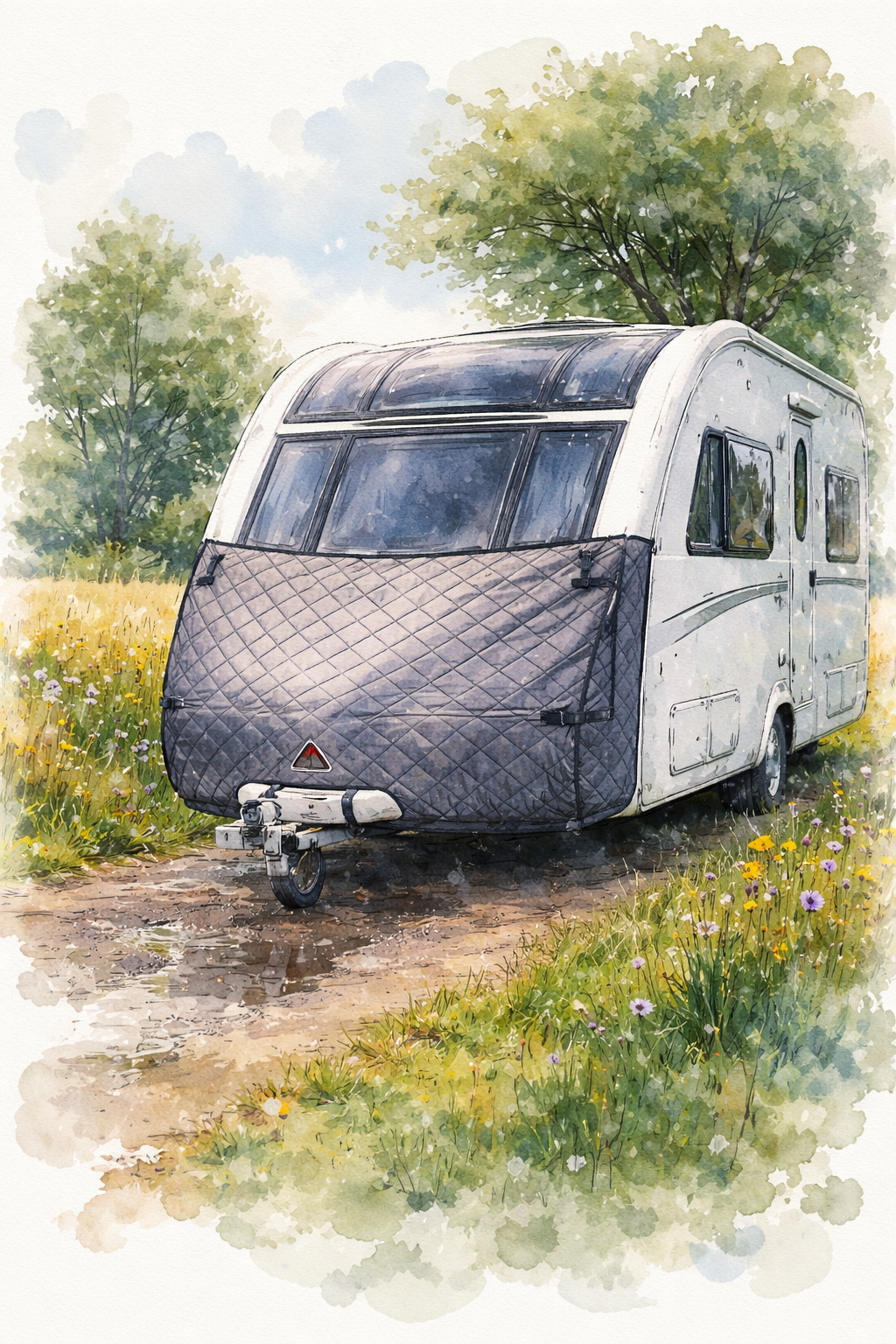
Caravan Towing Covers: Worth It or Waste?
You can tow thousands of miles without a towing cover and never lose sleep over it. Then one day you arrive, step round to the front panel, and find it looks like it has spent the journey sandblasted by every lorry on the M6.
That moment is usually when people start Googling Caravan Towing Covers - and promptly fall into a familiar caravanning trap: half the internet swears they are essential, the other half says they are pointless, and somebody, somewhere, insists your caravan will “delaminate” if you don’t buy the right one by Friday.
Let’s lower the temperature. A towing cover is neither magic armour nor guaranteed snake oil. It is a tool with clear strengths, a few genuine downsides, and a big “it depends” based on how you travel, what you tow, and how much hassle you’re willing to accept in exchange for fewer chips and marks.
What caravan towing covers actually do (and what they don’t)
A towing cover is a fitted fabric (sometimes padded) barrier that goes over the caravan’s front - typically the front panel, A-frame area, and often the front windows - while you’re towing. The idea is simple: stop stones, grit, road salt, diesel spray, insects, and general motorway filth from hammering the most exposed part of the caravan.
Used in the right circumstances, they can reduce stone chips and the peppered look you sometimes see on front panels. They can also keep the front cleaner, which sounds trivial until you’ve had to scrub black streaks off a textured panel in the rain.
What they don’t do is eliminate all damage, stop water getting everywhere, or replace sensible towing habits. If you sit in the spray of an artic for 40 miles in February, a cover might help - but it won’t turn that into a spa day for your caravan.
Why the front of the caravan takes such a battering
The front of the caravan is a perfect storm of aerodynamics and bad luck. Your tow car’s tyres fire grit and water backwards, the airflow between car and caravan is turbulent, and anything kicked up tends to get funnelled towards the A-frame and front panel.
On a dry day, that means stone chips, tiny impacts, and dust. On a wet day, it’s a cocktail of road grime, brake dust, and diesel residue. In winter, add salt and whatever the council has decided counts as “gritting”. Over time, you can end up with:
pitting and stone chips in the gel coat or paint
scuffs and marks on the front locker lid area
crazing or visible wear that makes an otherwise tidy van look tired
stubborn black streaks and general staining
None of this is guaranteed, and some vans seem to shrug it off better than others. But if you tow regularly on motorways, or you’re often out in wet weather, the front gets it first.
The real benefits of towing covers - and who feels them most
1) Fewer chips and less cosmetic wear
If your routes include long motorway runs, or you’re frequently behind vehicles that throw up debris (hi, lorries and farm traffic), a towing cover can make a noticeable difference over a few seasons.
It’s not just about keeping things pretty. Stone chips can expose layers beneath the surface, and if you’re the sort of person who keeps a caravan for a long time, reducing that cumulative wear can help the van age more gracefully.
2) Easier cleaning at the site
A cover doesn’t stop all dirt, but it can reduce the baked-on mess on the front panel and windows. That means less aggressive scrubbing, fewer “what is that black line?” moments, and a quicker set-up when you arrive.
If you’re touring and moving frequently, that’s a real quality-of-life improvement. If you mostly do one big tow to a seasonal pitch, you might care a lot less.
3) Protection for front windows (sometimes)
Some covers include protection for the front windows, which can help reduce tiny impacts and wiper-like abrasion from grit in the airflow. Again, not a guarantee, but it’s part of the appeal.
4) Peace of mind - the sensible kind
There’s a difference between calm confidence and anxious ritual. For some people, a cover reduces that nagging feeling of “I’m destroying my van every time I tow.” That matters, as long as it doesn’t turn into another thing you’re afraid to get wrong.
If towing already makes you tense, it’s worth reading this alongside Towing a Caravan for Beginners: Calm, Confident Starts so your kit choices support your confidence rather than replacing it.
The downsides people don’t mention in the sales copy
Fit and flapping: the noise you can’t un-hear
The main practical risk with towing covers is movement. If a cover isn’t properly tensioned, or it’s the wrong shape for the caravan, it can flap. Flapping fabric can:
abrade the front panel or window seals over time
mark acrylic windows if the inner surface rubs
create annoying noise in the tow car (depending on your set-up)
Some covers are designed with anti-flap straps, padding, or shaped sections to reduce this. But even a good cover needs fitting properly.
Water and grit trapped underneath
It sounds counter-intuitive, but a cover can sometimes hold damp grit against the front if you fit it over a dirty or wet van, then tow in more grime. The cover protects against direct impact, but you may end up with a mild sanding effect underneath.
This is why the best advice is boring: if your front panel is filthy, give it a quick rinse or wipe before you put the cover on. You don’t need to detail it like a show car - just don’t trap a layer of grit under fabric and then blast it down the A1.
Hassle factor: you will touch it every tow
A towing cover is not a “fit once and forget” accessory. You’ll be putting it on and taking it off every time you tow, storing it when wet, and occasionally re-adjusting straps.
If you’re the kind of caravanner who wants to arrive, level, plug in, kettle on - the extra faff may annoy you more than the stone chips ever would.
Storage when it’s wet (which it will be)
In the UK, anything you put away “dry enough” has a habit of becoming “mildly pongy” by the next trip. A wet towing cover needs a plan: a breathable bag, a place to hang it, or at least a willingness to dry it when you get home.
Not always compatible with every set-up
Some covers don’t play nicely with front-mounted accessories, grab handles, certain window shapes, or particular A-frame kit. If you’ve got ATC, a mover, gas bottle covers, or an unusually busy A-frame area, check how the cover routes around it.
And yes, some caravans just have awkward noses.
Do towing covers affect fuel economy or stability?
This is where the internet can get theatrical. The honest answer is: the effect is usually small, but not impossible.
A well-fitted, taut cover generally won’t turn your outfit into a parachute. A badly fitted, baggy cover can add drag and may create more turbulence between car and caravan. In extreme cases - think lots of loose fabric - you could also end up with more noise and movement.
On stability, the cover itself isn’t changing your caravan’s weight distribution. What matters far more is the fundamentals: correct loading, sensible speeds, tyre pressures, and a stable outfit in the first place. If you’re still working through the “what actually matters?” side of towing, Towing a Caravan: Confidence Tips That Work is a better use of your attention than worrying about whether your cover adds 0.3 mpg.
The big question: should you buy one?
A towing cover tends to make most sense if you tick several of these boxes.
You do regular motorway miles, you tour often (so cleaning and wear add up), you tow in winter or wet conditions, you keep your caravan for years, or you’re particular about the front looking tidy.
It’s less compelling if you do short tows on quieter roads, you’re on a seasonal pitch, your storage and drying options are limited, or you simply don’t want another piece of kit to manage.
There’s also a middle ground that rarely gets discussed: you might only use a cover for certain trips. Long winter run to Northumberland? Cover on. Short summer hop to a local CL? Cover stays in the garage.
That is allowed. Caravanning doesn’t award points for consistency.
Types of caravan towing cover (without the marketing fluff)
Different brands call them different things, but most towing covers fall into a few practical categories.
Full front covers
These cover the front panel and often wrap around the corners. Some extend to protect the front windows and parts of the side. They offer the most protection, but they also have the most fabric, which means the most opportunity for flapping if not tensioned properly.
Window protectors
These focus on shielding the front windows, sometimes with padded sections. They can be a compromise if you mainly worry about the windows rather than the whole front.
A-frame and hitch area covers
Less common as standalone solutions, but some covers include sections that protect the A-frame area from spray. It’s worth thinking about because the A-frame can end up filthy, and grit in that area isn’t your friend.
DIY or generic covers
They exist, and some people swear by them. The risk is poor fit. A cover that doesn’t match the caravan’s shape is more likely to move around. If you go this route, be brutally honest about whether you’re getting a snug, stable fit or just strapping a sail to the front of your van.
How to choose Caravan Towing Covers that actually work
Prioritise fit over features
The single most important factor is whether the cover is designed for your caravan’s shape and size. Features like padding, extra straps, and window panels are secondary to “does this sit properly and stay put?”
If you can, choose a cover that is model-specific or at least sized for your caravan’s dimensions rather than “fits most”. “Fits most” often means “fits none brilliantly”.
Look for sensible tensioning
You want a system that lets you tension the cover evenly and securely without having to invent new swear words. Wide straps, decent buckles, and clear routing points matter.
Too few attachment points can lead to ballooning. Too many can make it so annoying you stop using it.
Check the lining where it touches the caravan
Anything rubbing against paintwork or acrylic wants to be soft, cleanable, and not prone to holding grit. If the inner surface feels like it could sand a garden bench, it probably can.
Think about your storage reality
If you don’t have space to dry a cover, choose one that’s easier to shake off and wipe down. Some materials hold water like a sponge; others shed it better. In the UK, that difference shows up fast.
Don’t forget the basics: weight and legality
A towing cover doesn’t usually add much weight, but the habit of adding “just one more thing” can creep up on you. If you’re already close to limits, every accessory matters - not because the cover will tip you over on its own, but because it’s part of the wider pattern.
If you want a calm, no-drama refresher on weights, Caravan weights in the UK, explained calmly is worth a read. Not to frighten you - just to help you make decisions with the full picture.
Fitting a towing cover properly (the bit that makes or breaks it)
Most cover problems come down to either fitting it over dirt, or leaving slack.
Start with the caravan nose reasonably clean. You’re not detailing it with cotton buds - you’re removing grit that could rub. If the van is wet, accept that the cover will get wet too, but try not to trap a layer of road film underneath.
When you fit the cover, centre it carefully and work outwards. The aim is even tension, not “as tight as possible in one spot”. If you over-tighten one strap and leave another loose, you can create a pocket where the cover pumps air.
After the first few miles, it’s worth stopping somewhere safe and checking it. Covers can settle, and straps can loosen slightly. That one quick check can prevent a long tow listening to fabric auditioning for a role in a storm documentary.
When you arrive, take the cover off sooner rather than later. If you leave it on while the sun comes out, damp grime can dry into the fabric. If it’s wet, shake it off and give it a chance to dry. If it has picked up grit, rinse it before it becomes a permanent feature.
Common myths and anxieties (calmly dismantled)
“A cover will definitely scratch my caravan.”
It can, if it’s loose, dirty underneath, or badly designed. A well-fitted cover on a reasonably clean front is unlikely to cause dramatic damage. The risk is real, but it’s manageable.
“If I don’t use a cover, I’m ruining the caravan.”
No. Plenty of caravans live long, happy lives without towing covers. You may get more chips and marks, and you may spend more time cleaning. That’s a trade-off, not a catastrophe.
“I need the most expensive one or it’s pointless.”
Not necessarily. The best cover is the one that fits your caravan well and that you’ll actually use. An expensive cover that lives in the garage because it’s a pain to fit is not a great investment.
“It will fix towing instability.”
No. If your outfit feels unstable, look at loading, noseweight, speed, tyre pressures, and the match between car and caravan. A cover is about protection, not dynamics.
Real-world scenarios: where covers shine and where they don’t
If you regularly tow up and down the motorway network to tour - especially with winter trips - a towing cover is often a sensible buy. The repeated exposure to spray and debris is exactly what they are for.
If you mostly tow short distances on A-roads and country lanes, the picture is mixed. You may see less stone chipping from high-speed spray, but you might still pick up grit from agricultural traffic. In those cases, it’s more about your tolerance for cosmetic wear than any universal “should”.
If you’re on a seasonal pitch and tow twice a year, your money might be better spent on the things that improve your day-to-day experience: decent levelling gear, tyre care, or simply a good cleaning routine.
If you store your caravan outdoors and it already takes a weathering, you might still want a towing cover - but you may care less about pristine looks, and more about reducing the worst of the impact damage.
Using a towing cover with other front-end protection
Some caravans have front protectors like plastic panels or stone guards, and some tow cars have mud flaps. These can help, and sometimes they reduce the need for a cover. But they can also complement each other.
Mud flaps can reduce spray and debris thrown up by the tow car’s tyres, though effectiveness varies by vehicle and fitting. A front protector can take the brunt of impacts. A towing cover adds a sacrificial layer over a wider area.
The trap is stacking protection without considering side effects. If you add multiple items and end up with awkward gaps, rubbing points, or something that traps moisture, you can create new problems while trying to prevent old ones.
Maintenance: keeping the cover from becoming the problem
Treat a towing cover like any other piece of touring kit. Keep it clean, let it dry properly, and check for wear points.
If you notice rubbing marks on the cover, don’t ignore them. That is the cover telling you where movement is happening. Adjust tension, check strap routing, and make sure the cover is sitting as designed.
If the cover has padding, check that it hasn’t shifted or bunched up. If it has clear panels, keep them clean and free of grit. If it uses metal hooks, make sure they can’t contact the bodywork.
And if you lend it to a mate with a “similar sized van”, don’t be surprised when it comes back looking like it has been in a minor fight. Fit matters.
Buying tips without the panic
If you’re trying to decide, start by being honest about your travel pattern and what annoys you most.
If chips and marks genuinely bother you, and you’re doing the sort of miles that create them, a cover is a practical solution. If you’re mainly motivated by a vague sense that you “should”, take a breath. There are many ways to be a competent caravanner, and not all of them involve extra fabric and straps.
Before you buy, measure properly, check compatibility with your caravan’s front shape and any accessories, and read the fitting instructions. Not because you’re incapable, but because the difference between “brilliant” and “why did I do this to myself?” is often one overlooked strap route.
If you want more calm, experience-led help across the whole towing and touring picture, you’ll find it at CaravanVlogger - the aim is always confidence over noise.
So… are they worth it?
They’re worth it when they solve a problem you actually have: repeated motorway grime, cosmetic wear you care about, or the sheer irritation of arriving with the front looking like it has been pressure-washed with mud.
They’re not worth it when they become another ritual that adds faff, traps dirt, and makes you feel like towing is a performance.
If you do buy one, fit it carefully, keep it clean, and give yourself permission to use it only when it makes sense. The goal is simpler touring and fewer worries - not a new hobby in strapping up the caravan like it’s heading into battle.
What Cover I Use…
For many years I’ve used cover from Specialised Covers. We’ve recently moved to a Tow Pro + which is light than a Tow Pro Elite and easier to put on, but doesn’t offer as much padding.
If you’re interested in Specialised Covers I’ve negotiated a discount of £25 using the code CV25 during checkout.
Follow this Specialised Covers Link
This is an affiliate link, this means you’ll get £25 when you use the code and I’ll get a small commission, which helps CaravanVlogger…
Need clearer caravan answers?
TalkWrench is where caravan questions get calm, experience-based explanations — without the noise, arguments, or guesswork.