
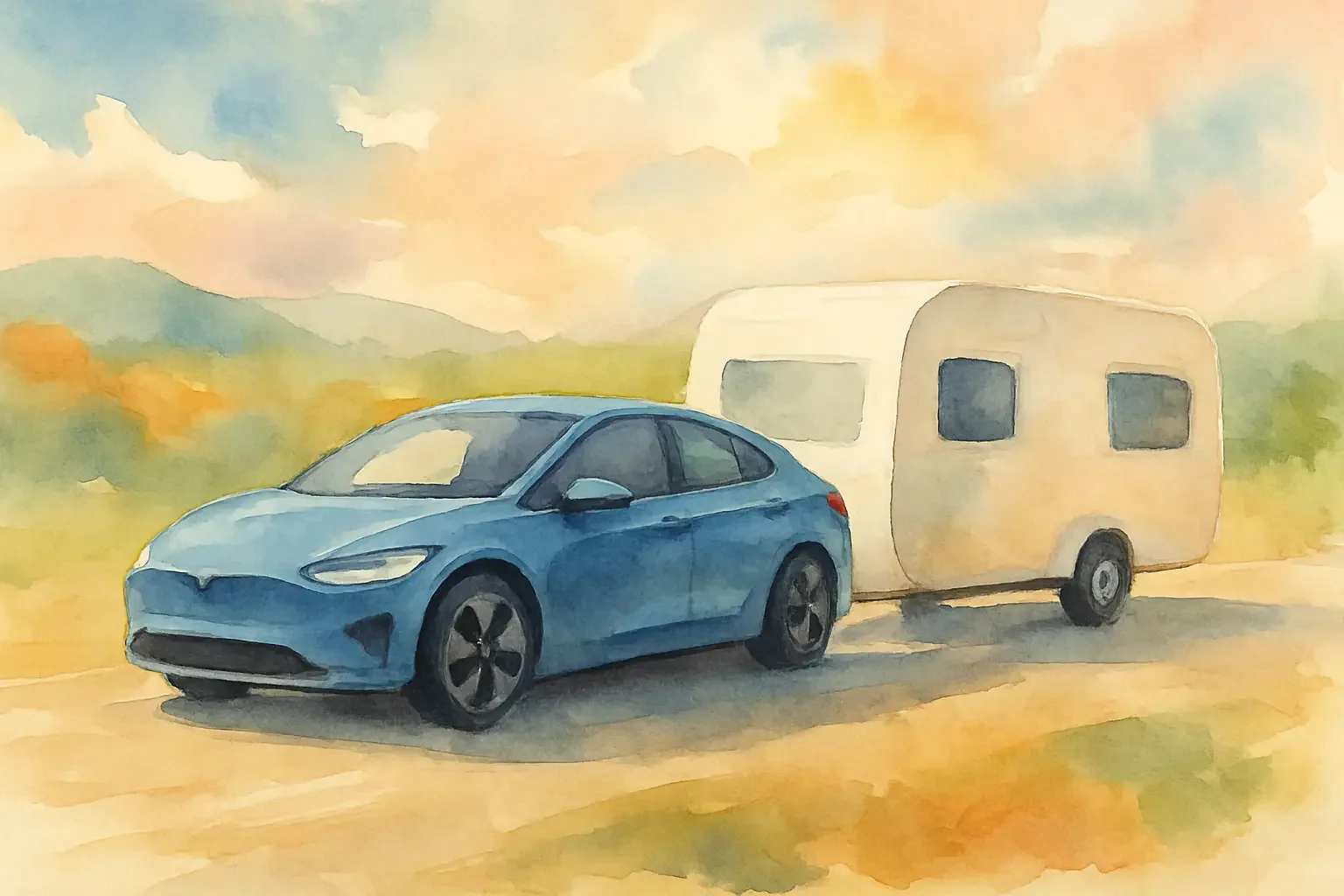
Towing a Caravan with an EV: What’s Next?
The first time you tow a caravan with an electric vehicle (EV), you learn a humbling truth: the battery doesn’t care about your optimism. A headwind on the M62, a wet A-road, a slightly enthusiastic right foot - and the range estimate starts acting like it’s got somewhere else to be.
That’s the reality check most people need, because the future of EV towing in the UK won’t be won by hype. It’ll be won by the boring stuff: better charging layouts, clearer weights guidance, and vehicles designed with towing in mind rather than treated as an afterthought.
The Future Of Towing A Caravan With An Electric Vehicle
Right now, towing with an EV is completely doable - for the right caravan, the right routes, and the right expectations. The future is mainly about widening that “right” window so it feels less like planning a small military operation.
Three things are already pushing the change. Battery tech is improving (not magically, but steadily). Charging networks are expanding (again, not perfectly - but it’s moving). And more drivers are simply getting used to the idea that planning stops isn’t failure, it’s just touring.
The big shift, though, is this: manufacturers are starting to accept that people tow. That means designing cars and the infrastructure around a car-and-caravan combination, not a solo commuter doing 20 miles a day.
Range will improve, but expectations matter more
Let’s be candid: towing is one of the hardest things you can ask an EV to do. Drag goes up sharply with speed, caravans are basically upright bricks, and UK weather loves adding “bonus resistance” in the form of wind and rain.
Will future EVs tow further? Yes. Higher energy-density batteries and more efficient motors will help. But the bigger win is predictable, honest range when towing. Some EVs already offer towing modes that stabilise consumption estimates. Expect that to become standard, with navigation that plans charging stops based on real towing load rather than fantasy figures.
Also expect a more grown-up conversation about speed. Sitting at 55-60 mph instead of chasing 60+ isn’t moral virtue - it’s physics. The future isn’t everyone towing 250 miles non-stop. It’s more people towing 120-180 miles comfortably with a planned stop that doesn’t involve sweating in a service station queue.
Charging: the real battlefield is bay design
If you only read one thing about the future, make it this: charging speed matters, but charging access matters more.
A lot of UK chargers were laid out for cars that can nip in, reverse, plug in, and leave. Add a caravan and suddenly you’re doing geometry under pressure, usually with an audience. The future needs more drive-through charging bays where you stay hitched. Some sites are already trialling this, and as towing EVs becomes normal, it’ll stop being a novelty and start being a competitive advantage.
Another likely change is better reliability and clearer payment. When you’re towing, you’re less flexible. You can’t easily “just pop to the next one” if the charger is broken or blocked. The networks that win will be the ones that feel boringly dependable.
Weight, legality, and the part nobody wants to talk about
EVs are heavy. That’s not a dig - it’s just batteries. The upside is stability and strong towing performance. The downside is payload can be surprisingly tight once you add passengers, luggage, a dog that insists on bringing its entire wardrobe, and the noseweight.
In the near future, we’ll see more focus on clear, usable loading information in-car: not just “here’s a maximum”, but prompts that help owners avoid accidental overloading. Think of it like the car being mildly bossy for your own good.
And because confusion still reigns, it’s worth checking your licence situation too. The rules have changed in recent years, and you don’t want to build your whole EV towing plan on an assumption. If you’re unsure, this is a calm place to start: Can you tow a caravan on a B licence?
Tow cars will be designed for caravanners, not just drivers
Today, some EVs tow well but feel like they were never tested in the real world of caravan life - tight pitches, wet grass, reversing onto a levelling ramp, or inching up to the hitch.
That will improve. Future EVs will increasingly include:
Better low-speed control for manoeuvring (smooth, predictable creep)
More accurate trailer stability systems tuned for caravans, not just box trailers
Camera views and guidance that actually help when you’re lining up to hitch or reverse
Thermal management that protects performance on long, loaded runs
This is where EVs genuinely shine already: instant torque for pulling away, quiet towing, and often a more settled feel thanks to the low centre of gravity. The next step is making the whole experience less fiddly.
If reversing still raises your blood pressure, it’s not an EV problem - it’s a practice-and-process problem. This walkthrough helps you build calm repetition rather than white-knuckle guesswork: Reverse a Caravan Calmly: Beginner Steps
Trip planning will get easier (and more normal)
The unglamorous truth of EV towing today is that you plan around chargers, not just campsites. The future is software doing more of that mental load for you, including suggesting stops that are physically easy with a caravan.
Until that’s universal, your best tool is still a sensible plan with options. Build in a buffer, assume at least one charger will be busy, and choose stop points where you can unhitch if you must - not because you will, but because it’s relaxing to know you can.
If you want a calmer way to map it all out without turning it into a spreadsheet hobby, this approach works whether you’re towing with diesel, hybrid, or electric: Plan a UK Caravan Road Trip Without the Stress
So, should you wait?
If you already tow and you’re thinking about an EV, the question isn’t “can it tow?” It’s “does it tow the way I tour?” If your trips are mostly shorter hops with a decent stop en route, you might be closer than you think. If you do long motorway slogs to Cornwall in one hit, you may want either a bigger-battery EV, a different travel rhythm, or a bit more time for infrastructure to catch up.
Either way, the future looks less like a revolution and more like a gradual removal of hassle: more sensible charging, more honest range tools, and tow cars built with caravanners in mind. And if you’d like the calmer, no-dogma version of all this stuff as you plan your next steps, that’s exactly what we do at CaravanVlogger - because confidence is nicer than bravado, especially when you’re hitched up.
Where to Start
If you’re not sure where to begin, most people find this page the most grounding:
👉 Caravan Accessories – What Solves Real Problems
Because once you separate needs from noise, ownership becomes much simpler.
A Quiet Word About TalkWrench
Many of the questions covered in this guide come up again and again in real life.
TalkWrench exists for those conversations — the ones that don’t need shouting, judgement, or one-upmanship. It’s where caravan owners talk through real decisions, real worries, and real experiences calmly.
If this guide feels like your kind of tone, TalkWrench probably will too.