
Hitch locks – protecting the point that matters most
You can spend £30 on a hitch lock and still sleep badly, or spend £150 and still get it wrong. The difference usually isn’t the badge on the box - it’s whether the lock actually suits your hitch, your habits, and the way caravans are typically nicked in the UK.
Caravan theft is rarely Hollywood. It’s more often a quick, quiet job: a tow vehicle reverses up, someone drops a coupling on, and the whole outfit disappears before you’ve finished making a brew. Hitch locks are popular because they target that exact moment - the “hook up and go” part. They don’t make your caravan impossible to steal. They make it harder to steal quickly, which is a very different (and much more useful) goal.
This guide is a practical, experience-led look at Caravan Hitch Locks: what the different types actually do, how to choose one that fits, what the Sold Secure ratings mean in real life, and how to avoid the classic mistakes that turn a decent lock into expensive jewellery.
What a hitch lock can (and can’t) do
A hitch lock’s job is simple: stop someone attaching your caravan to their towball, or at least slow them down enough that they choose an easier target. That’s it. It is not a force field.
So the sensible mindset is layered security and sensible expectations. A thief with time, privacy, and the right tools can defeat almost anything. The aim is to remove speed and convenience. Most opportunistic theft depends on speed.
There are also a couple of theft routes a hitch lock doesn’t directly address. A caravan can be moved on a flatbed, dragged, or pushed around a yard. That’s why a hitch lock works best as part of a broader set-up (think wheel clamp, good storage practice, and not advertising your kit).
And yes, some people will tell you a hitch lock is pointless because “they’ll take it anyway”. That’s forum sport. In the real world, adding friction works.
The main types of Caravan Hitch Locks (and who they suit)
There are a few common designs on the UK market. They all aim for the same outcome, but their strengths and annoyances differ.
1) Locking hitch covers (the ‘cup’ style)
These cover the coupling head so it can’t be placed onto a towball. They usually sit over the hitch like a protective cap and lock in place.
They’re popular because they’re quick to fit and easy to understand. Where people get caught out is fit and tolerance: some covers sit a bit loose on certain hitches, which can mean they rattle or can be persuaded off more easily than you’d like.
Good ones have a solid metal shell, a protected lock barrel, and minimal gaps around the front where tools can bite.
2) Locking receiver inserts (go into the hitch)
These use an insert that goes into the hitch mechanism itself, often locking the handle down or blocking the ball socket internally.
They can be very effective, especially on certain stabiliser hitches, because they’re not just a “lid” - they interfere with the mechanism. The downside is that they can be fiddlier and more hitch-specific.
If you’re the sort of person who likes things to click into place neatly, you’ll enjoy this type. If you’re the sort of person who loses patience in the rain, you may not.
3) Combination “hitch + wheel” set-ups
Some products combine a hitch lock with a wheel clamp concept, or at least try to create a single solution.
They can be convenient, but the compromise is usually bulk and set-up time. If a security device is a pain, you will find excuses not to use it. That’s not a character flaw - that’s human behaviour. Choose something you’ll actually fit every time.
4) The lightweight “deterrent” covers
These are often bright, sometimes plastic-heavy, and look like security more than they are security.
They can still have a place if your caravan lives on a busy driveway and you just want to stop casual interference. But if you’re relying on it for storage yards, unattended sites, or long winter periods, treat them as visual deterrents, not as serious resistance.
Sold Secure ratings: useful, but don’t worship them
In the UK, you’ll often see Sold Secure ratings (Gold, Diamond, etc.). These are independent test standards that assess resistance to attack for a certain time using specified tools.
They’re genuinely helpful for narrowing the field, and some insurers like them. But two things matter:
First, ratings apply to a specific product used as intended. If you fit it incorrectly, or it doesn’t suit your hitch, you don’t magically keep the rating.
Second, a rating doesn’t tell you about day-to-day usability. A lock that’s “the best” but lives in your garage because it’s awkward is, in practice, not the best.
A good approach is: pick the strongest rating you can afford that still fits your routine. Security you use beats security you admire.
Fit is everything: hitches aren’t all the same
Most hitch lock disappointment comes down to one of three things: the lock doesn’t fit the hitch properly, the hitch is worn/adjusted in a way that changes how it sits, or the user expects a universal product to behave like a custom one.
Stabiliser hitches and compatibility
Many UK caravans have stabiliser hitches (often AL-KO style) with a prominent handle and friction pads. Some hitch locks are designed specifically around these shapes.
If you’re buying online, don’t just match the brand name. Check the exact hitch model, and be wary of listings that say “fits most”. “Most” is doing a lot of heavy lifting there.
The awkward bits people forget
Breakaway cable brackets, handbrake positions, jockey wheel clearance, and even the angle your caravan sits on a slope can affect whether a lock seats properly.
A hitch lock that fits perfectly on level ground can become a wrestling match on a pitch where the A-frame is slightly twisted. That doesn’t mean it’s a bad lock - it means you should practise fitting it somewhere easy before you’re trying to do it with an audience and a headtorch.
How thieves typically defeat hitch locks (so you can choose smarter)
This isn’t to make you paranoid. It’s to stop you buying the wrong thing for the wrong reasons.
The common attacks are:
Direct towing attempt: If the lock is flimsy or poorly fitted, they may still manage to attach to a towball or partially couple and drag.
Leverage and prying: Gaps and exposed edges let crowbars and similar tools do their thing.
Attacking the lock barrel: Cheap cylinders can be drilled, snapped, or simply abused. A protected barrel and decent cylinder design matter.
Removing the hitch head: Some will try to unbolt parts (less common on a driveway, more plausible in a quiet yard with time).
So when you’re comparing options, look for tight fit, thick metal where leverage would be applied, and a barrel that isn’t sat there like a button begging to be drilled.
Choosing the right hitch lock for your actual life
Most advice stops at “buy a good one”. Helpful. Let’s make it real.
If you tow every week in season
You want speed and consistency. A lock that takes 30 seconds and doesn’t need you to kneel in gravel is more likely to be used.
In this scenario, a well-fitting hitch cover with a decent cylinder can be ideal. Pair it with habits: lock it every time the caravan is left unattended, not just overnight.
If your caravan is stored off-site
Here, you’re thinking about long periods unattended and unknown footfall. Stronger resistance and a higher Sold Secure rating becomes more attractive.
But also think about storage yard rules. Some yards require specific devices, and some prefer you not to use anything that makes moving the caravan in an emergency harder. It’s worth a quick chat.
If you’re new to towing and already feeling overloaded
Security should not add stress to your hitching routine. When beginners are learning to hitch up safely, they’re already juggling steps and checks.
If you’re in that camp, keep the security device simple at first, then upgrade later if you want. You’ll get more confidence from a calm routine than from a complicated lock you resent.
If towing itself is the bit that’s raising your heart rate, these two will help you build a calmer process: Towing a Caravan for Beginners: Calm, Confident Starts and Towing a Caravan: Confidence Tips That Work.
Using Caravan Hitch Locks properly (the bits that actually matter)
There’s no point pretending everyone reads manuals. Most of us do a quick glance, then improvise. Here are the practical points that make the difference.
Fit it when the caravan is uncoupled - and check it’s properly seated
Some locks will happily “lock” while not fully seated. That’s a nasty little trick, because you walk away feeling smug, and the lock is basically a loose hat.
After fitting, give it a firm wiggle. You’re not trying to rip it off, just checking whether it’s properly engaged. If it moves a lot, don’t assume “it’s meant to”. Investigate.
Lock orientation matters more than people think
If the lock barrel is exposed and facing forward, it’s easier to attack and often easier to get tools onto. Many designs allow you to orient the lock so the barrel is tucked away or shielded.
You’re not being dramatic by thinking about this. You’re just not making it easy.
Don’t forget the hitch handle and stabiliser position
On stabiliser hitches, some locks require the handle to be up or down. Some require the stabiliser to be engaged or disengaged. If you force it, you can damage both the lock and the hitch.
If you find yourself needing brute force, stop and reassess. Caravan kit should be snug, not violent.
Keep the mechanism clean and lightly maintained
Road grime, winter salt, and storage dust can wreck a lock faster than any thief.
You don’t need a full workshop routine. Just keep the lock clean, don’t store it wet inside a bag, and use an appropriate lubricant for the cylinder now and then. If you’ve ever had a lock seize on a cold, wet Sunday evening, you’ll know why this matters.
Have a plan for the keys
It’s not exciting, but it’s real. The best security device is useless when the key is at home, in a drawer, because you swapped coats.
Keep a spare key somewhere sensible and secure (not taped under the A-frame, unless you’d like to sponsor a thief’s holiday). If you tour as a couple, decide who carries the primary key and stick to it.
Hitch locks vs wheel clamps: do you need both?
If you only buy one security device, most people lean towards a wheel clamp because it stops rolling. But hitch locks have two advantages: they’re usually quicker, and they stop the simplest theft attempt.
The best approach is layered: a hitch lock to prevent coupling, plus a wheel clamp to prevent rolling, especially for storage.
If you’re mostly on a driveway with good visibility and you use your caravan often, you might start with a hitch lock and add a clamp later.
If your caravan is stored somewhere quiet, or it sits for long periods, a clamp plus hitch lock is a more sensible baseline.
This is not about living in fear. It’s about acknowledging that a caravan is a big, valuable thing on wheels.
Common myths (and the calmer reality)
“If I have a hitch lock, I don’t need to worry about anything else”
A hitch lock is one layer. It addresses one theft method well. It doesn’t stop lifting, dragging, or determined attack with time.
“A visible lock is enough because thieves won’t bother”
Visibility helps, but it depends where you are. In some areas, a visible lock is a deterrent. In others, it’s just an indicator that the caravan is worth nicking.
The smarter version of this myth is: visible security plus real resistance is better than either alone.
“Heavier is always better”
Sometimes heavier is just heavier. Thickness and design matter more than weight. A well-designed lock that fits tightly can outperform a bulky one with gaps.
“If it’s Sold Secure Diamond, I can relax”
It’s a strong sign you’ve bought something serious. It’s not permission to leave the caravan in an isolated spot with the keys in the tow car.
Real-world scenarios: which lock choice makes sense?
Let’s make it concrete.
The motorway services stop
You’ve pulled in for a loo break and a coffee. The caravan is attached to the car, so a hitch lock isn’t relevant at that moment, but a hitch lock is useful if you ever unhitch to manoeuvre or leave the caravan temporarily.
For brief stops while hitched, your best protection is actually situational: park where you’re visible, keep the car locked, don’t leave the caravan unattended uncoupled, and don’t make it easy for someone to interfere with the hitch while you’re away.
In this situation make sure you check your insurance policy. many specify the caravan should not be left unattended unless a hitchlock is fitted. The more expensive Alko lock that I use, can be fitted whilst the caravan is still attached (see below )
The storage yard over winter
Here, a hitch lock is part of a stronger set-up. You want something that resists attack and doesn’t degrade in weather. Pair it with a wheel clamp and good storage discipline.
Also consider how often you’ll visit. If you only go once a month, buy something you can fit reliably even when it’s been sat in the cold and wet.
The driveway with a drop kerb
Driveways are popular theft locations because thieves can work quickly and leave quickly.
A hitch lock helps because it blocks the quick coupling method. But also think about reducing access: if you can position the caravan nose-in, close to a wall, or otherwise awkward to approach, you’re adding friction without buying anything.
What to look for when shopping (without getting lost in marketing)
Product descriptions can be pure theatre. Ignore the dramatic language and focus on a few practical signals.
Build and design cues
Look for thick metal in the areas that would be attacked, minimal gaps, and a barrel that’s recessed or protected. If you can picture where a pry bar would go, you’re thinking along the right lines.
Hitch-specific fit information
Good manufacturers are clear about which hitches a lock fits. If the listing is vague, that’s usually because they want to catch as many buyers as possible and deal with returns later.
Key system and usability
Some locks come with multiple keys and a key code for replacements. That’s not glamourous, but it’s useful. Also check whether the key operation feels smooth. A sticky lock is a lock you’ll curse at, and eventually avoid.
Weather resistance
UK weather is very good at being damp. Stainless parts, decent coatings, and a simple design that doesn’t trap water will generally live longer.
How hitch security affects towing routine (and your confidence)
Security devices can either support confidence or undermine it. If you’re already nervous about hitching up, adding a fiddly lock can turn a calm pre-departure check into a comedy of errors.
The goal is a routine that you can repeat. Hitch, stabilise, electrics, breakaway cable, jockey wheel, lights check, mirrors, tyres - whatever your usual sequence is - security should slot in without drama.
If you’re working on towing confidence generally, it’s worth separating two feelings that often get mixed up: towing competence and theft anxiety. They’re different problems. One is solved with practice and knowledge, the other is solved with sensible layers and good habits. Trying to solve both with one expensive gadget is how people end up frustrated.
Extra layers that play nicely with a hitch lock
You don’t need a full security catalogue. A few sensible choices, used consistently, do more than a pile of kit you can’t be bothered with.
A wheel clamp is the classic pairing. Tracking devices can help recovery, but they don’t prevent the initial theft. Motion alarms can add noise and attention, which is useful in some settings and pointless in others (remote storage yards, for instance).
Even simple habits matter: don’t leave the hitch area clutter-free for someone to work on, don’t leave the caravan perfectly lined up for a quick hitch-and-go, and don’t store the hitch lock key in the obvious place.
A note on insurance and “approved” locks
Some policies specify certain types of security, sometimes even named brands or Sold Secure levels. It’s annoying, but it’s part of the landscape.
Before you buy, check your policy wording. If it says “hitch lock and wheel clamp required when stored”, take that literally. If it says “Sold Secure Gold or equivalent”, keep evidence of what you bought.
Also remember the boring bit: if you don’t use the security you said you’d use, insurers can make life difficult. This is another reason to choose something you’ll actually fit every time.
Mistakes I see again and again (easy to avoid)
People rarely buy a truly terrible lock. They just do one of these:
They buy a lock that technically fits their hitch but sits loose. They lock it, assume it’s fine, and it’s not.
They use the lock only at home and skip it on tour because it’s in a locker under three chairs, a barbecue, and a windbreak.
They don’t practise fitting it before their first trip, then discover on site that it doesn’t play nicely with their hitch at a funny angle.
They never maintain it, so by November it’s seized, and they start leaving it off “just this once”.
None of this is moral failure. It’s normal life. But a small tweak in habits fixes most of it.
If you want calmer, not more complicated
Security advice can get weirdly performative. There’s always someone claiming they have three locks, two chains, a tracker, an alarm, and a trained badger.
You don’t need to win security bingo. You need a sensible set-up that matches your risk and your routine.
If you’re the type who enjoys learning systems and building confidence step by step, that’s the approach we take at CaravanVlogger - practical guidance that reduces second-guessing rather than adding to it.
So, what should you actually do next?
Start by checking your hitch model and your insurance requirements. Then pick a hitch lock that fits properly, has a credible rating if you need one, and - crucially - feels easy enough that you’ll use it every single time the caravan is left uncoupled.
Practise fitting it at home in daylight. Do it until it’s boring. The boring stuff is what keeps caravanning relaxing.
A hitch lock won’t make your caravan immortal, but it can make you a much less appealing target - and that’s usually the point.
Maypole ALKO Hitchlock Suitable for Securing AK130 AK160 AKS1300 AKS2004 AKS3004 Caravan and Trailer Hitches

If you’ve ever stood on a pitch in the drizzle staring at your hitch and a shiny new lock, wondering whether you’re the problem or the product is, you’re not alone. The Maypole AL-KO hitchlock is designed for common UK AL-KO hitches such as AK130, AK160 and stabiliser heads like AKS1300, AKS2004 and AKS3004. Its job is simple: stop someone quickly coupling up your caravan and towing it away. It isn’t a magical forcefield, and it won’t defeat a determined thief with time and tools, but like most security devices its real value is delay and deterrence.
Compatibility is everything. Even within the same hitch family, wear, tolerances and handle clearance can affect how easily a lock fits. Before buying, check the exact model stamped on your hitch head rather than guessing. In use, the aim is a secure fit without brute force. If you’re stamping and swearing, something’s misaligned. Set the caravan at a comfortable height, make sure the hitch and stabiliser handle are in the correct position, offer the lock up squarely, and tug-test it once closed. If it resists, reset and try again rather than forcing it.
Like all security kit, it’s about balance. A hitchlock is visible, relatively quick to fit and more convenient than some alternatives, but it protects one point of attack. Many owners layer security, and just as importantly, build simple habits: fit it immediately after unhitching, keep the key separate, and practise at home. A device you use every time is better than a theoretically stronger one left in its box. Treated as part of a calm, consistent routine, a properly matched hitchlock becomes just another small step in protecting your caravan without turning every trip into a drama.
Stronghold Hitchlock for Caravan and Trailer AL-KO Hitches Including AK130, AK160, AKS1300, AKS2004 and AKS3004 Sold Secure Gold Standard
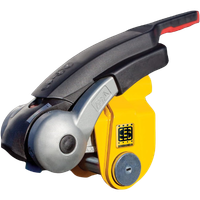
Caravan security advice can swing between theatrical overkill and cynical defeatism, but the reality is usually more practical: most theft is opportunistic, and visible, sensible security helps — especially if it’s quick to use and hard to bodge. A proper hitchlock, particularly for common AL-KO hitches, sits firmly in that sensible middle. The Stronghold Hitchlock for AK130, AK160, AKS1300, AKS2004 and AKS3004 (Sold Secure Gold) isn’t a miracle cure, but it is a real-world tool designed to block the simplest theft method: coupling up and towing away.
A hitchlock’s job is straightforward — prevent access to the hitch mechanism, slow down tampering, and act as a clear visual deterrent. It won’t make a caravan theft-proof, and it won’t stop every possible method, but it can make casual and mid-level attempts far more trouble than they’re worth. Because AL-KO hitches have specific shapes and clearances, a lock designed around those profiles generally fits more cleanly and predictably than a “universal” option. Sold Secure Gold certification adds reassurance that it has met recognised test standards, though it’s still just one layer in a wider security approach.
In practice, usability matters as much as strength. If a lock is fiddly, people skip it — especially in bad weather or at the end of a long drive. The most effective setup is one you’ll use every time: fit it as soon as you unhitch, keep the key somewhere deliberate, check it’s properly seated, and maintain it so grit and wear don’t turn it into a frustration. Paired with sensible positioning and, where appropriate, a second layer like a wheel clamp, a well-matched hitchlock becomes part of a calm routine — protecting your caravan without turning security into drama.
AL-KO Safety Premium UK Black for AKS 3004
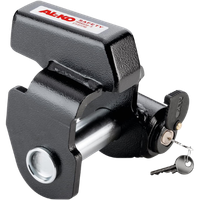
You can spend a small fortune on caravan security and still lie awake worrying, but the right hitch lock can remove a big chunk of obvious risk without turning every arrival and departure into a performance. The AL-KO Safety Premium UK Black for the AKS 3004 is designed specifically for that very common stabiliser hitch, aiming to provide a tight, coupling-specific fit that’s genuinely awkward to attack while still being usable enough that you’ll actually fit it every time. It’s a deterrent and delay device, not a magic forcefield — the goal is to make your caravan a harder, noisier, less appealing target than the one next to it.
Because the AKS 3004 has its own shape and clearances, compatibility really matters. A lock built around that geometry tends to sit properly, reduce wobble and leverage, and avoid the frustrating “push here, lift there” dance that makes people abandon security gear altogether. What you’re paying for over cheaper options is usually stronger build quality, a more robust locking mechanism, and a tighter fit that stands up better to weather and crude attack attempts. None of that makes it invincible, but it does make it a more credible obstacle in real-world use.
Day-to-day usability is what decides whether it earns its keep. Fit it as part of a simple routine, keep the hitch clean so alignment isn’t a battle, and sort out a sensible key system so you’re not hunting for it in the rain. In real terms, it’s secure enough to be worth considering — especially if you store outdoors or unhitch regularly — but it works best as part of layered, sensible security rather than as a single heroic gadget. Choose what fits your hitch and your habits, then let security fade into the background so you can enjoy the trip.
This is the hitch lock I use and have for many years. It’s easy to put on and take of and it does have the ability to be left on the caravan when towing. Not something I actually do, but it’s there it you want to.