
How to Read Your Motorhome Weight Plate
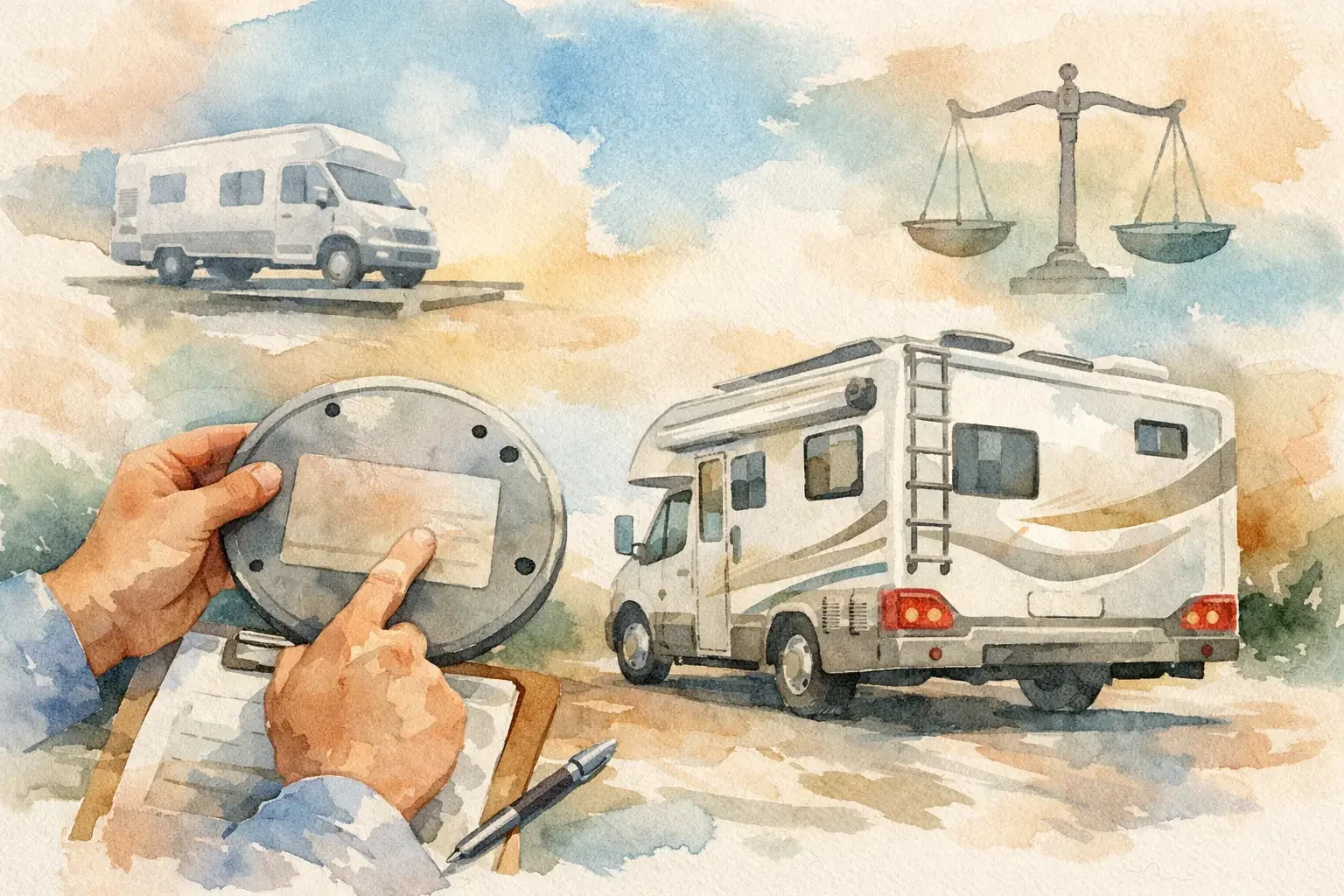
If you have ever looked at your motorhome’s weight plate and felt as though it was written by a committee of very serious robots, you are not alone. Learning How to Read Your Motorhome Weight Plate is one of those jobs that sounds more technical than it really is. Once you know what the numbers mean, it becomes much easier to load sensibly, stay legal, and stop second-guessing every bike rack and awning bag.
Where to find the weight plate
On most motorhomes, the weight plate is usually fitted by the manufacturer and can often be found under the bonnet, on the door pillar, near the passenger seat, or sometimes in the engine bay. There may also be more than one plate, especially if the base vehicle and motorhome converter have both added information.
That can be slightly irritating, but not mysterious. The important thing is to find the plate that gives the plated weights for the completed motorhome, not just the original van chassis.
How to read your motorhome weight plate
Most UK motorhome weight plates show four key figures. They are usually laid out one under the other, and while the labels vary a bit by manufacturer, the meaning is broadly the same.
The first number is the maximum authorised mass, often shortened to MAM. You may also see gross vehicle weight or technically permissible maximum laden mass. Same general idea. This is the maximum your motorhome is allowed to weigh when fully loaded.
The second number is the gross train weight. That is the maximum combined weight of the motorhome plus anything it is towing, such as a trailer.
The third and fourth numbers are the axle limits - front axle and rear axle. These matter more than many people realise. A motorhome can be under its overall MAM but still be overweight on one axle, which is an easy trap if most of your kit, water, bikes or storage sits towards the rear.
What the numbers actually mean in practice
Here is the calm version, without the forum drama. Your overall weight limit and your axle limits both matter. It is not a choice between them.
Say your motorhome has a MAM of 3,500kg, a train weight of 5,500kg, a front axle limit of 1,850kg and a rear axle limit of 2,000kg. That means the fully loaded motorhome must not exceed 3,500kg. If you are towing, the combined total must not exceed 5,500kg. Separately, the weight pressing down on each axle must stay within its own limit.
This is why guessing is not a great strategy, however optimistic your packing style may be.
Payload is the bit people care about most
Payload is simply the difference between the motorhome’s empty running weight and its MAM. In other words, it is what you have left for people, dogs, clothes, food, leisure batteries, accessories, water and all the other things that somehow appear before a trip.
The catch is that brochure figures can be a bit flattering. Optional extras such as an awning, solar panels, air conditioning, automatic gearbox, extra passengers, and a bike rack all eat into payload. So does fresh water, and water is heavy enough to stop being theoretical very quickly.
If you have bought a used motorhome with lots of extras already fitted, do not assume the remaining payload is generous just because the van looks substantial. Plenty of solid-looking motorhomes have surprisingly modest margins.
Why axle weights catch people out
Rear axle loading is the usual culprit. Storage garages, bike racks, scooters, toolboxes and full water tanks often sit behind or near the rear axle. Weight placed there does not just add kilos - it can shift load off the front axle and pile more onto the rear.
So even if your total weight looks acceptable, the rear axle can still be over its limit. That is why a proper weighbridge visit is useful. Ideally, get the whole vehicle weighed and then each axle separately. It removes the guesswork and tends to lower the blood pressure.
A simple way to check you are safe and legal
First, read the plate and write down the MAM, train weight and axle limits. Keep them somewhere obvious.
Next, load the motorhome as you would for a real trip. Include passengers, typical luggage, food, petrol bottles, water, and anything mounted outside. Then visit a weighbridge. Ask for the total weight and, if possible, axle weights.
If the total is under the MAM and both axles are within their limits, you are in good shape. If one axle is too heavy, move weight if you can. If the whole motorhome is too heavy, you need to remove weight, travel with less water, or rethink what is really essential. The inflatable kayak may be fun, but so is not being overloaded.
A few terms that are easy to mix up
Mass in Running Order is not the same as actual travelling weight. It is a standardised starting figure, not a promise about what your motorhome weighs today.
MAM is your legal maximum loaded weight.
Gross train weight only matters if you are towing.
Axle limits always matter, whether you tow or not.
Once those four ideas are clear, the plate becomes much easier to read.
Don’t turn it into a mystery
Weight plates matter because safety and legality matter. But they are not there to intimidate you or to fuel endless debate in a campsite service area. They are simply the reference point for loading your motorhome sensibly.
If you treat the plate as a practical tool rather than an exam paper, you will make better decisions and enjoy the trip more. That is usually the better outcome than carrying half the garage just in case.