
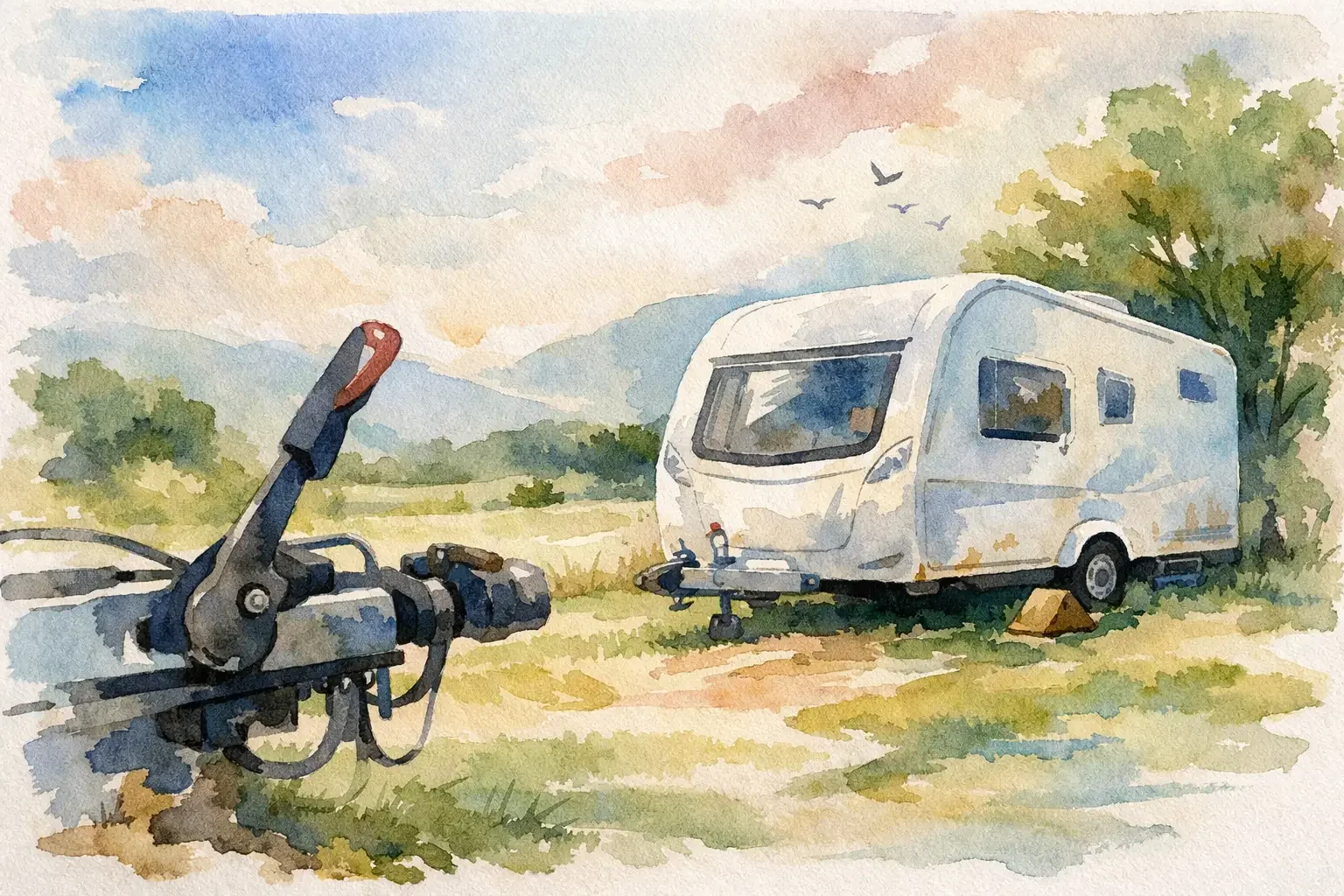
Should You Leave a Caravan Handbrake On?
That little handbrake lever seems to attract more opinion than it deserves. Ask ten caravanners whether to leave it on in storage and you can quickly end up with a mini civil war involving brake shoes, stuck drums, rolling risks and somebody insisting their uncle did the opposite for 27 years without issue.
The calm answer is this: if you are asking, should I leave caravan handbrake on storage, the sensible default for longer-term storage is usually no - not if the caravan is parked securely and properly chocked. For shorter periods, or while hitching and unhitching, yes, of course use it. But for weeks or months at a time, relying on the handbrake alone is usually not the best choice.
That is not because the handbrake is fragile or because catastrophe is lurking behind every jockey wheel. It is simply because caravan brakes are mechanical parts, and leaving them clamped on for long periods can increase the chance of them sticking on, especially after damp weather, cold spells or extended inactivity.
Should I leave caravan handbrake on storage?
For long-term storage, the better approach is usually to release the handbrake and secure the caravan with wheel chocks on firm, level ground. That takes pressure off the braking system while still preventing movement.
For short-term stops, use the handbrake as intended. On a service pitch, on your drive while loading, or when unhitching before you get the corner steadies down, the handbrake is part of normal safe operation. This is not a case of never use it. It is more a case of not making it do a job for months that is better handled by chocks.
Where people get tied in knots is treating every scenario as if it is the same. A caravan parked for half an hour while you sort the mover is not the same as one left in winter storage until the daffodils come back.
Why leaving it on can cause problems
The main issue is brake binding or sticking. Caravan handbrakes work by applying the braking mechanism and holding it there. If the van then sits unused in damp conditions, corrosion can form on the drums or shoes can effectively stick in place. When you next try to move off, you may find the brakes reluctant to release, or one wheel dragging.
Sometimes that is just an annoyance. Sometimes it means a proper inspection and adjustment job before you head anywhere. Neither is ideal when all you wanted was a quiet Friday departure and a cup of tea before dark.
This is more likely if your caravan is stored outside, especially on grass or in a location where moisture hangs around. It can also be more noticeable on older braking systems, on caravans that are not moved often, or where maintenance has slipped a bit. No judgement there - plenty of caravans spend more time being planned for than actually used.
There is also a practical point. If the caravan is safely immobilised with chocks, the handbrake is not adding much. It is just keeping tension in the system for no real benefit.
When the handbrake should be on
There are still times when the handbrake absolutely should be used. During hitching and unhitching, it is part of basic control. If you are parked briefly on your drive, on a slope, or stopping during setup before the caravan is properly secured, put it on.
If your storage situation is temporary and you are only leaving the van for a short period, especially on a level hardstanding, using the handbrake is not automatically wrong. This is where a bit of judgement matters more than internet theatre.
The key distinction is whether the handbrake is your temporary control measure or your long-term storage strategy. For the first, yes. For the second, usually not.
What counts as long-term storage?
There is no magic line where three days is harmless and four days summons mechanical doom. But once you are talking about weeks rather than hours or a weekend, it makes sense to think about taking the handbrake off and securing the caravan another way.
If the van is going into winter storage, that is the clearest example. Chock it securely, make sure the surface is suitable, and avoid leaving the brakes held on for the whole period.
The safer alternative - wheel chocks
If you are not leaving the handbrake on, the caravan still needs to stay exactly where you left it. This is where wheel chocks earn their keep without needing any fanfare.
A proper pair of wheel chocks placed firmly against the tyres is usually the better way to stop movement during storage. On level ground, chocking both sides of a wheel can be enough. On a slight incline, the placement matters more, and you want the caravan fully secure before releasing the handbrake.
Do not treat the corner steadies as anti-roll devices. They are steadies, not supports and certainly not a substitute braking system. They help stop the caravan wobbling when you are using it. They are not there to stop it setting off on its own adventure.
If you have a motor mover, that can help position the caravan precisely, but it is not your storage brake strategy either. Once the caravan is parked, chocks and sensible setup still matter.
Ground conditions matter more than people admit
A lot of this comes down to where the caravan is stored. On a good, level, firm hardstanding, chocking and releasing the handbrake is straightforward. On soft ground, uneven surfaces or a noticeable slope, things get more nuanced.
If the storage surface is poor, the answer is not automatically leave the handbrake on and hope for the best. It may mean improving the parking setup, using suitable pads under the wheels or jockey wheel where needed, and being extra careful with chocking.
A steep slope is the trickiest case. If your only storage spot is significantly sloped, you need a more deliberate plan. In some cases, leaving the handbrake on as part of a belt-and-braces approach may feel reassuring, but it still should not be your only line of defence. Chocks are doing the real work there.
A sensible storage routine
If you want a practical approach without turning it into a ritual, keep it simple. Park the caravan on the firmest, level surface available. Use the handbrake while positioning and unhitching. Once the caravan is exactly where you want it, fit the wheel chocks securely.
Then check that the caravan is stable and cannot roll. Only after that, release the handbrake for longer-term storage. Leave the caravan in a secure, settled position without unnecessary load on the braking system.
Before your next trip, do a quick walk-round. Check tyre condition and pressure, make sure the chocks are removed before moving, and pay attention to any sign that a brake may be dragging as you first set off. Better to notice it at two miles an hour than halfway to the site with a queue forming behind you.
Are there exceptions?
Yes, because caravanning has a habit of refusing to fit neatly into absolutes. Some owners leave the handbrake on and never have an issue. Others have had brakes stick after a relatively short lay-up. Storage conditions, brake condition, weather and maintenance all play a part.
If your manufacturer gives specific guidance for your model, follow that. If your caravan has had previous brake issues, that also changes the picture. And if you are storing somewhere awkward or insecure, you may need a more tailored approach than a generic rule from the internet.
What matters is understanding the trade-off. Leaving the handbrake on may slightly reduce movement risk if nothing else is in place, but it can increase the chance of sticking brakes over time. Releasing it reduces strain on the braking system, but only if the caravan is properly chocked and parked sensibly.
That is why the best answer is not dramatic. It is simply practical.
The bottom line on caravan handbrake storage
If you are storing your caravan for more than a short period, the usual best practice is to secure it with wheel chocks and leave the handbrake off. Use the handbrake during normal manoeuvring, hitching and setup, but do not expect it to be the ideal long-haul storage solution.
That approach is calmer on the brakes, sensible in damp British conditions, and far less exciting than discovering a stuck brake on departure day. Which, frankly, is exactly what most caravan owners are after - fewer surprises, less fuss, and one less thing to overthink before the kettle goes on.
If you want your caravanning to feel easier, this is one of those small habits that helps: secure the van properly, take the pressure off parts that do not need it, and let good judgement do the work rather than old campsite folklore.
Where to Go Next
If this page resonates, you may also find reassurance in:
Need clearer caravan answers?
TalkWrench is where caravan questions get calm, experience-based explanations — without the noise, arguments, or guesswork.