
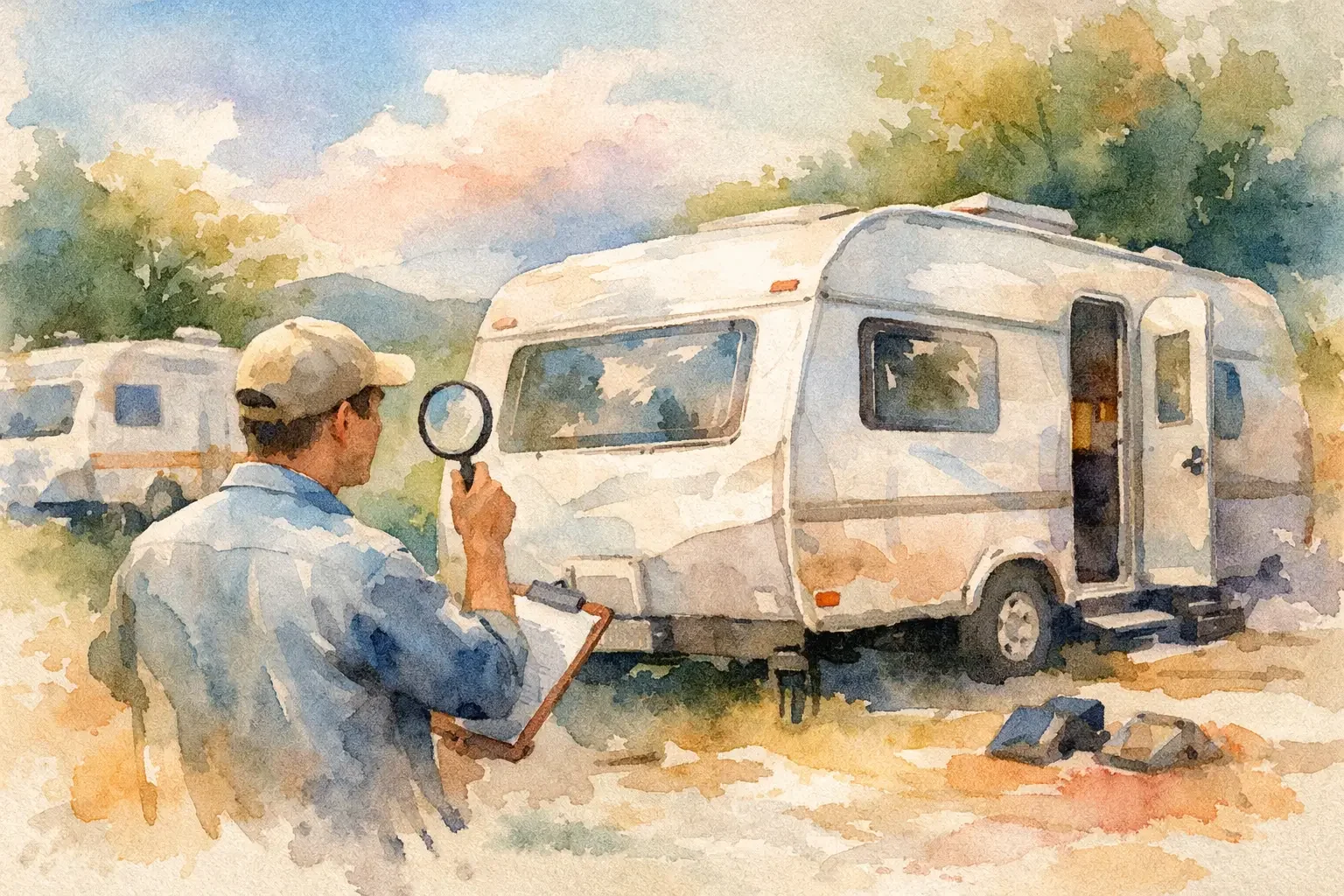
Used Caravan Inspection Example Walk Through
You arrive to view a used caravan, the kettle is on, the seller seems decent, and within ten minutes you can feel your judgement being quietly replaced by optimism. That is exactly why a used caravan inspection example walk through helps. Not because every van is a trap, but because excitement has a habit of glossing over the expensive bits.
This is not about turning you into a damp-meter-wielding detective with a clipboard and a thousand-yard stare. It is about having a calm, sensible process so you can spot obvious problems, ask better questions, and decide whether the caravan is right for you. Some faults are normal for age. Some are bargaining points. Some are your cue to smile politely and head home.
A used caravan inspection example walk through before you set off
Before you even view the caravan, ask for the basics. You want the model year, layout, service history, CRiS details if applicable, and confirmation that everything works. Ask whether there has been any damp, repairs, accident damage, or insurance work. The point is not to interrogate anyone like a police drama extra. It is to see whether the answers are clear, consistent and relaxed.
If the seller sounds vague about ownership, paperwork or known faults, that does not automatically mean disaster, but it does mean you should tread carefully. Equally, a tidy folder full of receipts is encouraging, though not a magical shield against problems. Plenty of caravans have lovely paperwork and one rather alarming soft wall panel.
Take a torch, a notepad, your mobile phone, and if you have one, a damp meter. A damp meter is useful, but it is not gospel. It gives clues, not verdicts. Also take your time. Rushed viewings tend to become regret with upholstery.

Start outside - where first impressions can mislead
Walk around the caravan slowly. Stand back first and look at the overall stance. Does it sit level? Does anything look twisted, patched or out of line? Mismatched panels, odd sealant lines and different shades of trim can suggest previous repair work. That is not always a problem if it was done properly, but it is something to ask about.
Check each corner panel, the awning rail, window surrounds, roofline and locker doors. You are looking for cracks, gaps, bodged sealant and signs of water getting where it should not. Factory-style sealant tends to look neat and consistent. DIY repairs often look as though someone attacked the van with bathroom silicone and good intentions.
Then look lower down. Tyres matter, but not in a dramatic, forum-shouting way. Check the age code as well as the tread. Caravan tyres often age out before they wear out. Cracking in the sidewalls, uneven wear, or very old tyres are all costs to factor in. While you are there, glance at the steadies, chassis, hitch head and jockey wheel. Surface rust is common. Heavy corrosion, bent parts or signs of impact deserve more attention.
Open the petrol locker. It should feel solid and tidy rather than damp, damaged or improvised. Check the regulator, pigtails and mounting points. Again, you are not certifying it. You are checking whether it looks cared for or neglected.
The inside tells the truth more quickly
Once inside, do not be distracted by cushions, scatter cushions, or the fact it smells faintly of polish and ambition. Start with your nose. A musty smell does not prove damp, but it certainly earns a proper look.
Press gently but firmly around common trouble spots - front corners, rooflights, window corners, side walls, washroom walls, and around the floor near the door. You are feeling for softness, springiness or wallboard that seems to move more than it should. Interior walls should feel firm. If one section feels like a slightly apologetic sponge, that is not character.
Use the damp meter if you have one, especially around windows, rooflights, front corners and in the washroom. High readings do not automatically mean structural trouble, and low readings do not guarantee perfection. Temperature, materials and technique all affect readings. What matters is the pattern. One isolated odd number is less worrying than several high readings around a known ingress point.
Open every cupboard, locker and under-seat box. Sellers do not always hide problems, but caravans certainly do. Check inside corners and around fixings for staining, mould, lifting wallboard or blackened timber. Lift seat bases if you can. Look under the mattresses. Damp often leaves clues in the less glamorous corners.
Example walk through - what a sensible viewing looks like
Here is a realistic used caravan inspection example walk through. You arrive to view a 2016 four-berth caravan from a private seller. From ten paces, it looks tidy. Good start.
You begin at the hitch. The stabiliser handle moves properly, the breakaway cable is present, and the electrics plug is not hanging together by stubbornness alone. The front locker opens cleanly and the petrol area looks neat. Fine.
Walking down the nearside, you notice a small crack in a rear light cluster and some fresh-looking sealant under one window. That does not kill the deal, but you ask when and why it was resealed. The seller says there was a minor leak two years ago, repaired professionally, with paperwork to show it. Better. Not perfect, but better.
You check the tyres and find they have plenty of tread but were made six years ago. That is a likely replacement cost soon, so into the mental calculator it goes. The offside skirt has a scuff, but nothing dramatic. Underneath, the chassis looks used rather than abused.
Inside, the caravan is clean and presentable. You start at the front corners and one side feels firm, while the other feels just slightly softer than you would like. Not collapsing, not obviously rotten, but enough to pause. The damp meter gives modest readings in most places, then higher readings around that front offside window corner.
Now you stop admiring the upholstery and start asking useful questions. Has that area been repaired before? Has the caravan been serviced annually? Is there paperwork showing a damp check? The seller produces service records, but there is a gap of two years. That does not automatically mean calamity, though it does remove some reassurance.
You continue. The floor near the door feels solid. The washroom corners are dry. Appliances power up. The fridge runs, the lights work, the heater starts. Good. Then you open a front locker and spot slight staining to the back panel near the same corner that showed a higher reading.
At this stage, a calm decision would be one of three things. If the price already reflects likely remedial work and you are comfortable getting an independent inspection, you might proceed cautiously. If the seller is open, the paperwork is decent and the issue appears localised, you could make an offer subject to a professional damp assessment. If the seller becomes slippery, dismissive, or starts explaining that all caravans do that, it is probably time to leave.
That is the real value of a walk through. It helps you join the dots rather than react to one single thing.
Appliances, services and paperwork
A caravan can be dry and still become expensive if half the kit does not work. Test what you reasonably can. Hook up the electrics if possible. Check lights, sockets, water pump, taps, heater, fridge and cooker. You do not need a two-hour campsite re-enactment, but you do want confidence that the basics function.
Ask when the brakes were last checked and whether the caravan has been serviced regularly. Look for evidence rather than hopeful memory. Ownership documents, service invoices, manuals and receipts all help build a picture. A careful owner usually leaves a paper trail.
Paperwork cannot replace inspection, but it can support it. Likewise, a spotless caravan with no history is not automatically a bad buy, though it does mean you are relying more heavily on what you can see and verify now.
When to negotiate, and when to walk away
Not every defect means run for the hills. Old tyres, tired decals, a cracked light lens, missing trim, cosmetic marks and an overdue service are usually negotiation points. Signs of damp, structural softness, accident damage, poor repairs and unclear ownership are different. Those are not minor nibbling points for a few quid off. They can turn a bargain into a lengthy lesson.
It also depends on your appetite for work. Some buyers are happy with a project if the price makes sense. Others want to hitch up and go. Neither is morally superior. It is just better to be honest with yourself before you buy the wrong caravan for the life you actually lead.
If you are unsure, arrange an independent inspection before committing. That is not being fussy. That is being sensible with a purchase that can go very right or very wrong depending on what you miss in the first half hour.
A used caravan does not need to be immaculate to be a good buy. It needs to be sound, honestly described, and priced in line with its condition. If you keep your inspection calm, methodical and slightly sceptical, you give yourself the best chance of buying with confidence rather than hope.
-
Worried About Towing
If towing makes you second-guess yourself — weights, stability, snaking, or whether your car and caravan are a sensible match — this guide explains what actually matters and what doesn’t.
-
Arriving On Site
If your nerves start when you reach the campsite — reversing onto the pitch, levelling, hook-up, water, or packing up — this guide walks through the real rhythm of site life without the stress.
-
Caravan Ownership Questions
If you’re wondering whether you’ve bought the right accessories, worrying about damp or upgrades, this guide helps separate real concerns from caravan noise.
