
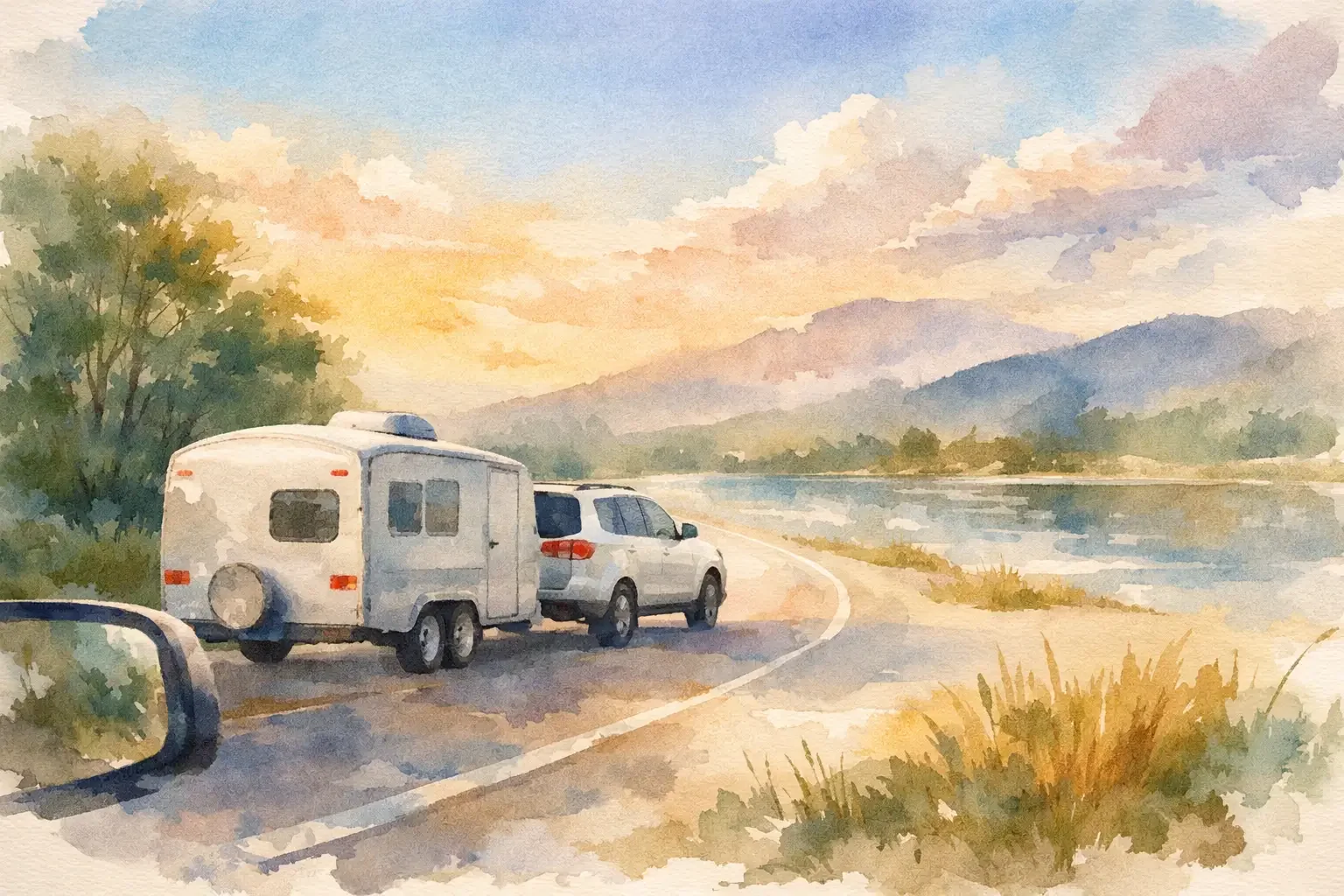
Best Calm Towing Tips for Nervous Drivers
That first proper towing journey can make perfectly sensible adults feel like they’ve agreed to pilot a small bungalow down the A-road. If you’ve been searching for the best calm towing tips for nervous drivers, the good news is this: nerves are normal, and they usually respond far better to preparation and repetition than to bravado.
A lot of towing advice online manages to turn a manageable skill into a character test. It isn’t. You do not need to become the sort of person who enjoys reversing into a pitch while six strangers watch with folded arms. You just need a method, a bit of patience, and enough understanding to separate genuine safety points from noise.
Why nervous towing feels harder than it is
Most towing anxiety comes from three things happening at once. You’re handling a longer outfit, you’re aware that mistakes have bigger consequences, and you’re often trying to learn while under pressure. Add a few horror stories from forums and suddenly a routine left turn feels like a practical driving exam.
The awkward truth is that nerves can create the very problems you’re worried about. A tense grip on the wheel leads to jerky steering. Rushing a roundabout leads to poor positioning. Trying to look confident often means skipping the pause that would have made everything easier. Calm towing is not about pretending to be relaxed. It’s about giving yourself enough margin that calm becomes possible.
The best calm towing tips for nervous drivers start before you move
Confidence usually improves long before the engine starts. If your car and caravan are well matched, your mirrors are set properly, your loading is sensible, and your route is thought through, you’ve already removed a surprising amount of stress.
Start with the basics. Check hitch connection, breakaway cable, electrics, noseweight, tyres and lights. Not because a checklist is glamorous - it very much isn’t - but because uncertainty is exhausting. When you know the essentials are right, your brain has fewer excuses to invent disaster.
Loading matters too. A caravan that’s loaded poorly can feel unsettled, and that unsettled feeling feeds nerves quickly. Keep heavier items low and close to the axle, avoid stuffing lots of weight at the very back, and don’t use the caravan as a rolling loft. There is a trade-off here: some people become so worried about weight that they make packing feel like a military exercise. It doesn’t need to be that dramatic. You just want sensible balance and legal compliance, not a spreadsheet that ruins the holiday before it begins.
Route planning is another calm-maker. If a motorway route takes ten minutes longer but avoids a narrow town centre with parked cars and awkward mini-roundabouts, that is often ten minutes well spent. Nervous drivers do not need to prove anything by choosing the most difficult route available.
Practise when the stakes are low
A quiet industrial estate on a Sunday, a large empty car park where permitted, or a straightforward local run can do more for confidence than hours of reading. Start small. Go out for thirty to forty minutes, not four hours. You’re not trying to complete an epic. You’re teaching your brain that towing can be uneventful.
If possible, do your first few runs in decent weather and daylight. Yes, real life sometimes involves wind, rain and a service station that seems designed by a committee with a grudge. But there is no prize for making your learning curve steeper than necessary.
Set your pace and protect it
One of the best calm towing tips for nervous drivers is to stop worrying about what the traffic behind thinks. Easier said than done, certainly. But a calm, consistent pace is safer than speeding up because a white van has appeared in your mirrors looking emotionally invested.
Drive at a speed that feels settled and legal for the road you’re on. Leave more space than you think you need. Start braking earlier and more gently. Everything becomes easier when you give yourself time. This is where confidence actually comes from - not from doing things quickly, but from noticing that you have enough space to make good decisions.
If traffic builds behind you on a single carriageway and it’s safe to let people pass, do so. That’s not failure. That’s judgement. Equally, don’t start diving into every lay-by in a fluster just because two impatient motorists have appeared. Read the road, choose your moment, and carry on without turning it into a personal moral issue.
Steering, mirrors and the art of not overcorrecting
New towers often steer too much because the outfit feels bigger and slower to respond. Small, smooth inputs work better. If the caravan appears a little in the mirror, that doesn’t automatically mean a crisis is unfolding. It usually means you are going round a bend.
Use your mirrors steadily, not frantically. A regular scan is useful. A panicked stare is not. You want to know what’s happening around you while keeping your main attention where the outfit is actually going. Nervous drivers sometimes keep checking the caravan so often that they become less accurate with the tow car. The caravan would probably prefer that not to happen.
Junctions, roundabouts and hills
These are common stress points because they combine timing, positioning and pressure from other traffic. The trick is not to become brilliant at them overnight. The trick is to simplify them.
At junctions and roundabouts, slow down earlier than you would solo. Give yourself space to observe properly. Take a wider line where needed, but not a theatrical one. Watch the caravan wheels and remember that the back cuts in. If a gap doesn’t feel right, wait for the next one. Missing an opportunity is cheap. Forcing one can become expensive.
On hills, prepare early. Carry enough momentum, change gear in good time if you drive a manual, and avoid last-second decisions. Hill starts can be unnerving, especially with traffic close behind, but good setup helps. Use the handbrake properly, stay calm, and focus on a clean move-off rather than rushing because someone else looks impatient.
Reversing without turning it into a public performance
Reversing is the bit many people dread, largely because it’s slow, fiddly and often witnessed by an audience that appears from nowhere. The audience, for the record, is not helping. Still, reversing becomes far less dramatic when you break it down.
Go slowly enough that you can stop and reset. Tiny steering inputs are usually enough. If it starts going wrong, stop before it becomes a full interpretive dance. Pull forward, straighten up, and try again. That is normal. In fact, it is often the difference between a tidy reverse and a needlessly stressful one.
A good helper can make life easier, but only if you agree simple signals beforehand. Too many helpers provide a sort of windmill-based semaphore from the rear corner and then look surprised when confusion follows. One person, clear signals, slow pace.
Build confidence by shrinking the task
Nervous drivers often look at towing as one giant skill they either have or don’t. That’s not really how it works. Towing is a collection of smaller skills: hitching up, mirror checks, lane position, braking smoothly, reading roundabouts, reversing, choosing routes, and staying composed when plans change.
If one part bothers you most, work on that part specifically. If reversing is your weak spot, practise reversing. If dual carriageways make you tense, do a short route that includes one and nothing else too demanding. Improvement feels more realistic when you stop treating every trip as a referendum on your competence.
There’s also no shame in taking additional training if you want it. For some people, a lesson or course transforms anxiety into something much more manageable because it replaces vague worry with clear feedback. For others, steady self-practice is enough. It depends on how you learn best, not on what sounds toughest in conversation.
Keep the day itself as calm as possible
A surprising amount of towing stress has little to do with towing. It comes from poor timing, hunger, arguments, rushed packing and trying to leave two hours later than planned while pretending everything is fine. Everything is not fine. Everyone knows it.
Give yourself more departure time than seems necessary. Keep the first stop easy. Avoid making the first journey overly ambitious. If you’re tired, stop. If the weather is grim and the route is awkward, consider whether delaying is the smarter option. Calm decision-making sometimes means not going yet.
Resources that reduce confusion can help too. If you want more plain-English towing guidance without the usual drama, CaravanVlogger has built plenty of it around exactly that problem.
The main thing to remember is that confidence rarely arrives with trumpets. It turns up quietly, usually after a few ordinary trips where nothing very dramatic happened at all. That’s the goal, really - not to feel fearless, but to feel capable enough that towing becomes part of the holiday rather than the bit you spend all week dreading.
Recommended Reading
There is more information of towing in the Towing Without The Panic section If you’re unsure about your car / caravan combination, look at the tow car check up page
-
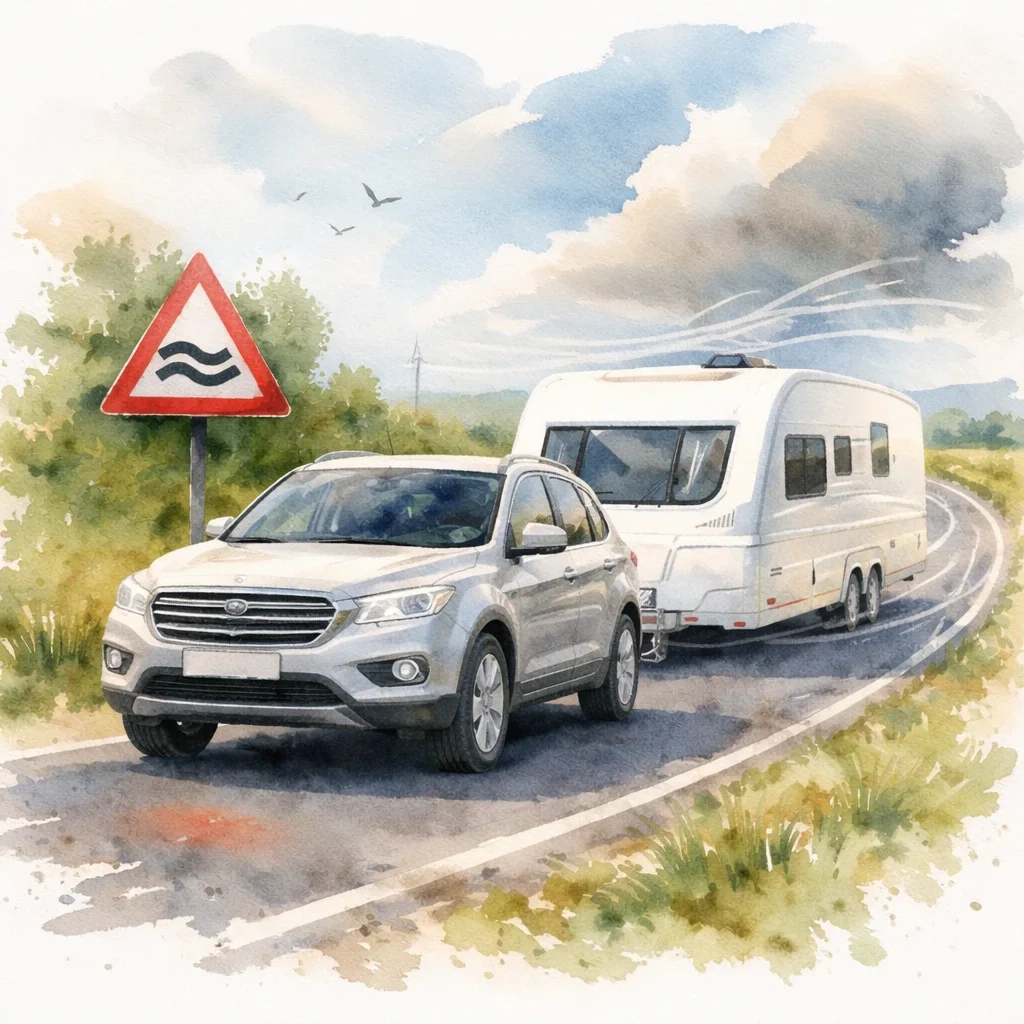
Worried About Towing
If towing makes you second-guess yourself — weights, stability, snaking, or whether your car and caravan are a sensible match — this guide explains what actually matters and what doesn’t.
-
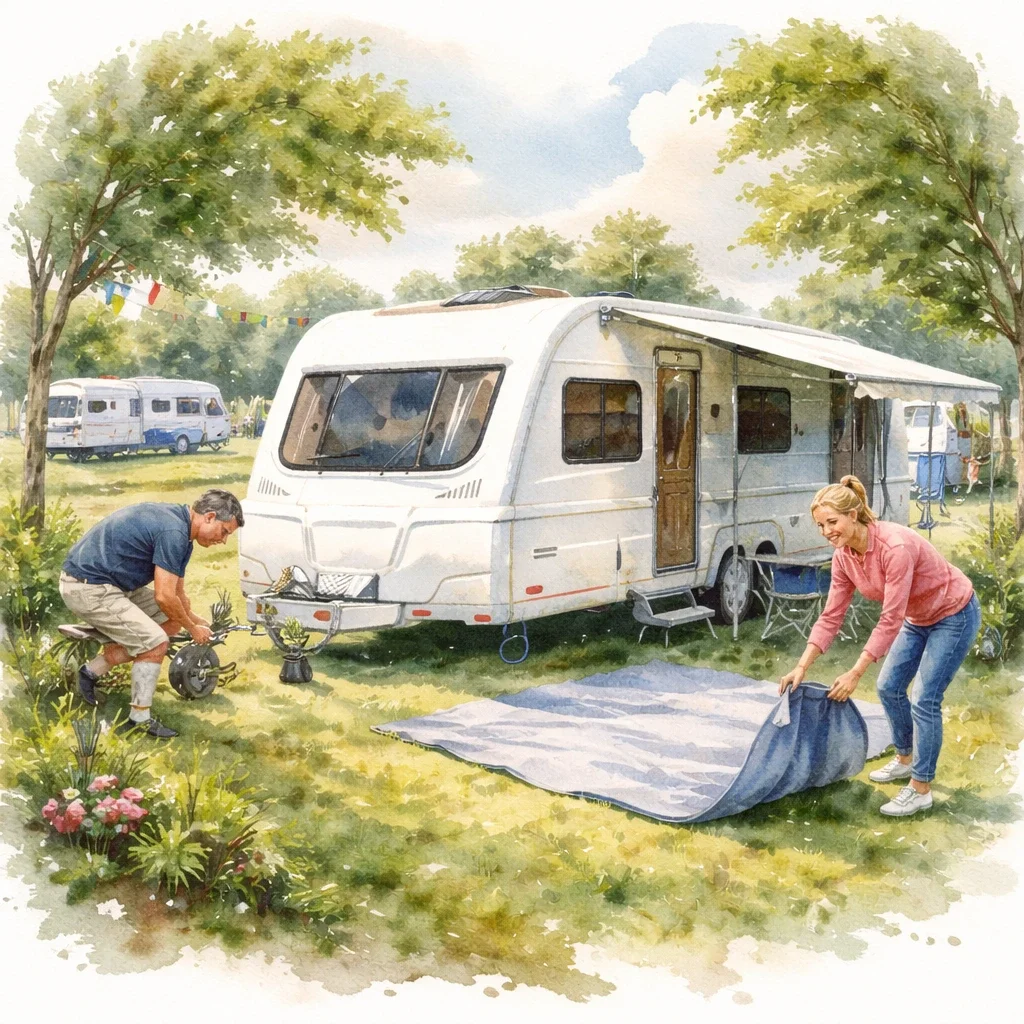
Arriving On Site
If your nerves start when you reach the campsite — reversing onto the pitch, levelling, hook-up, water, or packing up — this guide walks through the real rhythm of site life without the stress.
-

Caravan Ownership Questions
If you’re wondering whether you’ve bought the right accessories, worrying about damp or upgrades, this guide helps separate real concerns from caravan noise.