
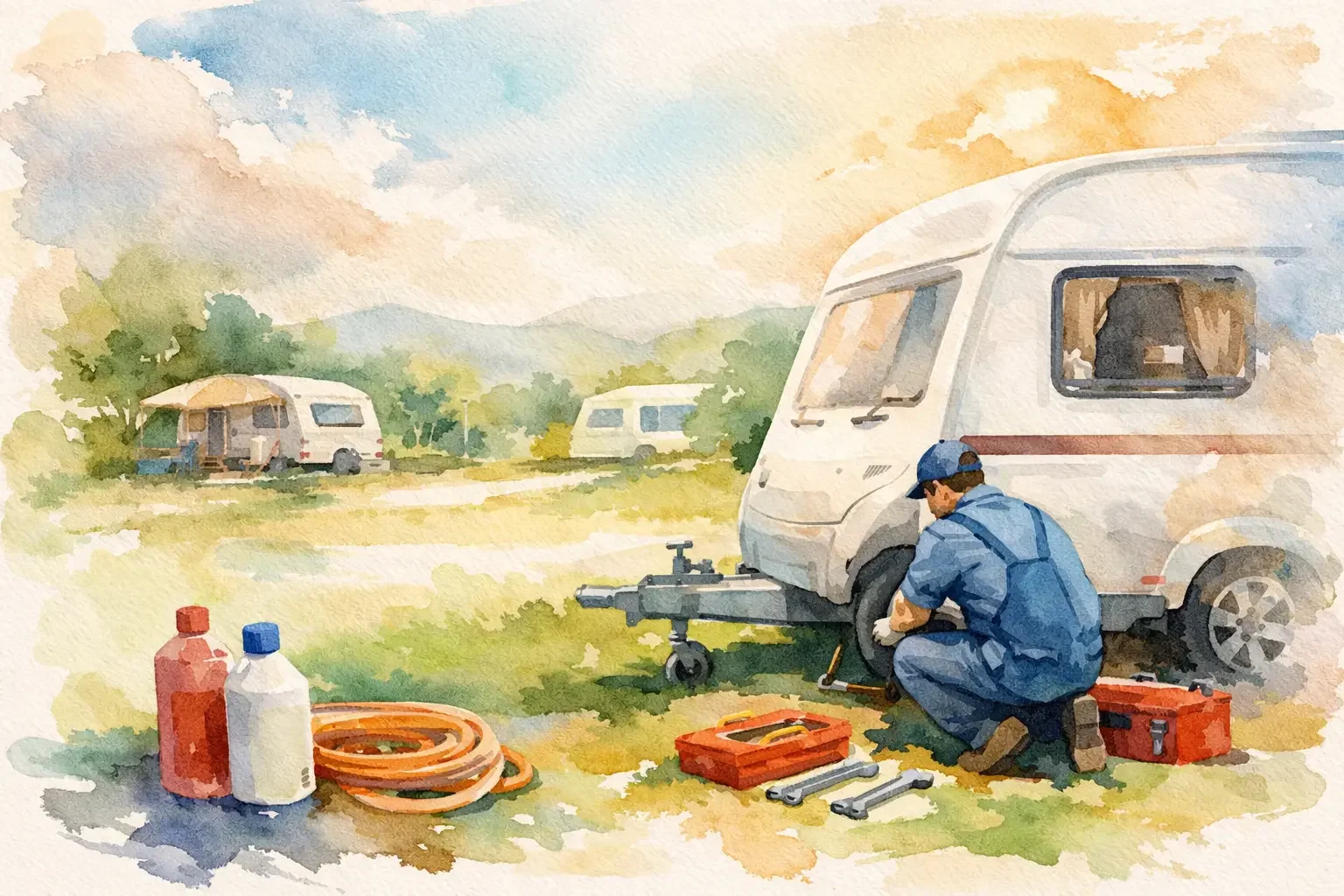
Caravan Servicing Basics UK Guide
A caravan can look perfectly fine on the drive and still be quietly developing expensive problems. That is why a proper caravan servicing basics UK guide matters. Not because every outing is a mechanical drama waiting to happen, but because small issues with brakes, tyres, seals or damp are much easier to deal with early than after they have ruined a holiday - or your wallet.
For many owners, servicing gets tangled up with myth. Some people talk as if missing one check means instant disaster. Others treat annual servicing as a dealer upsell and rely on a quick glance and blind optimism. As usual, the sensible answer sits in the middle. A caravan is a road-going trailer with petrol, electrics, water systems and a timber or composite body trying its best to survive British weather. It deserves more than guesswork.
What caravan servicing actually covers
A full service is not just someone poking the cushions and charging you for the privilege. A proper caravan service is a structured inspection of road safety items, habitation systems and the body itself.
On the road side, that means brakes, running gear, tyres, suspension components, corner steadies, lights and the hitch assembly. In the habitation area, it usually includes checks on petrol appliances, the electrical systems, water ingress risks, ventilation and various safety items. The important point is that servicing is not there to make your caravan feel loved. It is there to catch wear, faults and early signs of damage before they become awkward or costly.
The exact checklist varies slightly between workshops, and some caravans have different equipment levels. A basic two-berth tourer and a twin-axle with every extra under the sun are not identical jobs. Still, the broad principles stay the same.
Caravan servicing basics UK guide - the annual service
In the UK, the annual service is the foundation. If your caravan is under warranty, following the maker's servicing schedule is usually non-negotiable. Miss it, and a future claim may become an interesting conversation for all the wrong reasons.
Even outside warranty, annual servicing is usually the sensible interval for most owners. Caravans spend long periods standing still, then get dragged down wet roads at speed, then sit in storage again. That pattern is not especially kind to brakes, tyres, seals or damp prevention. A yearly inspection keeps problems from building quietly in the background.
Could some owners leave longer? Possibly, if the caravan is lightly used, stored well and checked carefully in between. But this is one of those areas where false economy can turn into actual economy for the repairer.
The big things a service should check
Brakes and running gear matter because caravans are often judged by how they behave when things are not ideal. An emergency stop, a rough road or a long downhill stretch tells you more than a sunny tow to a local site. Brake linkages, hubs, bearings, tyres and suspension parts all need inspecting. If the caravan has been standing for months, issues can develop without obvious warning.
Tyres deserve special mention because owners often focus on tread and miss age, condition and loading. Caravan tyres can look barely worn because they do fewer miles, but age-related cracking and deterioration still happen. Sidewalls matter. Pressure matters. Load rating matters. Tread depth on its own is not the whole story.
The hitch head and stabiliser should also be checked. Excess wear, poor adjustment or contamination can affect towing stability. This is not a glamorous bit of ownership, but it is one of the bits that helps keep the journey calm rather than memorable.
Inside the caravan, petrol appliances and electrical systems need proper attention. Fridge, heater, hob, water heater and safety devices should all be inspected and tested as applicable. A caravan's electrics are split across mains and 12V systems, which is simple enough once understood but still worth checking properly rather than assuming all is well because one light came on.
Then there is damp. Nobody enjoys the word, largely because it can become expensive very quickly. A competent service should include moisture checks in known problem areas such as around windows, rooflights, doors, joints and front and rear panels. Damp does not always announce itself with stained walls and a dramatic smell. Sometimes it starts quietly.
What you should check yourself between services
A service once a year does not remove the need for owner checks. It just means you are not relying only on them.
Before a trip, check tyre pressures when the tyres are cold, inspect the tread and sidewalls, test all road lights and make sure the breakaway cable, hitch and jockey wheel are in good order. Look underneath if you can do so safely and sensibly. You are not trying to become a workshop technician on the driveway. You are looking for obvious damage, hanging cables, loose trims or anything that looks wrong.
Inside, it is worth testing the water pump, taps, lights and appliances before the morning you plan to leave. Caravans have a talent for revealing faults precisely when you are already running late. A quick pre-trip check gives you time to fix small problems without introducing colourful language to the packing process.
Regular owner checks also help with damp prevention. Keep seals clean, watch for changes around windows and lockers, and do not ignore musty smells or soft spots. Damp is much easier to investigate when it is suspicious than when it is established.
Choosing where to get a caravan serviced
The right workshop matters almost as much as the service itself. A cheaper price is not always a bargain if the inspection is rushed or the reporting vague. Equally, the most expensive option is not automatically the best. What you want is competence, clarity and a willingness to explain findings without theatrical doom.
A good service centre should tell you what was checked, what needs attention now and what can reasonably wait. That distinction matters. Not every advisory is an emergency. If a workshop treats every minor wear item as if your next trip to Norfolk will end in catastrophe, a little scepticism is healthy.
For newer owners, asking what is included before booking is sensible. Does the service cover habitation checks, damp testing and running gear? Are replacement parts extra? Will you get a written report? Calm, clear answers are usually a good sign.
Service, repair and inspection are not the same thing
This catches plenty of people out. A service is a scheduled inspection and maintenance check. A repair fixes a known fault. A pre-purchase inspection is about assessing condition before you buy. They overlap, but they are not identical.
If your caravan has a specific issue - say the motor mover is playing up, the fridge is erratic or the floor feels soft by the washroom - that needs diagnosing as a repair problem, not quietly folded into your expectation of a standard service. Some workshops will spot it during the service, of course, but it is better to be upfront.
Likewise, if you are buying used, a recent service record is helpful but not magical. It tells you something, not everything. A well-presented service history is reassuring, but condition in the present still matters.
Common mistakes owners make
One is assuming low mileage means low risk. Caravans are often damaged more by age, standing, water ingress and lack of use than by epic annual mileage. Another is focusing only on what is visible. If the upholstery is tidy and the bodywork shines, that tells you very little about brakes, bearings or hidden damp.
A third mistake is postponing servicing because the caravan "seems fine". That phrase has emptied many bank accounts. Fine is not a diagnostic standard.
And then there is DIY overconfidence. There is nothing wrong with learning your caravan and carrying out basic checks. In fact, you should. But petrol safety, braking components and certain electrical issues are not the place for cheerful guesswork and a screwdriver set inherited from your dad.
How to make servicing easier and more useful
Keep records. Save invoices, service sheets and notes on faults or changes you have noticed. If a problem appears repeatedly, a good history helps. It also supports resale and makes conversations with service centres far less vague.
Book early if you want a service before the main holiday season. Spring workshop diaries can fill up quickly, and nobody enjoys discovering that the earliest available slot is three weeks after the trip they have already booked.
It also helps to arrive with the caravan reasonably accessible. If every locker is packed like a game of touring Tetris, inspections can become slower and more awkward. You do not need military precision, just a bit of consideration for the person trying to inspect it.
If you want more practical ownership advice in the same calm spirit, CaravanVlogger has plenty of guidance at https://caravanvlogger.co.uk.
The reassuring truth is that caravan servicing is not mysterious, and it does not need to be wrapped in panic. Treat it as regular maintenance, stay alert between annual checks, and use professional help where it genuinely matters. That way, your caravan has a much better chance of doing what you bought it for - getting you away for a decent break, rather than becoming an expensive garden ornament with curtains.
Caravan With Confidence
The complete guide to caravanning — from first purchase to touring with ease.
Everything you need to feel genuinely confident as a caravanner — written clearly, without jargon, and based on real experience rather than guesswork.
- Choosing and buying the right caravan
- Towing safely and confidently
- Arriving on site and setting up without stress
- Ownership, maintenance and what actually matters
- Touring — planning, packing, and enjoying it