
Caravan Water System Explained Simply
The first time you fill a caravan with water, it can feel oddly high-stakes. One wrong move and you imagine a soaked locker, a burnt-out pump, or no hot water just as you are about to wash up after tea. The good news is that a caravan water system is not especially mysterious. It is simply a few parts working together in the right order.
Once you understand that order, most of the worry drops away. You do not need to become a touring plumber. You just need to know what each part does, where the likely weak spots are, and which problems are genuinely worth bothering about.
Caravan water system explained - the basic layout
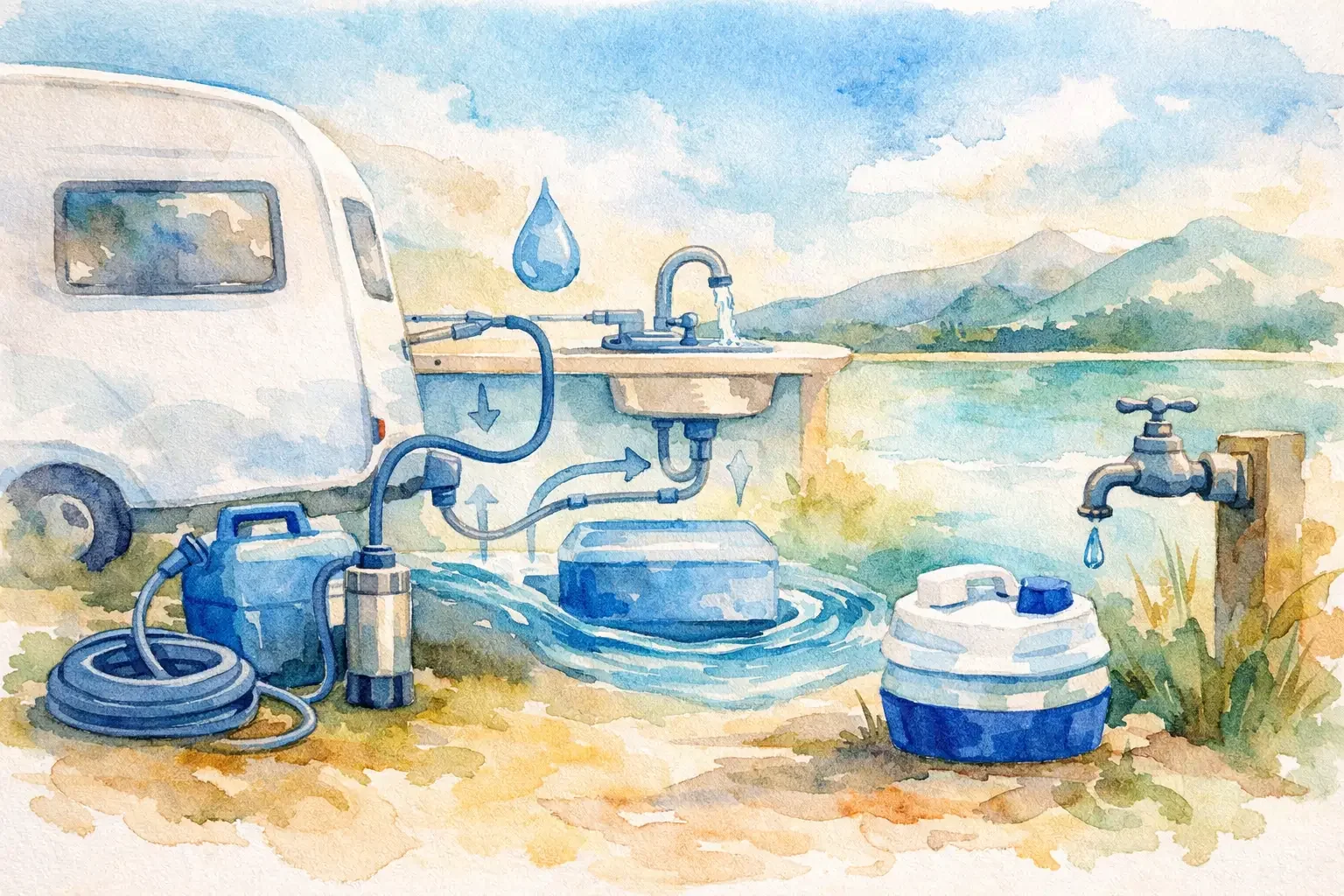
Most UK caravans use a fairly straightforward setup. Fresh water starts outside the caravan in an Aquaroll or similar container, though some caravans and motorhomes use onboard tanks. A pump moves that water into the caravan, where it feeds the cold taps, the toilet flush on some layouts, and the water heater. The heater then supplies the hot taps and shower.
Used water leaves through the sink and shower drains into a waste outlet, usually running into a Wastemaster or a site drain connection. So the whole thing is really just two systems side by side - fresh water coming in, waste water going out.
If you keep that simple picture in mind, fault-finding becomes less dramatic. No water at the tap? Think supply, pump, or airlock. Water not heating? Think heater settings, power source, or lack of water flow. Sink draining slowly? That is a waste issue, not a fresh water one.
Where the fresh water comes from
On many tourers, the fresh water supply begins with an external barrel. You fill the container, connect the pump assembly, and plug the hose into the caravan’s inlet. Depending on your caravan, the pump may sit in the barrel as a submersible pump or be mounted inside the caravan as an onboard pressure pump.
Submersible systems are common and perfectly serviceable. They are simple, relatively easy to replace, and familiar to many owners. Onboard pumps can give steadier pressure and often feel more domestic, but they add a little more complexity. Neither option is automatically better for everyone. It depends on the caravan, your touring style, and how much you value simplicity over refinement.
A pressure switch or intelligent control system tells the pump when to run. Open a tap and pressure drops, so the pump starts. Close the tap and pressure rises, so it stops. That is why a pump that keeps pulsing when no tap is open usually means something is not quite right - often a small leak, a dribbling tap, or a pressure setting issue.
How water gets around the caravan
Once inside, the water travels through pipework to the taps, shower and heater. Cold water usually reaches fixtures directly. For hot water, cold water first enters the boiler or water heater, where it is warmed before heading to the hot taps.
That means the hot side often takes a little longer to run properly, especially after filling up from empty. The heater has to fill first, and air needs to clear from the system. This catches plenty of newcomers out, who assume something is broken because the hot tap splutters like it is auditioning for a low-budget fountain display.
Usually, it just needs priming. Open the cold taps until water runs smoothly, then do the same with the hot taps. Allow the pump to push water through until the air is gone and the flow becomes steady.
The water heater - simple in principle, slightly fussy in practice
Most caravan water heaters can run on gas, electric, or both, depending on the model. Gas is useful off-grid or when not hooked up. Electric is handy on serviced pitches where you are already paying for hook-up. Some systems use both to heat water more quickly.
The key thing is this: never assume the heater is full of water just because the system is connected. If the caravan has been drained down for storage or winter, the heater may still be empty until you refill and purge the system. Running a heater incorrectly is one of those avoidable mistakes that becomes expensive far faster than it becomes interesting.
Heating performance also depends on expectations. Caravan systems are not domestic combi boilers. They are designed to be practical, not heroic. You can absolutely get decent hot water and a perfectly civilised shower, but if you expect endless high-pressure luxury, you may need to lower the bar a touch. You are still on holiday, not in a boutique hotel in Bath.
Waste water matters more than people think
Fresh water gets most of the attention, but waste water causes plenty of touring irritation. Sink and shower water drains through separate waste pipes to an external outlet. In many setups, these feed a Wastemaster that you empty at the service point.
If the waste container is too high, too full, or the pipes are not sloping properly, drainage slows down. Then the shower tray starts filling around your ankles and the washing-up water hangs about longer than an unwanted conversation on a CL site.
Good waste flow is mostly about gravity and hose routing. Keep the run smooth, avoid kinks, and do not overcomplicate it. A glamorous waste setup does not win prizes. One that drains properly does.
The toilet flush and drinking water question
Depending on your caravan, the toilet flush may draw from the main fresh water system or from its own flush tank. It is worth checking your handbook so you know which arrangement you have. This matters when diagnosing faults and when winterising.
As for drinking water, opinions vary. Some caravanners are happy to drink from the onboard system if it is kept clean and maintained properly. Others prefer to carry separate bottled or container water for drinking and cooking. This is one of those areas where there is no need for chest-beating certainty.
If you want to use the caravan supply for drinking water, hygiene matters. Clean containers, sanitised pipework, and regular maintenance are the real issue - not forum folklore. If you prefer a separate drinking water container for peace of mind, that is fine too. Confidence is the goal, not winning a purity contest.
Common problems and what they usually mean
When a caravan water system misbehaves, the fault is often fairly ordinary. No water flow can mean an empty barrel, a disconnected pump, a blown fuse, or air in the system. Surging at the tap often points to air ingress or a tired pump. Poor hot water can mean the heater is not switched on correctly, has not filled yet, or is set to the wrong energy source.
Leaks need a bit more attention, but not instant panic. A drip from a connection may be a loose fitting or worn seal. Water inside the caravan is never ideal, obviously, but the sensible response is to isolate the supply, inspect methodically, and avoid random fiddling just to feel busy.
If a pump runs when all taps are closed, pressure is dropping somewhere. Sometimes it is a visible leak. Sometimes it is a tiny seep or a tap not fully shut. Start simple before assuming major failure.
Maintenance without turning it into a hobby
A little routine care goes a long way. Sanitising the fresh water system periodically helps keep things clean, especially after storage. Draining down before winter protects the system from frost damage. Checking hoses, seals and pump connections before a trip can save a lot of aggravation on site.
It is also worth paying attention to how your own caravan behaves. The system develops a kind of normal rhythm - how loud the pump sounds, how long hot water takes, how quickly the waste fills. Once you know that rhythm, changes are easier to spot early.
That is often more useful than memorising every possible technical fault. Real-world confidence comes from familiarity, not from trying to sound like you swallowed the manual whole.
Caravan water system explained for beginners - what actually matters
If you are new to caravanning, focus on a few basics. Make sure the fresh water source is full and connected properly. Prime the system after setup. Confirm the heater is filled before using it. Keep waste hoses running downhill. Drain everything down when frost is a risk.
Beyond that, most of the rest is refinement. Yes, there are accessories, upgrades and strongly held opinions. Some are useful. Some are just expensive ways of feeling prepared. Start with understanding the standard system first. It will handle most trips perfectly well.
If you want more plain-English caravan help, CaravanVlogger has built quite a lot of it around exactly this sort of confusion - the normal kind, not the invented internet kind.
A caravan water system does not need reverence. It needs a bit of understanding, a bit of maintenance, and a calm approach when something goes wrong. Once you stop seeing it as a black box, it becomes just another part of touring you know how to manage.
Where To Next?
Caravan water system checker
Simple checks when the water system isn’t behaving as expected.
Caravan hot water basics
An easy to understand article on how hot water works in the caravan.
Need clearer caravan answers?
TalkWrench is where caravan questions get calm, experience-based explanations — without the noise, arguments, or guesswork.