
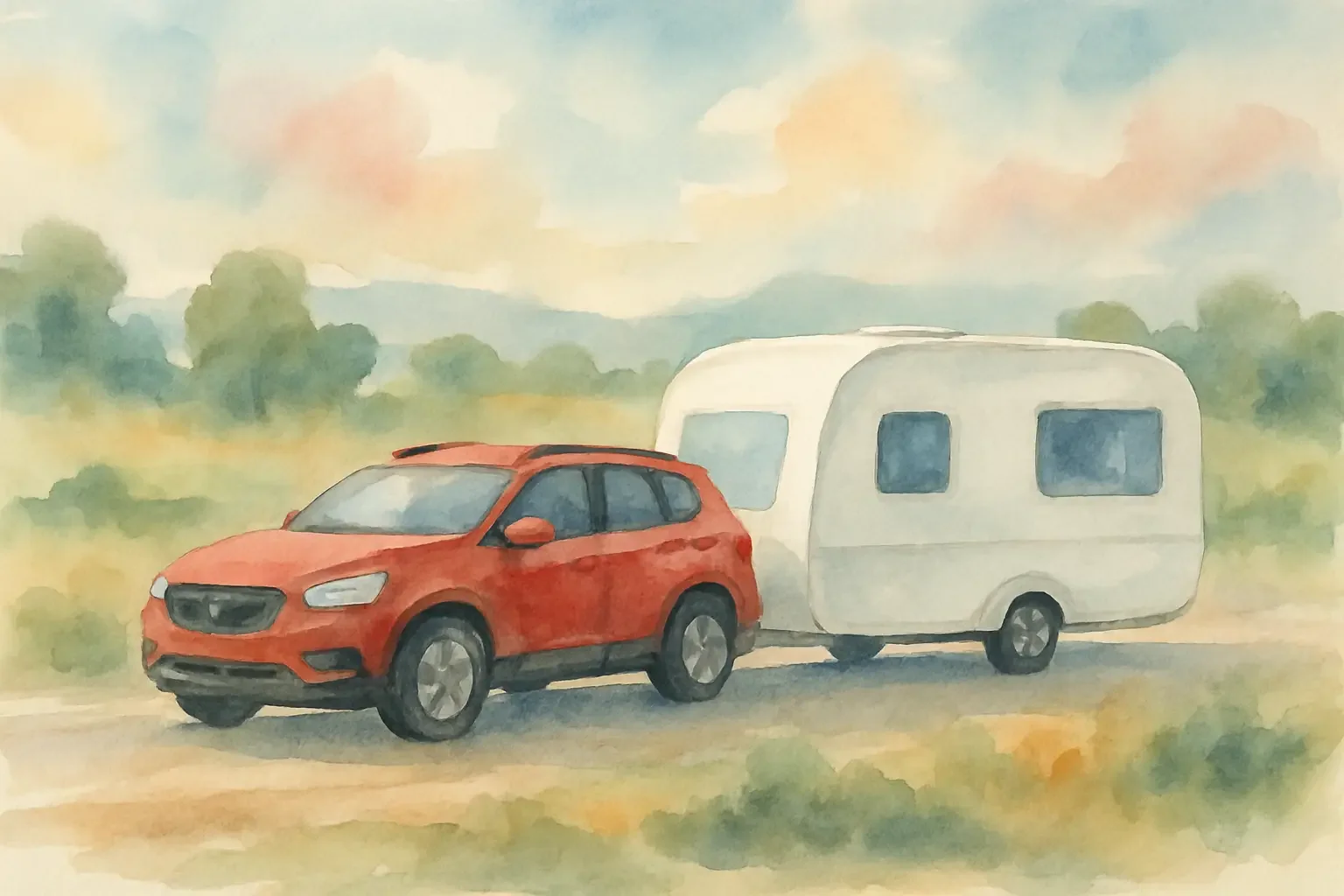
Choosing a Tow Car for Your Caravan, Calmly
The moment you start looking for a tow car, everyone suddenly becomes your uncle with a “rule”.
“It has to be a 4x4.”
“You must stick to 85% or you’ll die instantly.”
“Never tow with a hybrid.”
Most of it is well-meant, some of it is outdated, and a surprising amount is just people justifying the car they already own. If you want a calmer way through the noise, you’re in the right place.
This is a practical, UK-focused approach to how to choose tow car for caravan use - without pretending there’s one perfect answer for everyone. The goal isn’t to win a forum argument. It’s to tow legally, comfortably, and with confidence.
Start with the caravan you actually have (or will buy)
The tow car decision gets much easier when you stop shopping for “a good tow car” in the abstract and start with your caravan’s numbers.
There are three weights that matter in real life.
MTPLM is your caravan’s maximum permitted weight when loaded. Think of it as the caravan’s heaviest legal holiday version of itself. MIRO is the ex-works weight, but it’s often optimistic for how people travel (battery, mover, awning, extra petrol, etc.). Noseweight is the downward force on the towball, and it affects stability more than people expect.
If you’re still caravan-shopping, use MTPLM for your calculations and assume you will add gear. Because you will. We all do. Even the people who swear they travel “minimal”.
The legal bit: ignore bravado, read the plates
In the UK, towing legality is mostly about plated limits, not vibes.
The tow car has limits that matter: maximum braked towing capacity, maximum noseweight, and gross train weight (GTW) - the maximum the car and trailer can weigh together. You’ll find them in the handbook, on the VIN plate, or in the manufacturer specs.
Then there’s your driving licence entitlement. If you passed your test after 1 January 1997, the rules changed in 2021 and most people can now tow up to 3,500kg MAM combined, but it’s still worth checking your licence and the specific combination you’re planning.
Here’s the calm truth: plenty of “big” cars have surprisingly modest towing limits, and some “normal” estates tow very well. The badge doesn’t certify anything. The numbers do.
Matching weights: the 85% guide, not a commandment
You’ll hear the 85% figure a lot. It’s a guideline that suggests the caravan’s MTPLM should be no more than 85% of the car’s kerbweight for beginners.
Useful? Yes. A law? No.
It’s mainly about stability margin and driver confidence. A heavier car relative to the caravan tends to feel calmer, especially in crosswinds and when being overtaken by lorries. But plenty of experienced towers run at higher ratios legally and safely, and plenty of beginners get twitchy even well under 85% if their loading is poor or tyre pressures are wrong.
A better way to use the idea is this: if you’re new, anxious, or you’ll be doing lots of motorway miles, favour a heavier tow car or a lighter caravan rather than trying to “make it work”. If you’re upgrading from a smaller caravan, don’t assume your current car will feel the same with a longer, taller, heavier tourer.
Power is nice. Torque and gearing are what you feel
Horsepower is the number people boast about. Torque is the bit that makes towing feel easy.
For caravanning, you want an engine that pulls cleanly at lower revs, doesn’t need constant downshifts on hills, and feels unbothered when you merge onto a slip road with a headwind and a week’s worth of food in the back.
Diesels often suit towing because of their torque delivery, but petrol turbo engines can tow very well too. Hybrids can be excellent, especially for smooth torque and town driving, but check towing capacity carefully and be honest about whether you’ll be doing lots of long, loaded climbs where the engine may work harder.
Also think about wheelbase and overall vehicle mass. A long-wheelbase car can feel more settled, even if it doesn’t have headline-grabbing power.
Transmission: manual, auto, and the “it depends” bit
A good manual tow car is perfectly fine. A good automatic can make towing feel almost relaxing.
Modern torque-converter autos are generally very capable for towing. Dual-clutch gearboxes can be fine too, but they vary, and some feel fussy at low speeds when manoeuvring. If you’re buying used, test-drive on hills and in stop-start traffic. If it hunts between gears when solo, it won’t become enlightened when towing.
If you do a lot of site manoeuvring or you’re frequently in traffic, an auto can reduce workload. That’s not laziness. That’s fatigue management.
Stability is a package, not one magic feature
People love a single “fix”: 4x4, stabiliser, ATC, bigger tyres, a gadget. Real stability is boringly holistic.
First, the basics: correct loading in the caravan, correct noseweight (within both car and towbar limits), and correct tyre pressures on both car and caravan. Then you consider the car’s fundamentals: weight, wheelbase, suspension control, and how it behaves when pushed by wind.
Four-wheel drive can help on wet grass and steep pitches, and it can feel more planted pulling away. But it doesn’t automatically make a poor match into a good one, and it doesn’t exempt anyone from sensible loading.
Electronic trailer stability systems can be a useful safety layer, but they’re not permission to ignore the fundamentals either.
Real-world comfort: the bits you’ll notice on mile 120
Towing comfort isn’t just about towing. It’s about how you feel after three hours.
Check the driving position and mirrors first. Can you see properly, and can you add extended mirrors without drama? Is the car stable at 60mph without constant micro-corrections? Do the seats leave you feeling like you’ve been posted in a Victorian restraint device?
Noise matters more than you expect. Some cars are fine solo but get boomy under load. If you can, test-drive with weight in the boot or at least simulate a longer run.
Boot space matters too, because a well-matched tow car still needs to carry the things you shouldn’t load into the caravan. If the car is already full before you hitch up, you’ll be tempted to “just shove it in the van”, and that’s how payload disappears.
Towbar and noseweight limits: the overlooked deal-breakers
Two cars with the same towing capacity can behave very differently because of noseweight limits.
If your car’s maximum noseweight is low, you may struggle to achieve a stable, sensible noseweight without exceeding the limit or playing caravan-Tetris every trip. Likewise, the towbar itself has a plated noseweight limit that can be lower than the car’s.
This is one of those unglamorous checks that saves a lot of stress later. Do it before you buy, not after you’ve already mentally decorated the caravan.
Running costs: be honest about what you’ll actually do
A tow car that’s perfect for the one week in August but painful the rest of the year can feel like a bad deal.
Consider fuel economy solo and towing, insurance, tyres (tow cars eat front tyres if you do lots of loaded miles), servicing costs, and whether it fits your daily life. If it’s too big for your parking space or too expensive to run, you’ll resent it, and resentment is a terrible touring companion.
Also think about emissions zones if you travel into cities, and whether you’ll keep the car long enough for any higher purchase cost to make sense.
A simple buying process that avoids expensive surprises
If you want a practical route through how to choose tow car for caravan life, do it in this order.
Start by writing down your caravan MTPLM, your typical touring load (mover, awning, extra battery, bikes), and the sort of trips you actually do - mostly A-roads, lots of motorways, hilly Wales, long Scottish runs, quick weekends.
Then shortlist cars that meet the legal limits comfortably, not barely. “It can tow 1,600kg” is not the same as “it tows 1,600kg without feeling like it’s negotiating”. Check towing capacity, GTW, and noseweight.
Next, look at kerbweight and wheelbase to get a feel for stability margin. You’re not chasing a magic ratio, you’re building a comfortable buffer.
Finally, test-drive like a caravanner. Try tight turns, hill starts, slow manoeuvres, and motorway joining. Picture wet grass on a CL site. Picture a crosswind on the M6. You’re buying the car’s behaviour, not its brochure.
If you want more experience-led explainers in the same calm tone, CaravanVlogger has a whole towing and weights pathway at https://caravanvlogger.co.uk.
Common myths that make people spend more than they need to
You don’t automatically need a huge SUV. Plenty of estates and crossovers tow mid-weight caravans very well, and they can be easier to live with day-to-day.
You don’t automatically need 4x4. It’s helpful in specific conditions, not a moral virtue.
You don’t need to fear every higher ratio as if it’s forbidden, but you do need to respect the physics. Stability margin, loading discipline, and driver comfort matter. If you’re white-knuckling it, that’s information.
And you definitely don’t need to accept “that’s just how towing is” if your outfit feels wrong. Often it’s fixable through correct loading, tyre pressures, noseweight adjustment, or simply admitting the match isn’t as comfortable as you hoped.
The closing thought
Pick the tow car that makes you feel quietly capable, not the one that makes you feel like you’ve joined a club. When towing feels calm, you arrive with more energy for the bit you actually wanted - the holiday.
Where Next?
Caravan tyre age limits in the UK: what’s real? is part of the “Caravan Ownership - What Really Matters” guide on CaravanVlogger.
Or….
Need clearer caravan answers?
TalkWrench is where caravan questions get calm, experience-based explanations — without the noise, arguments, or guesswork.