
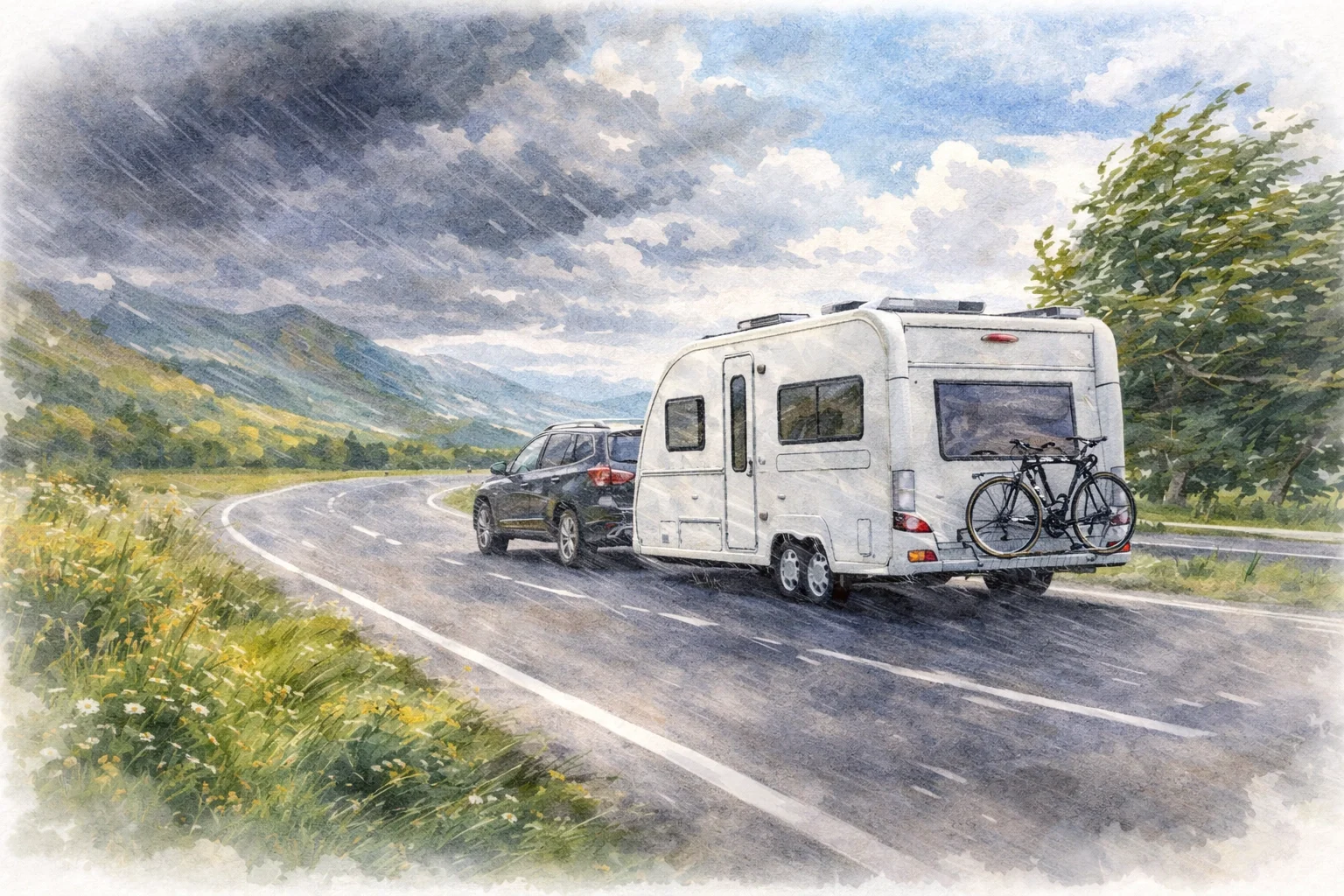
Speed, Wind & Road Conditions – What Changes When You Tow
Many towing worries don’t come from weight limits or technical setup.
They come from moments where:
The outfit suddenly feels different
The steering feels lighter or heavier than expected
You feel more alert — or more tired — than usual
Nothing is “wrong”.
You’re just feeling the effects of speed, wind, and road conditions more clearly when you tow.
Let’s explain why.
Why towing amplifies everything
When you tow, you’re no longer just driving a car — you’re guiding a longer, heavier system.
That means:
Movements take longer to settle
Forces act on more surface area
Small changes feel more noticeable
This is normal.
Understanding it is what removes the anxiety.
Speed: why a few mph makes a big difference
One of the most surprising things for new towers is how much difference a small speed change makes.
At lower speeds
Movements dampen more easily
Wind effects are gentler
Steering inputs feel calmer
Fatigue is lower
As speed increases
Wind pressure rises sharply
Small corrections become sharper
The caravan has less time to settle
Driver workload increases
This is why:
An outfit that feels calm at 50mph can feel noticeably busier at 60mph.
Nothing has “gone wrong” — the system is simply being asked to do more.
Wind: it’s not just about strength
Wind doesn’t have to be strong to be noticeable.
What matters is:
Direction
Gustiness
Exposure
Crosswinds
Crosswinds push against the side of the caravan, creating a sideways force.
A stable outfit:
Absorbs the push
Settles quickly
A less stable one:
Reacts more
Takes longer to settle
This is why towing can feel different:
On bridges
On open moorland
On coastal roads
Even when speeds stay the same.
Overtaking lorries: what’s actually happening
Being overtaken by a large vehicle combines two effects:
A pressure wave pushing the caravan away
A low-pressure area pulling it back in
This happens quickly, which is why it feels dramatic.
A well-set-up outfit will:
Move slightly
Then settle
Feeling this movement doesn’t mean something is wrong — it means physics is doing what it always does.
Road surfaces and camber
Not all roads behave the same.
Things that change towing feel include:
Ruts in the road surface
Long downhill sections
Adverse camber
Poorly repaired motorways
When towing:
The caravan follows these changes more noticeably
Steering may feel more active
The outfit may feel busier
Again — this is information, not danger.
Why fatigue increases when towing
Even when everything feels fine, towing requires:
More anticipation
More observation
Smoother inputs
This increases mental load.
If you feel:
More tired after towing
Less inclined to rush
Happier cruising slightly slower
That’s not weakness — it’s awareness.
Many experienced towers quietly prefer:
Lower speeds, fewer corrections, and calmer progress.
What doesn’t mean there’s a problem
It’s important to say this clearly.
Feeling:
Movement in wind
A reaction to overtakes
Increased steering input
A need to slow slightly
Does not automatically mean:
Your caravan is too heavy
Your setup is wrong
You’re doing something unsafe
It means you’re paying attention.
How this fits into Towing Without the Panic
This page connects directly with:
Together, they explain why towing behaviour changes — without turning it into a list of warnings.
The calm takeaway
When you tow:
Speed amplifies movement
Wind adds sideways forces
Road conditions demand more attention
None of that is a failure.
Understanding these effects allows you to:
Choose calmer speeds
Read conditions better
Tow with confidence instead of tension
That’s the aim of this page — and the whole hub.
Where next?
If this page resonated, the next helpful reads are:
👉 What Actually Causes Snaking?
👉 Do I Need ATC or Sway Control?
Both continue the story calmly, without scare tactics.
Need clearer caravan answers?
TalkWrench is where caravan questions get calm, experience-based explanations — without the noise, arguments, or guesswork.