
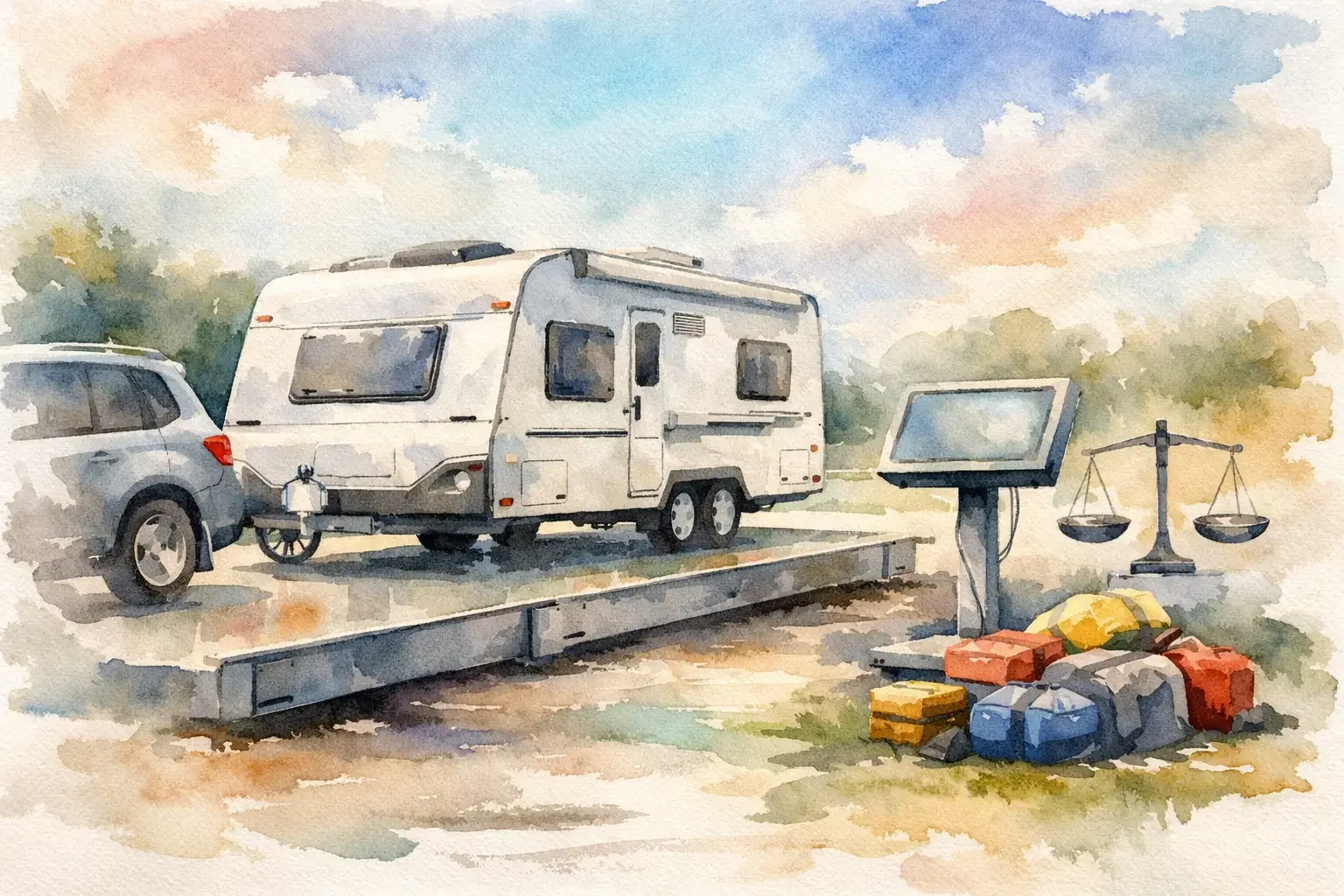
Weighbridge results and real caravan loading
A caravan can look perfectly sensible on the drive, sit level enough, and still deliver a weighbridge printout that makes you mutter a few words not fit for the site office. That is why weighbridge results real caravan loading matters. The brochure figure is one thing, the actual van packed for a proper trip is quite another, and the gap between the two is where a lot of confusion lives.
The good news is that a weighbridge does not exist to frighten you. It is simply one of the few places where guesswork gets replaced by numbers. Once you understand what those numbers are telling you, caravan loading becomes a lot less mysterious and a lot more manageable.
Why weighbridge results and real caravan loading often clash
A lot of owners assume that if they have packed "lightly", they must be fine. Fair enough in theory, but caravans are brilliant at collecting weight in small, innocent-looking amounts. A couple of levelling ramps here, an awning there, a toolbox, hookup lead, chairs, food, clothes, maybe the dog bed because apparently the dog now travels in greater comfort than the driver. It adds up quickly.
Then there is the issue of published weights. The Mass in Running Order gives you a starting point, not a guarantee of what your caravan weighs today, with your kit, your battery, your mover, your petrol bottles and all the other bits that somehow became essential. Manufacturers provide useful figures, but they are not a substitute for measuring your actual setup.
That is where people get caught out. Not because they are reckless, but because the difference between official numbers and real-world loading is often larger than expected.

What a weighbridge is actually telling you
At its simplest, the weighbridge gives you a snapshot of your outfit as it stands at that moment. If you weigh the tow car and caravan together, you get the gross train figure. If you then weigh the car and caravan separately, you can begin to see whether each part is within its allowed limits.
For caravan owners, the key question is usually whether the caravan is within its Maximum Technically Permissible Laden Mass. If it is over, that is not one of those charming caravanning grey areas people enjoy debating over tea. It needs sorting.
But the printout does not tell the whole story on its own. A caravan can be under its maximum laden weight and still be loaded badly. Weight distribution matters. Noseweight matters. How the outfit feels on the road matters as well. The weighbridge confirms the numbers, but it does not replace judgement.
Real caravan loading is not just about total weight
This is the bit that gets lost when online conversations turn into a contest about who can sound most alarmed. Total weight matters, yes. So does where that weight is placed.
Put too much heavy kit at the rear and you may reduce noseweight and encourage less stable towing. Put too much right at the front and you can push noseweight too high, even if the caravan itself remains under its plated limit. Put heavy items high up and you raise the centre of gravity, which is not doing you any favours either.
So when you look at weighbridge results, do not stop at "we're under, job done". Ask the more useful question: are we under, and is the load sensibly arranged?
That is a calmer way of thinking about it, and a more realistic one.
What tends to surprise people on the printout
The biggest surprise is usually how little spare payload there really is once the caravan is prepared for an actual holiday. Motor movers, leisure batteries, an extra petrol bottle, wheel locks, aquarolls, wastemasters, bedding and all the practical paraphernalia can nibble away at payload before you have packed so much as a biscuit.
The second surprise is that cars often carry more caravan-related weight than owners realise. If the awning, food, coats, tools and anything else have been moved into the boot to save caravan payload, the tow car still has its own limits. Gross vehicle weight and axle limits remain very real, even if the back of the car looks impressively organised.
The third surprise is that a setup can be legal on paper and still feel poor on the road. If the outfit feels unsettled, light at the hitch or more fidgety than usual in crosswinds, that is worth paying attention to. Good towing is not about passing a maths test while ignoring what the caravan is telling you.

How to use weighbridge results real caravan loading in practice
Start by weighing the outfit in the condition you genuinely travel in. Not the optimistic version where the water containers are empty, the food is missing and half the kit is still in the garage. Use the real trip load. Otherwise, you are only measuring your intentions.
Once you have the figures, compare them with the caravan's MTPLM, the car's gross vehicle weight, gross train weight and the relevant axle limits. If that sounds a bit dry, it is. Safety paperwork rarely arrives wearing jazz hands. Still, these are the limits that matter.
If the caravan is comfortably under its limit, that gives you useful headroom. If it is close, then small additions matter. If it is over, remove weight before you travel again. That may mean carrying some items in the car instead, leaving non-essentials behind, or being more honest about what qualifies as essential in the first place.
Then look at loading distribution. Keep heavier items low down and close to the axle area where practical. Avoid loading heavy kit at the very back. Aim for a sensible noseweight within both the tow car and hitch limits. This is where a decent routine helps more than endless theory.
The common mistake of chasing one perfect number
Many caravan owners want a single answer. A magic figure, a guaranteed ratio, a loading formula that settles everything forever. Sadly, caravanning refuses to be that tidy.
A well-matched outfit loaded sensibly can feel excellent. The same outfit, loaded lazily, can feel far less composed. A caravan weighed before a fortnight in Devon may differ from the same caravan weighed before a short weekend away. Add bikes, change the weather gear, swap awning setups, and your numbers shift again.
That does not mean the whole exercise is pointless. Quite the opposite. It means weighbridge checks are most useful when treated as part of an ongoing habit rather than a one-off ceremony. You are building confidence through evidence, not trying to impress anyone with a spreadsheet.
When a weighbridge visit is especially worth doing
If you have just bought your first caravan, changed tow car, added accessories like a mover, or upgraded to a larger van, a weighbridge visit is very worthwhile. The same applies if your outfit feels different on the road and you cannot quite put your finger on why.
It is also sensible before a long tour or after a gradual creep in "useful" kit. Caravans are a bit like kitchen drawers. They fill themselves while nobody is looking.
For newer caravanners especially, getting actual weights can cut through a lot of second-guessing. That is one reason CaravanVlogger keeps banging on about clarity rather than myths. Not because weighing solves every towing question, but because it gives you something solid to work from.
Confidence beats guesswork
There is a tendency in caravanning circles to make weight discussions sound either terrifying or trivial. Neither is very helpful. The reality sits in the middle. Limits matter, loading matters, and understanding your outfit properly is a sensible part of safe towing. At the same time, this does not need to become an anxious obsession.
A weighbridge result is not a verdict on your competence. It is information. If the numbers are good, excellent. If they are not, adjust and go again. That is far more useful than relying on hopeful estimates, forum folklore or the proud declaration that "it tows fine" from someone whose definition of fine may be broader than yours.
The aim is not to load a caravan by superstition. It is to know what your real setup weighs, place that weight sensibly, and head off feeling calm rather than half-convinced you have forgotten something obvious. That is a much nicer way to start a trip.
Where Next?
Some follow on information you might find useful